
War as a driver of medical change
At the start of the First World War, about 80% of soldiers with a broken femur (thigh bone) died. By 1917, about 80% of soldiers with the same injury survived. A simple device made much of that difference. The Thomas splint, named after the Welsh surgeon Hugh Owen Thomas, held the broken leg firmly in place, and by 1917 it was in routine use.
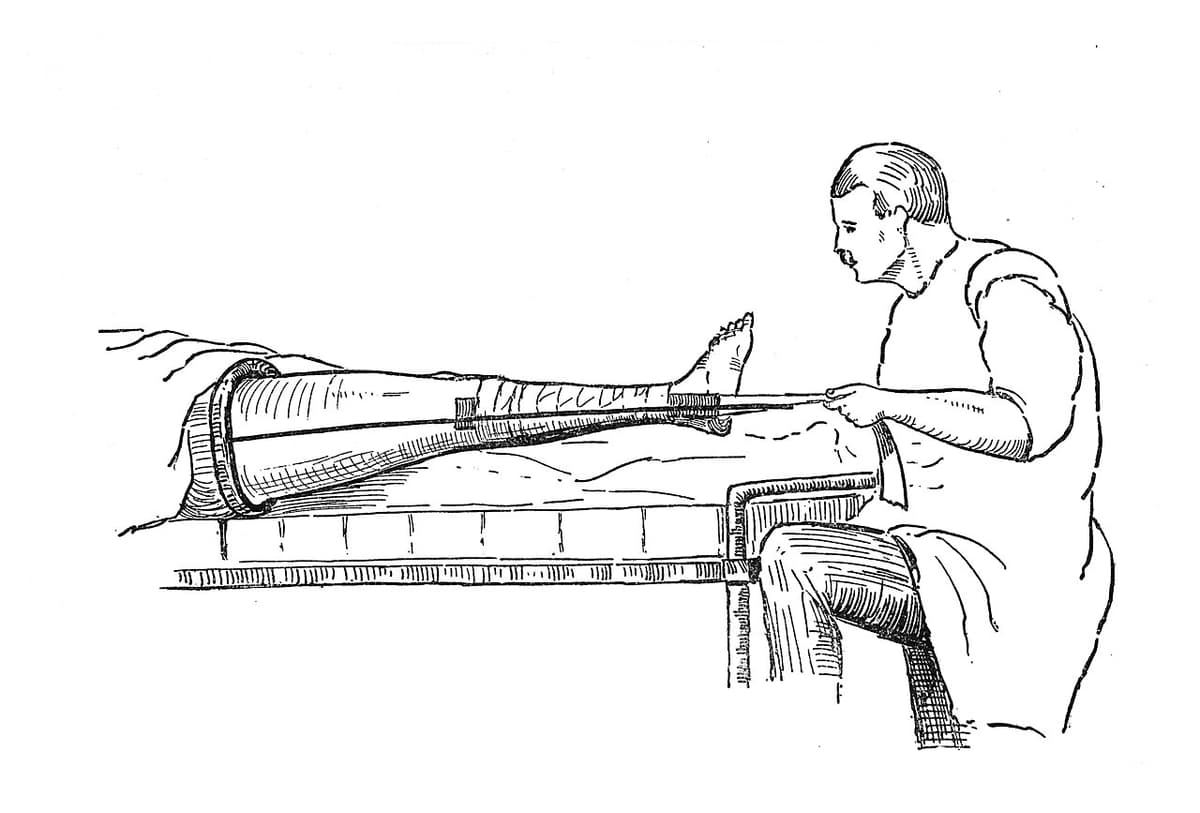
Stories like this are why historians ask whether war has been the key factor in improving medicine. The First World War was fought on an industrial scale. Railways carried armies of millions quickly to the front lines, and those armies used mass-produced weapons designed to kill. The result was casualties in the millions. At the Battle of the Somme in 1916 alone, huge numbers were wounded on both sides.
This scale of suffering pushed medicine forward for four main reasons:
- Surgeons dealt with thousands of horrific injuries every day, so they gained experience very fast.
- Surgeons shared ideas far more than they did in peacetime.
- Doctors and researchers worked together towards a single goal, the war effort.
- Governments spent more on new medical materials and equipment.
War also damaged medicine. It pulled doctors away from research, created new diseases and caused psychological harm. A fair historical judgement has to weigh both sides, from the Crimean War and the US Civil War in the nineteenth century through to the Second World War.
Keep two questions separate as you read. First, what new methods appeared during a war? Second, did the war itself cause them, or did it speed up knowledge that already existed?
9 more sections in this topic
Pick this up in your Library: it holds the whole topic, notes, cheatsheet and questions.