
Engels and the working-class district
In 1845 the German writer Friedrich Engels published The Condition of the Working Class in England. One passage from it (Source K) walks the reader through a typical working-class district in an English industrial town. It is a useful starting point because it shows what industrial growth meant for the people who lived in its shadow.
Engels describes houses of three or four rooms plus a kitchen. Outside, the streets are unpaved, rough and filthy, covered in rotting vegetable and animal waste. There are no sewers or gutters to carry the waste away, only stinking pools of standing water. The district has been thrown together with no plan, so fresh air cannot move through it, and large numbers of people are squeezed into small spaces. Engels does not describe the air itself. He tells the reader it can 'readily be imagined', trusting them to picture the smell and the stale, damp atmosphere.
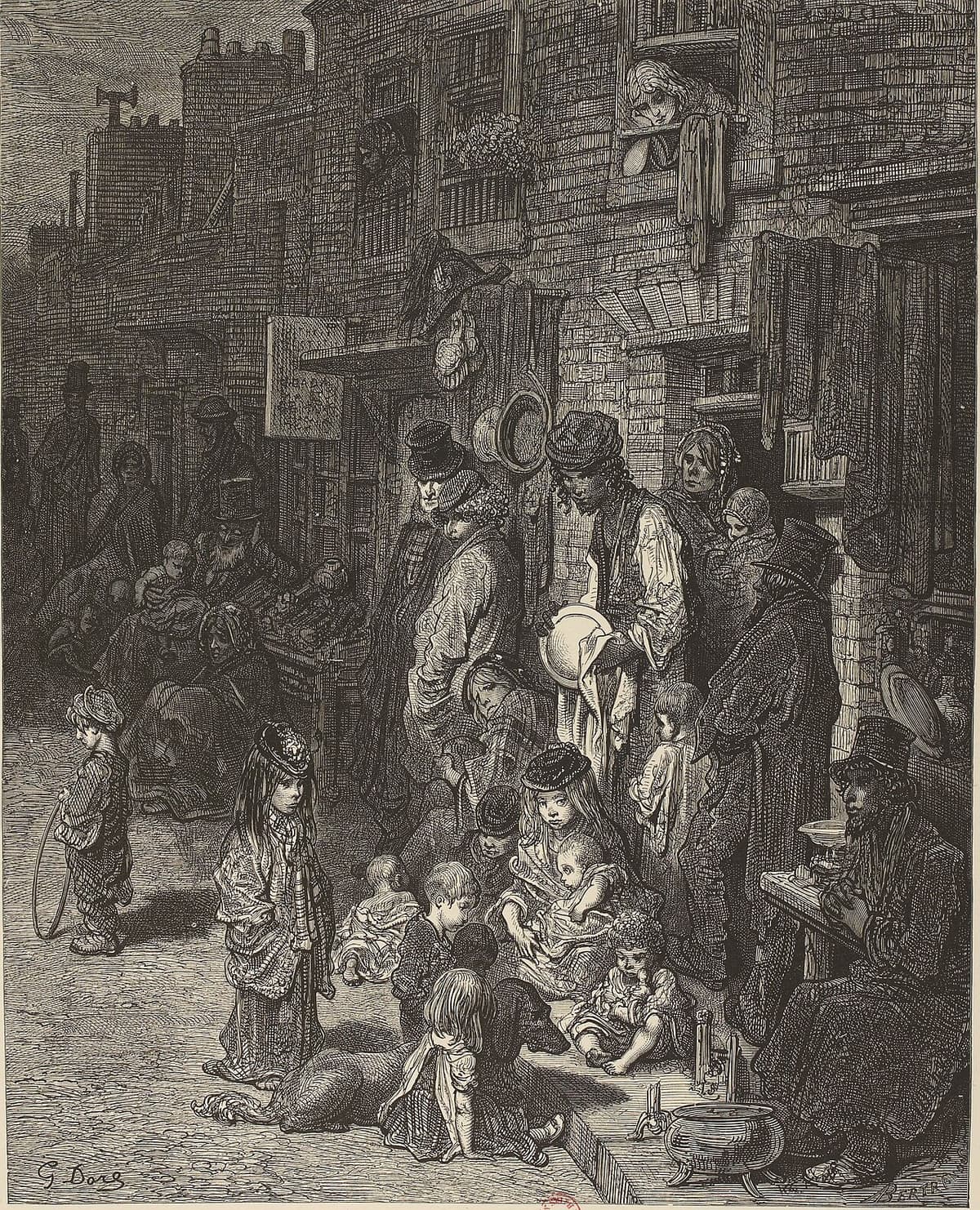
When you read a source like this, list each separate health hazard it mentions. Source K gives you at least four: overcrowding, waste in the streets, no drainage, and poor ventilation. Each one is a route by which disease could spread.
Engels presents these homes as typical, so he is describing a pattern across many towns. That matters. The Industrial Revolution made Britain far richer, yet the workers whose labour produced the wealth often lived like this. The same process that damaged health in the towns also created the money, machines and knowledge that later improved medicine. That double effect is the core of this topic.
9 more sections in this topic
Pick this up in your Library: it holds the whole topic, notes, cheatsheet and questions.