
The tsunami as a secondary hazard
When a powerful earthquake strikes beneath the sea, the shaking is often only the beginning. The sea itself can rise and surge inland as a tsunami. The wave floods coastlines, sweeps away buildings and kills people, including people some distance from where the earthquake happened.
Geographers call the tsunami a secondary effect. It is triggered by an earthquake or a volcanic event rather than being the event itself. Of all the secondary effects, it is the best known, and it is often more destructive than the earthquake that set it off.
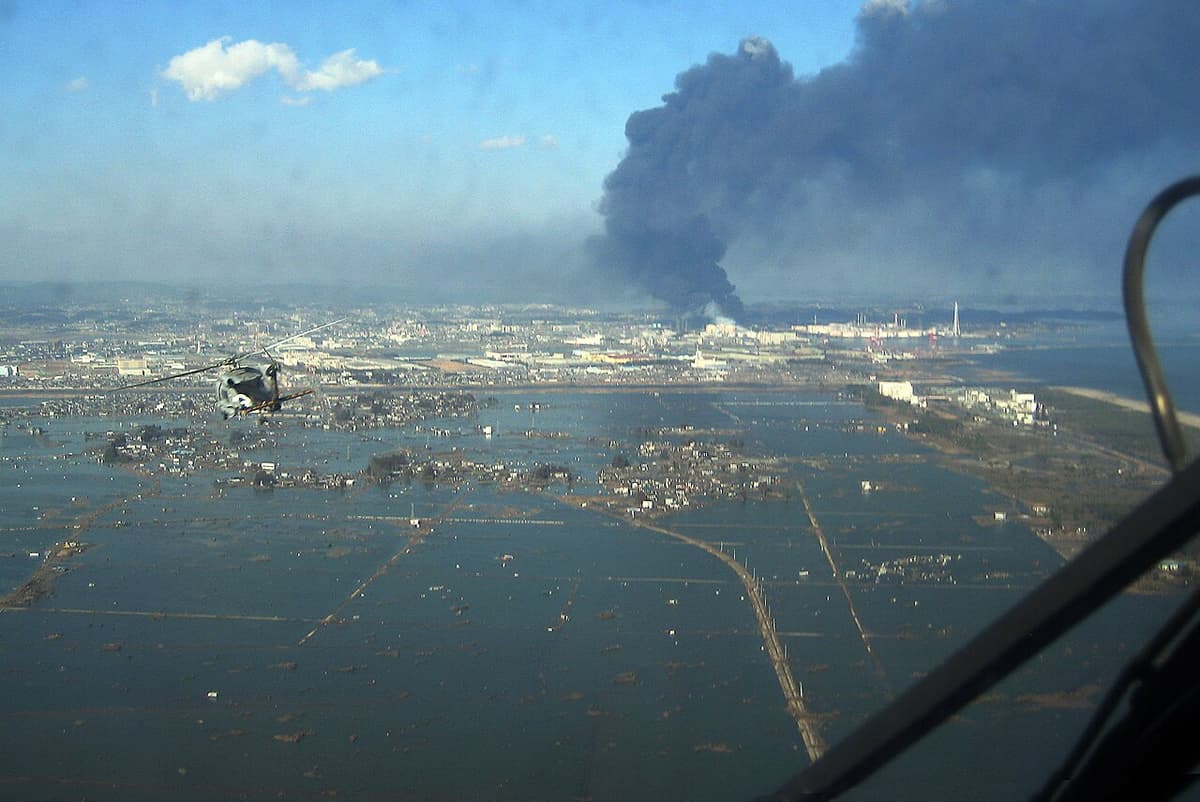
Look at the photo from Japan in 2011. The main damage visible is fire spreading through a port and its industry, a disaster set off by the arrival of the water. One tsunami can start a chain of further harm along a whole coastline. The wider list of secondary effects, such as landslides and lahars, is covered in the lesson on causes and consequences of tectonic activity.
8 more sections in this topic
Pick this up in your Library: it holds the whole topic, notes, cheatsheet and questions.