
How an earthquake happens
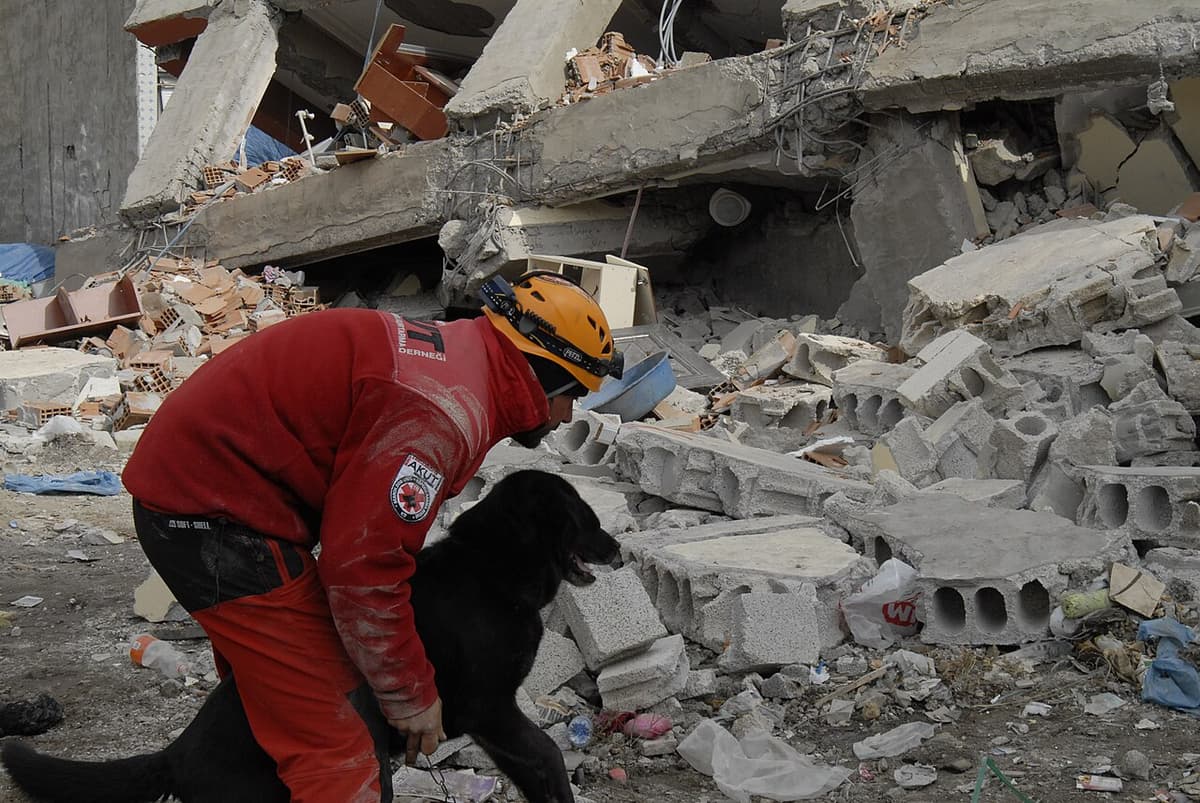
After the 2011 earthquake at Van in Turkey, rescuers and search dogs picked their way over broken concrete looking for survivors. Scenes like this follow many large earthquakes. The number of people who die, though, differs hugely from one event to the next, even when the earthquakes are a similar size. Explaining that difference starts with knowing what happens underground.
Most earthquakes are caused by sudden movements, or slips, along fractures in the crust. These fractures can be in oceanic or continental crust, and plate margins contain many of them, usually grouped together in fault zones.
A fracture in the Earth's crust along which blocks of rock can suddenly slip past each other.
The point inside the crust where built-up stress is released and the earthquake begins.
The point on the Earth's surface directly above the focus.
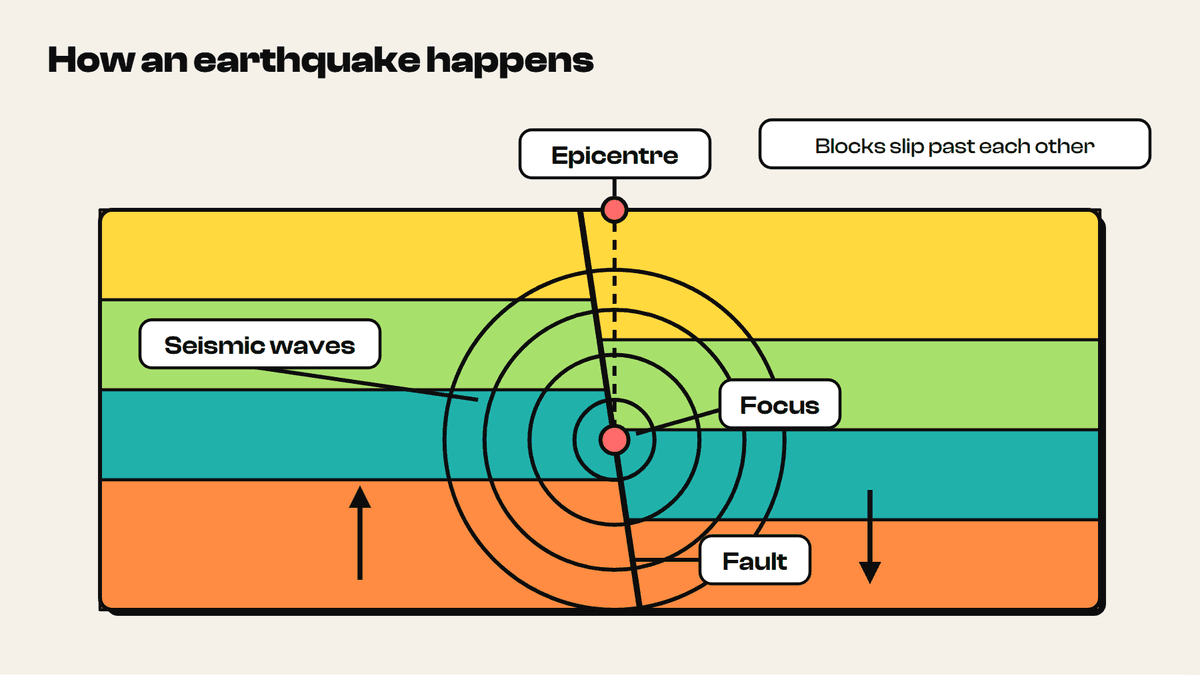
The sequence runs in a clear order.
- Convection currents in the mantle push the plates. Plate margin types and convection are explained in the lesson on causes and consequences of tectonic activity.
- Rock on either side of a fault is pushed in different directions but stays locked together, so stress builds up over time.
- The stress is released suddenly as the rocks slip along the fault.
- The point of release is the focus.
- Shock waves (seismic waves) travel out from the focus in many directions and at different speeds.
- The waves reach the surface, first at the epicentre, and spread out to be picked up by instruments called seismometers.
Two types of seismic wave matter most here.
Primary waves. The fastest seismic waves, so they reach a seismometer first. They are longitudinal (the rock vibrates parallel to the direction the wave travels) and can pass through both solids and liquids.
Secondary waves. Slower waves that arrive after the P-waves. They are transverse (the rock vibrates at right angles to the direction of travel) and can pass through solids only.
Students often swap focus and epicentre. The focus is underground, where the slip happens. The epicentre is on the surface above it. If your answer says the earthquake 'started at the epicentre', it is wrong.
9 more sections in this topic
Pick this up in your Library: it holds the whole topic, notes, cheatsheet and questions.