
Why population location matters
How the world's population grows may be the most important issue facing humanity. People disagree sharply about it. Some argue the planet is already overpopulated and that growth must be slowed, even by radical measures. Others argue that more people can bring more ideas, more workers and more wealth. Every one of these debates starts from the same simpler question, which is where people actually live and why.
People are spread very unevenly across the Earth. Vast areas have almost no inhabitants. The usual reasons are that the climate is too extreme, the soil is too poor, the land is too mountainous or the place is simply too remote.
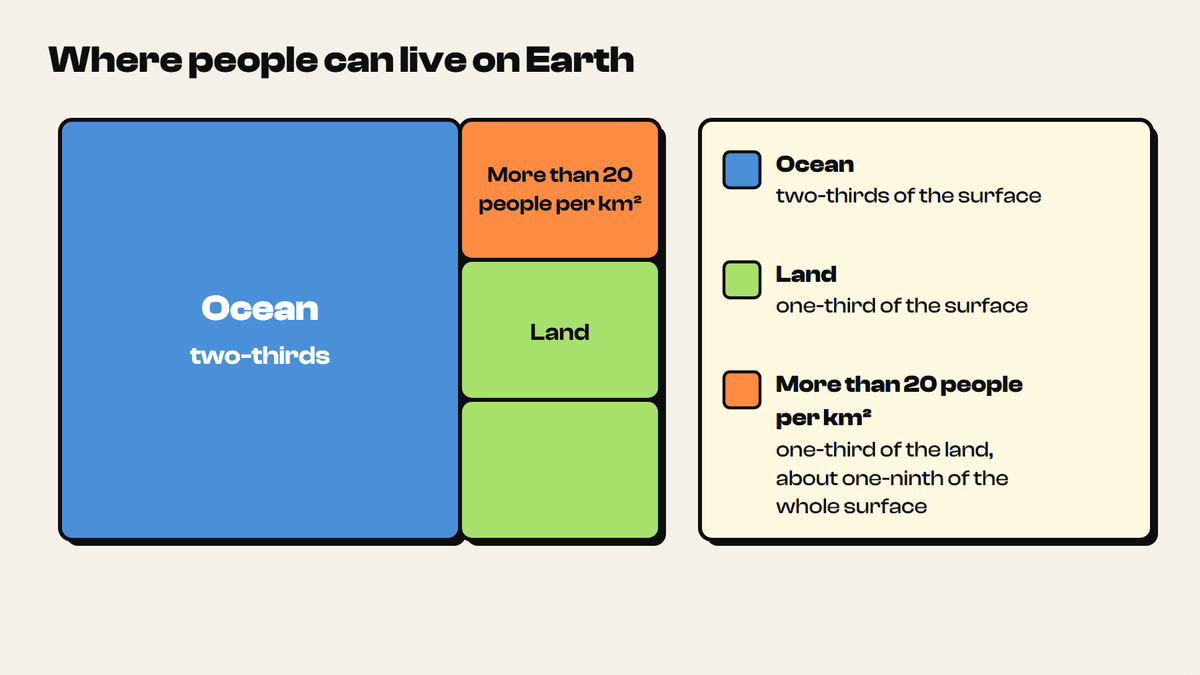
The land statistics show how uneven this is. About one-third of Earth's surface is land, and the rest is ocean. Of that land, only one-third has more than 20 people per square kilometre. Multiply the two fractions together and only about one-ninth of the planet's whole surface has more than 20 people living on each square kilometre.
Before you study any map, list what a person needs to survive in a place, such as fresh water, soil that can grow food and temperatures the body can cope with.
Then list places on Earth where you could not live. Look for what those places share. You will find the same features appear again when you study the physical factors below.
9 more sections in this topic
Pick this up in your Library: it holds the whole topic, notes, cheatsheet and questions.