
Tsunami hazard signs
Along the coast of Thailand, blue roadside signs carry a short message in Thai and English. They read Tsunami Hazard Zone and give one instruction: in case of earthquake, go to high ground or inland.
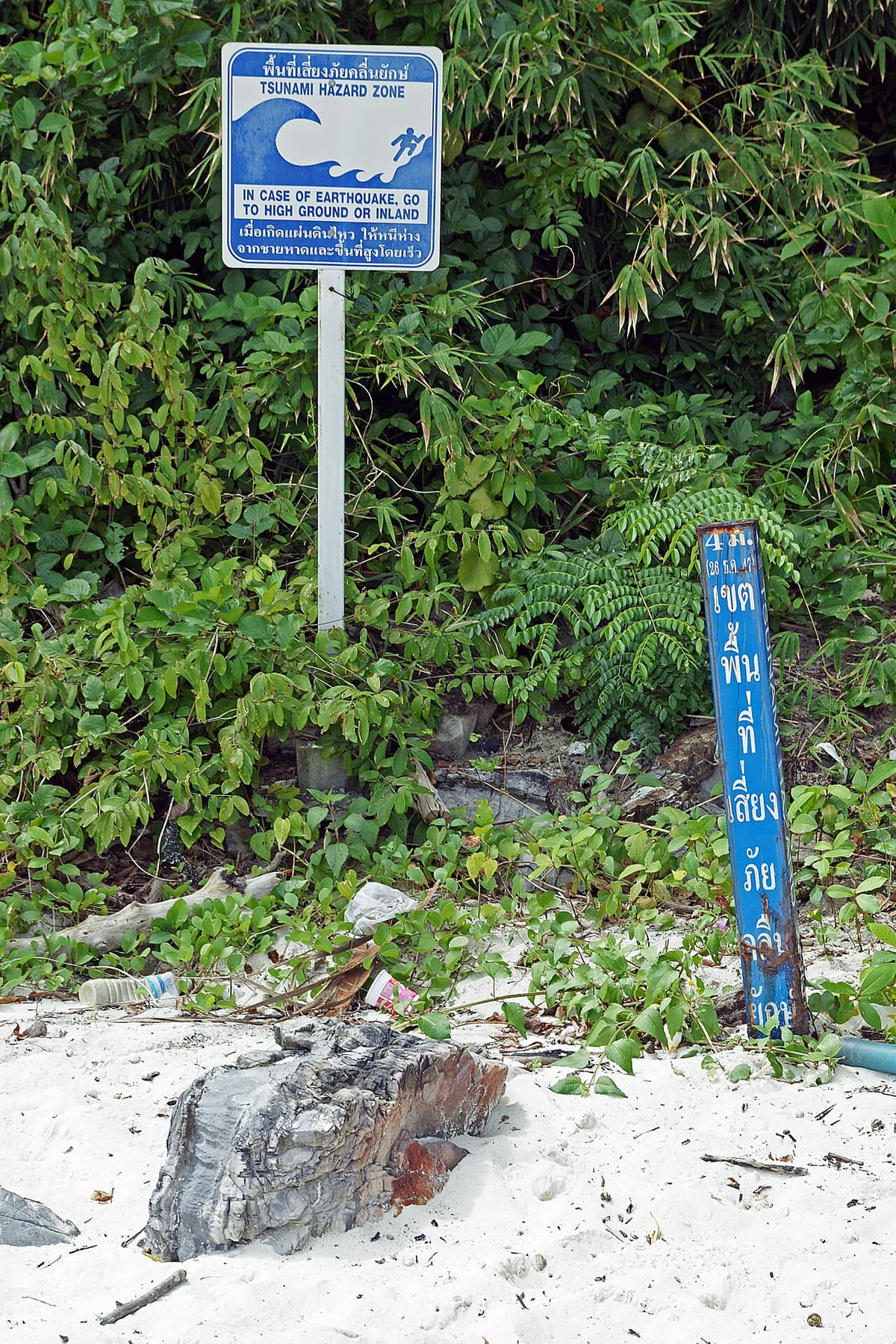
A sign like this costs very little, yet it could decide whether a family on the beach lives or dies. It tells people what the danger is, where it comes from and exactly what to do, before anything has happened. Signs like this went up after the Indian Ocean tsunami of 2004, a disaster in which around 230,000 people died, many of them with no idea what was coming.
Societies cannot stop earthquakes, volcanoes or storms. They can decide how well they prepare for them, how fast they respond, and how carefully they rebuild. Managing a disaster well means reducing the number of deaths and the damage to roads, buildings and services.
A natural event, such as an earthquake, volcanic eruption or extreme storm, that could cause harm to people and property.
A natural hazard that does cause serious harm, such as large numbers of deaths, injuries or destroyed infrastructure.
9 more sections in this topic
Pick this up in your Library: it holds the whole topic, notes, cheatsheet and questions.