
Apartheid and the 1948 election
Chief Lutuli, President of the African National Congress (ANC) from 1952 to 1967, described thirty years of his life as spent knocking patiently and politely at a door that stayed closed and barred. Moderation, he concluded, had brought no results. Those same thirty years had produced more laws restricting Black rights than any period before, until Black South Africans had almost no rights left.
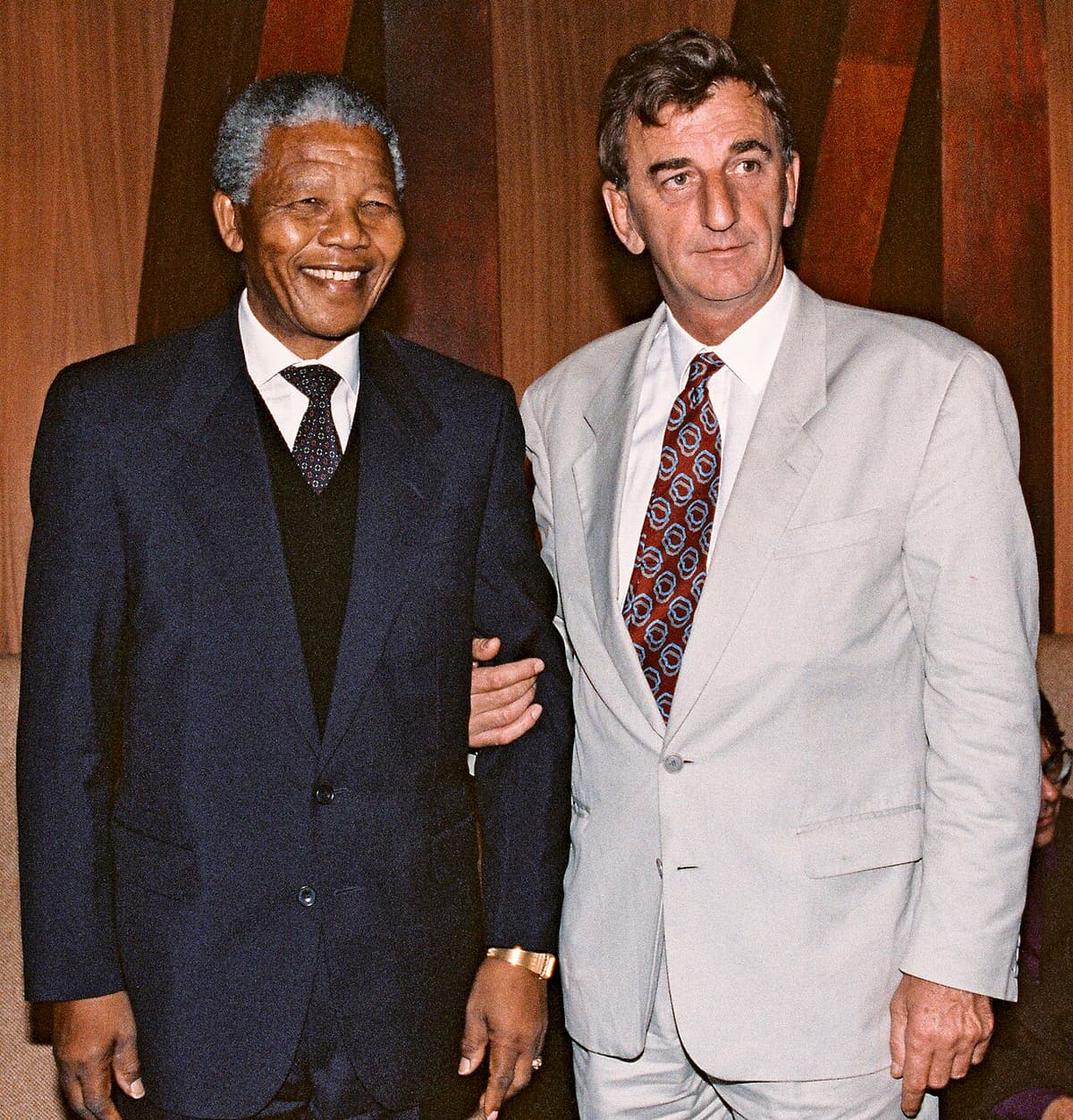
His frustration explains much of what follows. In 1964 Nelson Mandela was sentenced to life imprisonment, convicted of sabotage for trying to overthrow apartheid, the system through which a small white minority ruled South Africa. He was released in 1990, and four years later, in 1994, he became the country's president. That change came from two forces working together: protest inside South Africa and pressure on its government from abroad. The key historical question is how much each one mattered.
South Africa had been part of the British Empire. When the Union of South Africa was formed in 1910 as a self-governing part of the British Empire, white South Africans could vote but almost all Africans and Indians could not. Only in the Cape Province could some Black and Coloured men who met the qualifications vote. Many white South Africans were Afrikaners, descended mainly from Dutch, German and French Huguenot settlers who began arriving at the Dutch Cape Colony in the 17th century.
Black political organisation began early. The South African Native National Congress was founded in 1912 and renamed the African National Congress (ANC) in 1923. In its early decades it tried to build good relations with white South Africans and refused to break the law. This is the moderate approach that Lutuli later judged a failure.
In 1948 the Afrikaner Nationalist Party won an election in which only white people could vote. It had campaigned on a promise of apartheid.
An Afrikaans word meaning 'separateness'. The policy of the Nationalist government from 1948, which separated South Africans by race through a series of laws and kept political power in white hands.
Notice who chose apartheid. The voters who elected the Nationalists were the group that benefited from the policy, and the Black majority had no vote with which to reject it. This fact shapes every later choice about how to resist.
The apartheid laws
Apartheid was built law by law. The laws are easiest to understand when grouped by what they were designed to do. Some served more than one purpose.
Laws that divided the races
- Prohibition of Mixed Marriages Act (1949): made marriage between people of different races illegal.
- Population Registration Act (1950): the foundation of the whole system. Separating people by race required the government to define everyone's race, so every South African was given a racial group. For children of mixed marriages this was close to impossible.
- Group Areas Act (1950): allowed the government to declare areas 'whites only'. Black people were removed from urban areas where they had lived and moved to places the government chose.
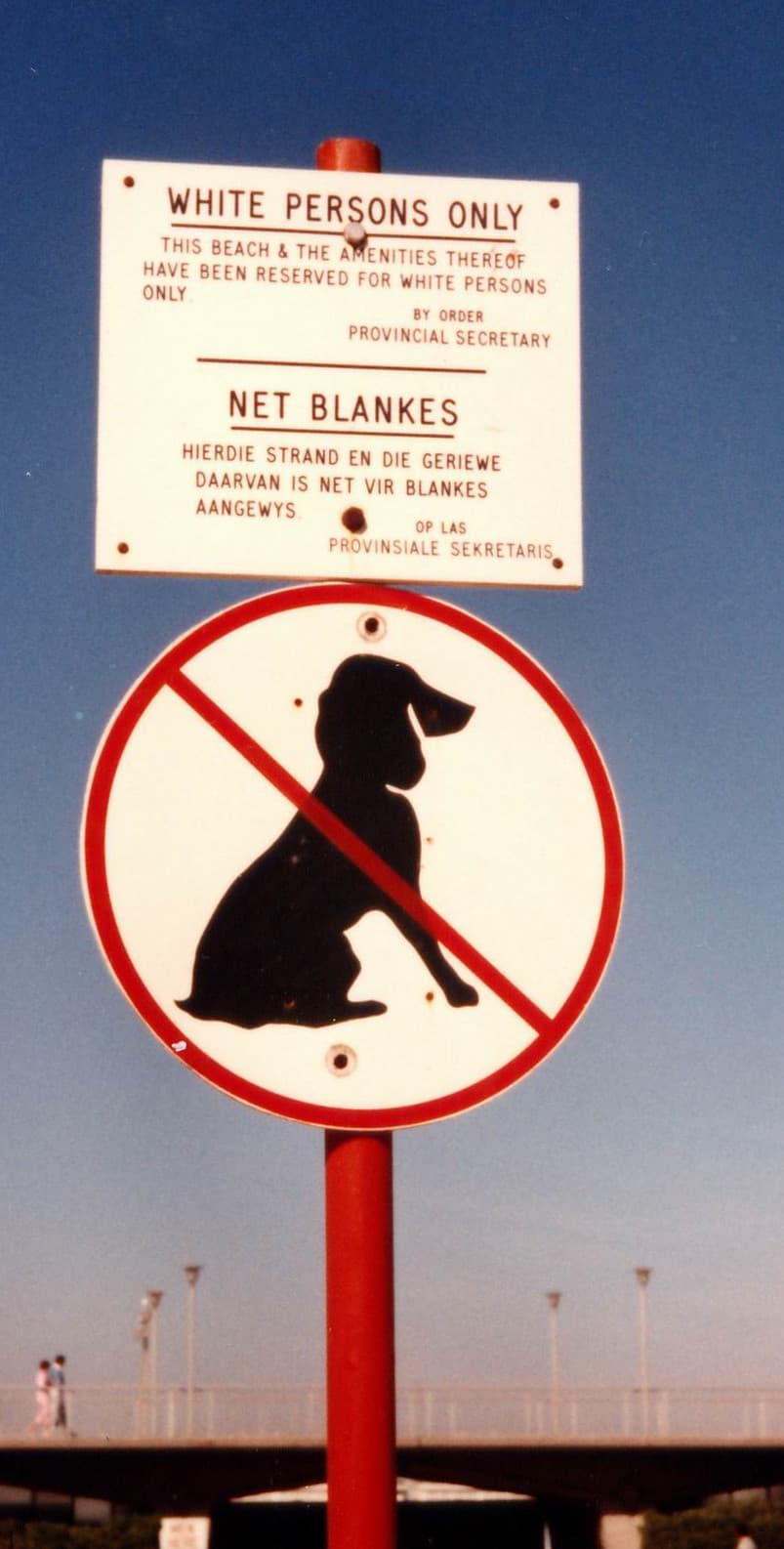
- Separate Amenities Act (1953): marked public services and spaces, such as post offices, trains, buses, parks and beaches, as 'Europeans only' or 'Non-Europeans only'. Facilities for non-Europeans were usually much poorer. The lesson on the US civil rights movement shows how closely this resembled the Jim Crow laws of the American South.
Laws that controlled Black movement
- Native Laws Amendment Act (1952): controlled the movement of Black people into and out of towns and cities.
- Abolition of Passes Act (1952): forced every Black man living in a 'white' area to carry a pass, or reference book, recording his address, employment, fingerprints and racial group. Working in a white area without one was illegal. Renewing a pass could mean queuing for days outside government offices. This gave the state tight control over where Black people lived and worked, and it was deeply hated.
Despite its name, the Abolition of Passes Act did not abolish passes. It forced every Black man in a white area to carry one, so control became stricter.
Laws that stopped Black South Africans challenging white rule
- Suppression of Communism Act (1950): banned communism and also any political group that sought political change or was said to promote disturbance and disorder.
- Bantu Education Act (1953): designed to keep Black children inferior to white children. Black schools taught different courses, in each group's ethnic language rather than English, and gave pupils only enough education for factory and urban work. Pupils were encouraged to think of the homelands as where they belonged.
- Separate Representation of Voters Act (1956): took away the right of the Cape Coloureds (people of mixed race in the Cape area) to vote alongside white voters.
- Bantu Self-government Act (1959): created 'homelands', or Bantustans, where Black people were supposed to have political rights. The government used them to justify excluding Black people from national politics. They also split Black South Africans into tribal groups. The homelands covered only 13 per cent of the land, yet Black people made up 70 per cent of the population.
The Bantu Self-government Act shows how one law could do several jobs.
It divided people by race and by tribe, it pushed Black South Africans towards land far too small for them, and it gave the government an excuse to deny them a vote in the national parliament.
10 more sections in this topic
Pick this up in your Library: it holds the whole topic, notes, cheatsheet and questions.