
Peacemaking after 1918
The First World War killed around 10 million soldiers (estimates range from 9 to 11 million). Including civilians, total deaths are estimated at 15 to 22 million. The war broke the old order in Europe. By its end the regimes and empires of Russia, Turkey, Germany and Austria-Hungary had all collapsed. Winning brought little comfort. Britain and France were economically exhausted, with their industry and farming badly damaged. Because the war had drawn on every resource each country had, almost no one in Europe escaped its effects.
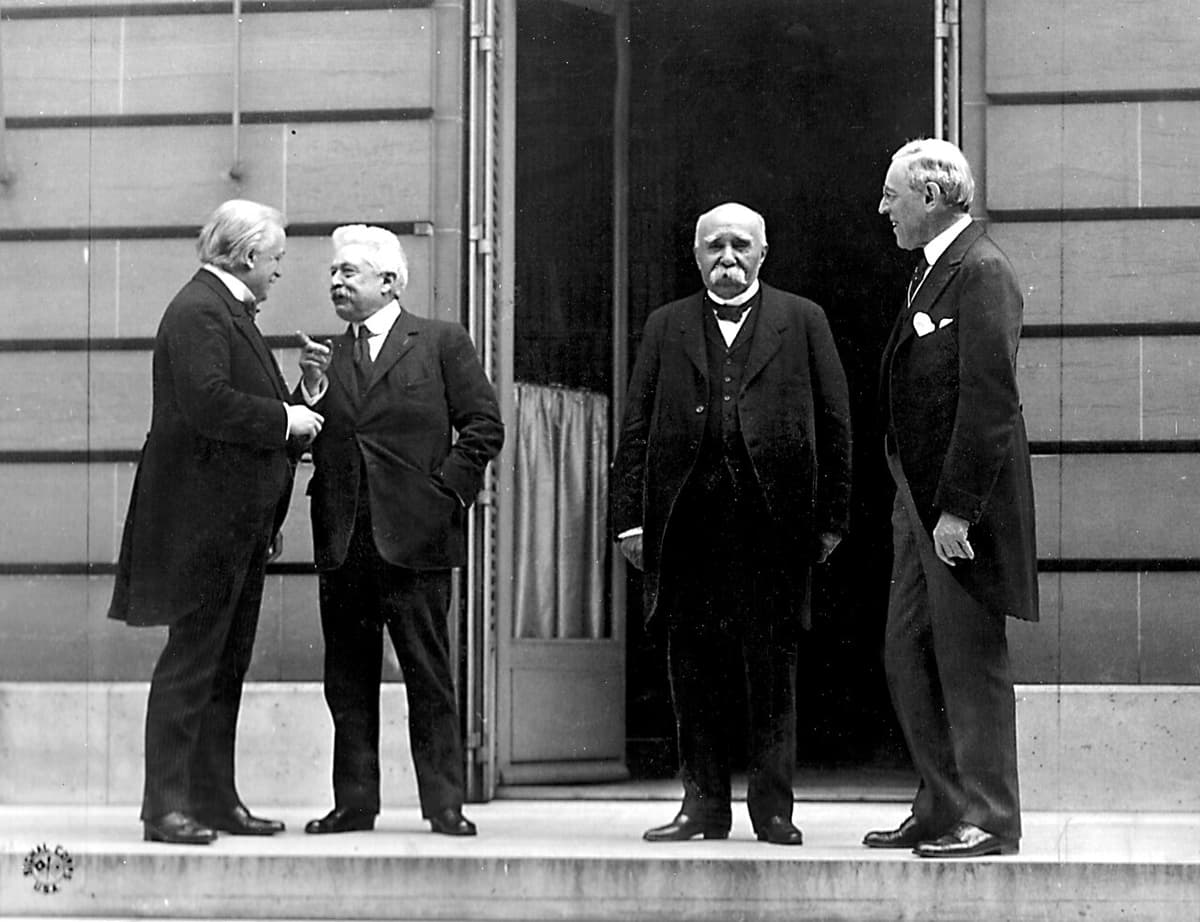
After the armistice of 11 November 1918 (see the lesson on the nature of World War I), in January 1919 the victorious leaders travelled to Paris to draft the treaties that would be imposed on the defeated powers. Three men dominated the talks and became known as the Big Three:
- Woodrow Wilson, President of the USA
- Georges Clemenceau, Prime Minister of France
- David Lloyd George, Prime Minister of Britain
Italy, also on the winning side, was represented by its prime minister Vittorio Emanuele Orlando, though he carried less weight than the other three.
Each defeated country received its own treaty. Austria and Hungary, now independent of each other, were given one each. The most significant settlement was the one with Germany, the Treaty of Versailles.
The task facing the peacemakers was easy to state and very hard to achieve. The USA, Britain, France and Italy had to build a peace that would last. Paris in 1919 shows why that is so difficult. The winners wanted different things, they worked under heavy pressure, and every decision involved a trade-off. The same problems return whenever a major war ends.
9 more sections in this topic
Pick this up in your Library: it holds the whole topic, notes, cheatsheet and questions.