
Photographic evidence of the fighting
Photographs taken at the front are some of the most direct evidence of what the First World War was like for the men who fought it. Before studying the campaigns, look closely at a set of four images and ask what they show, what they suggest, and what they leave unanswered.
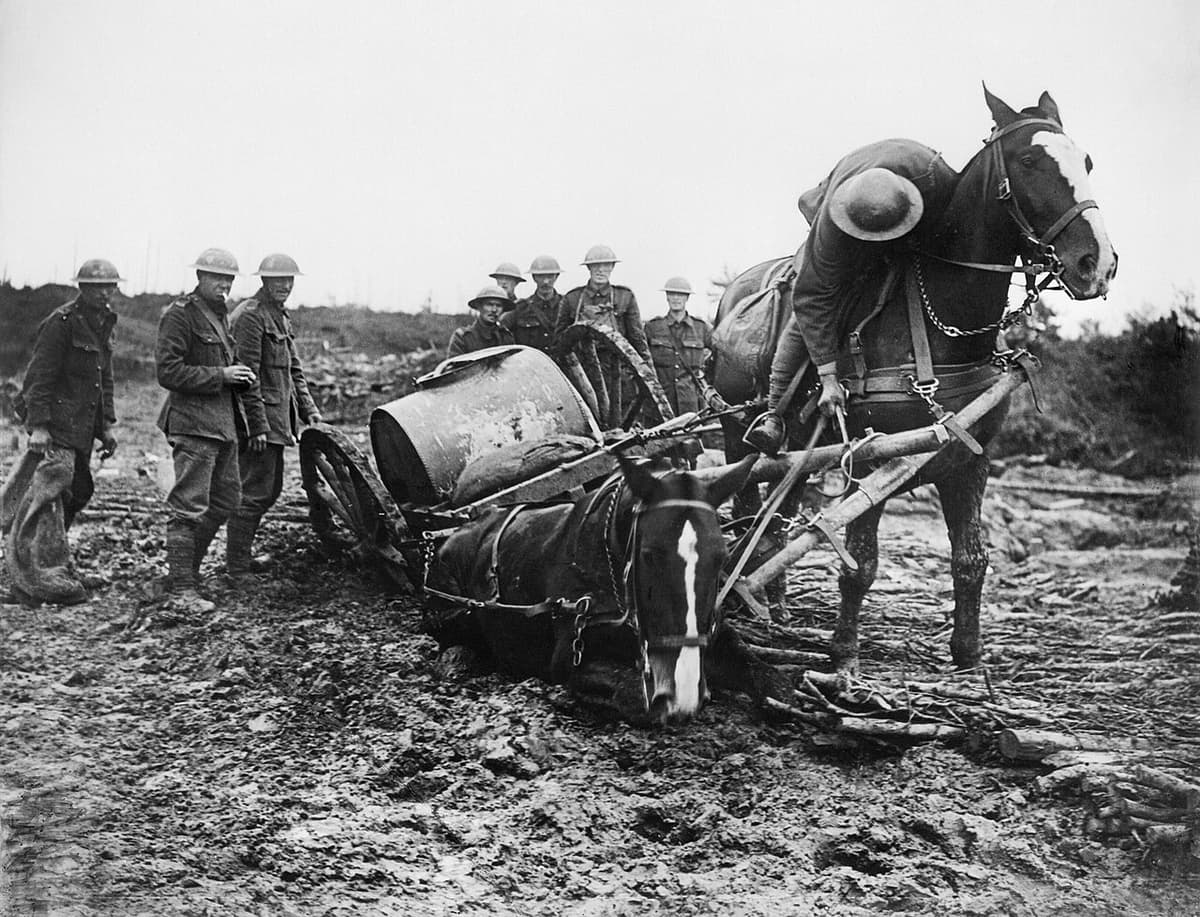
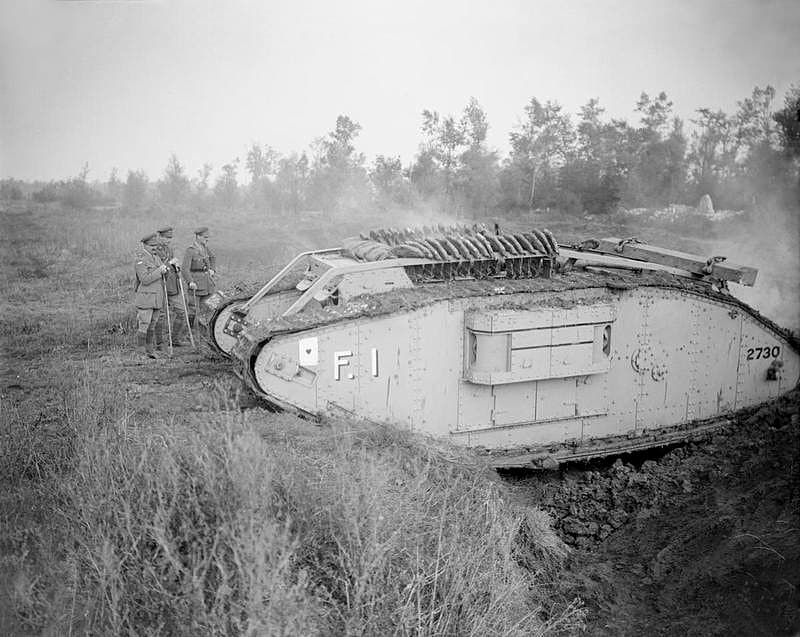
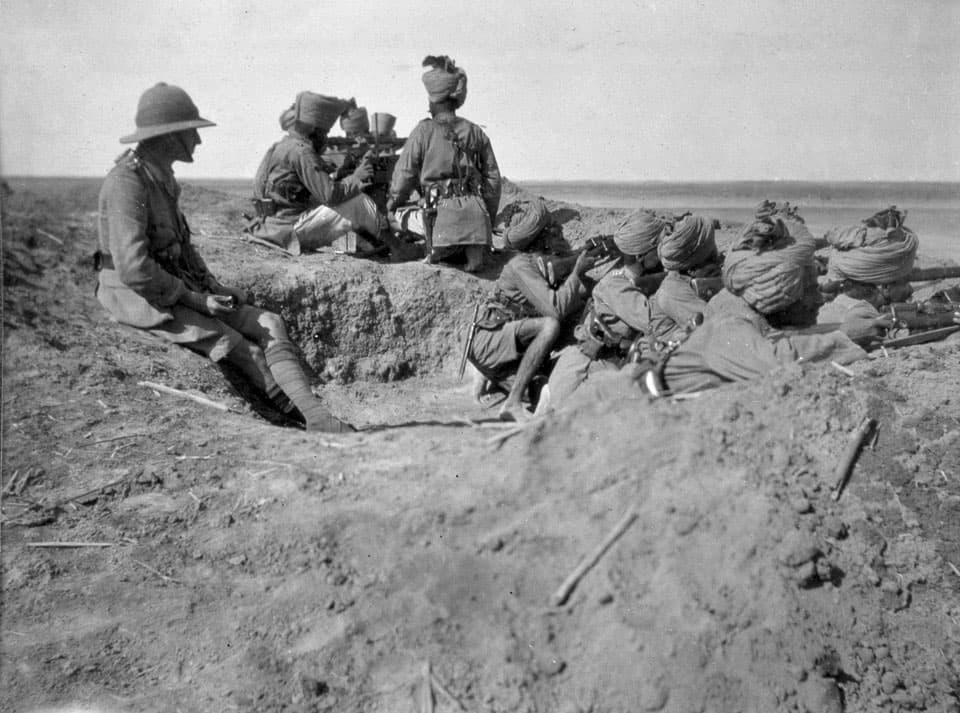
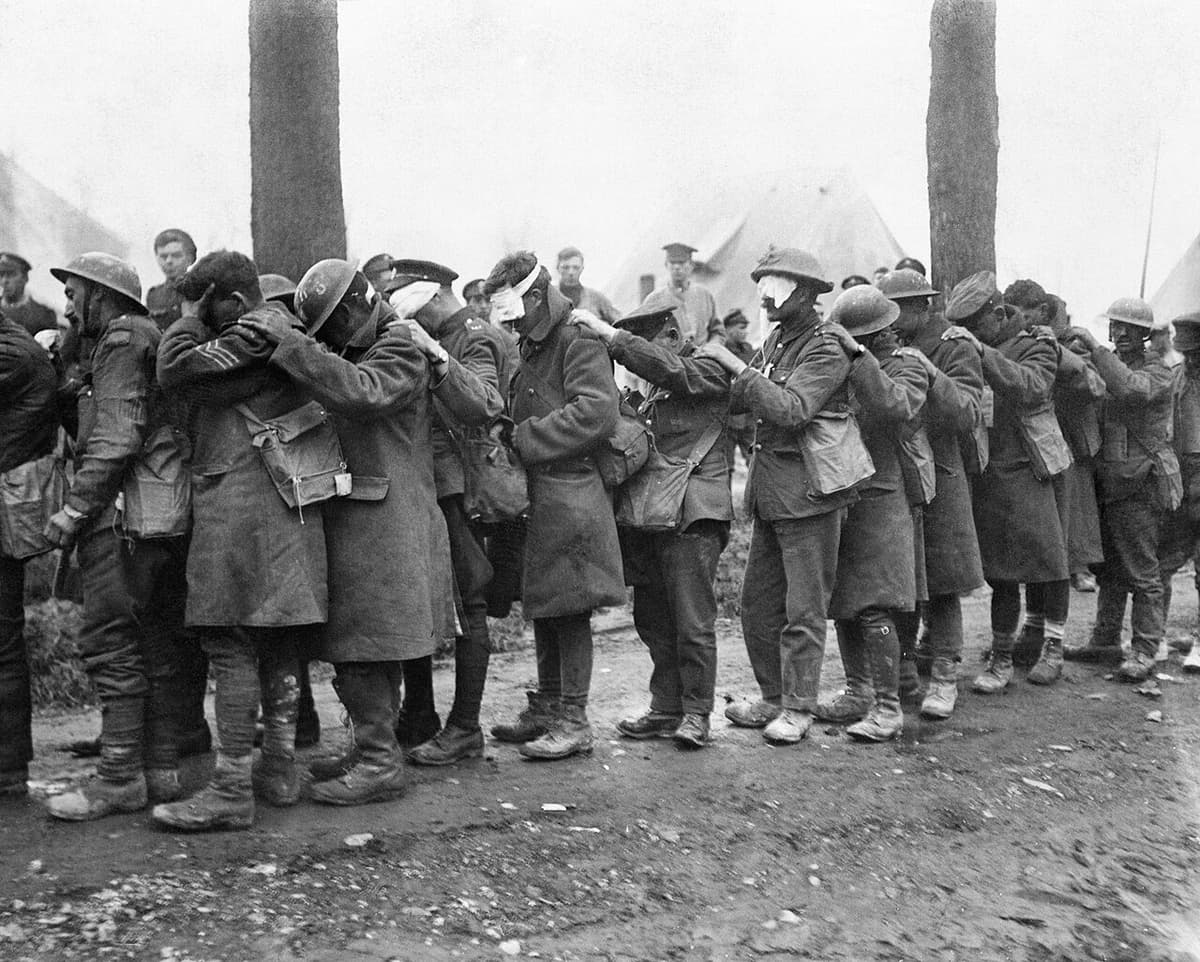
Each picture points to a different feature of the war.
- The ruined landscape shows how artillery and weather could turn farmland into a wasteland of mud, where animals as well as men died.
- The tank shows armies trying new machines to cross trenches and break through defences.
- The riflemen show infantry still doing much of the fighting, often lying low to avoid enemy fire.
- The blinded soldiers show the human cost of new weapons such as poison gas.
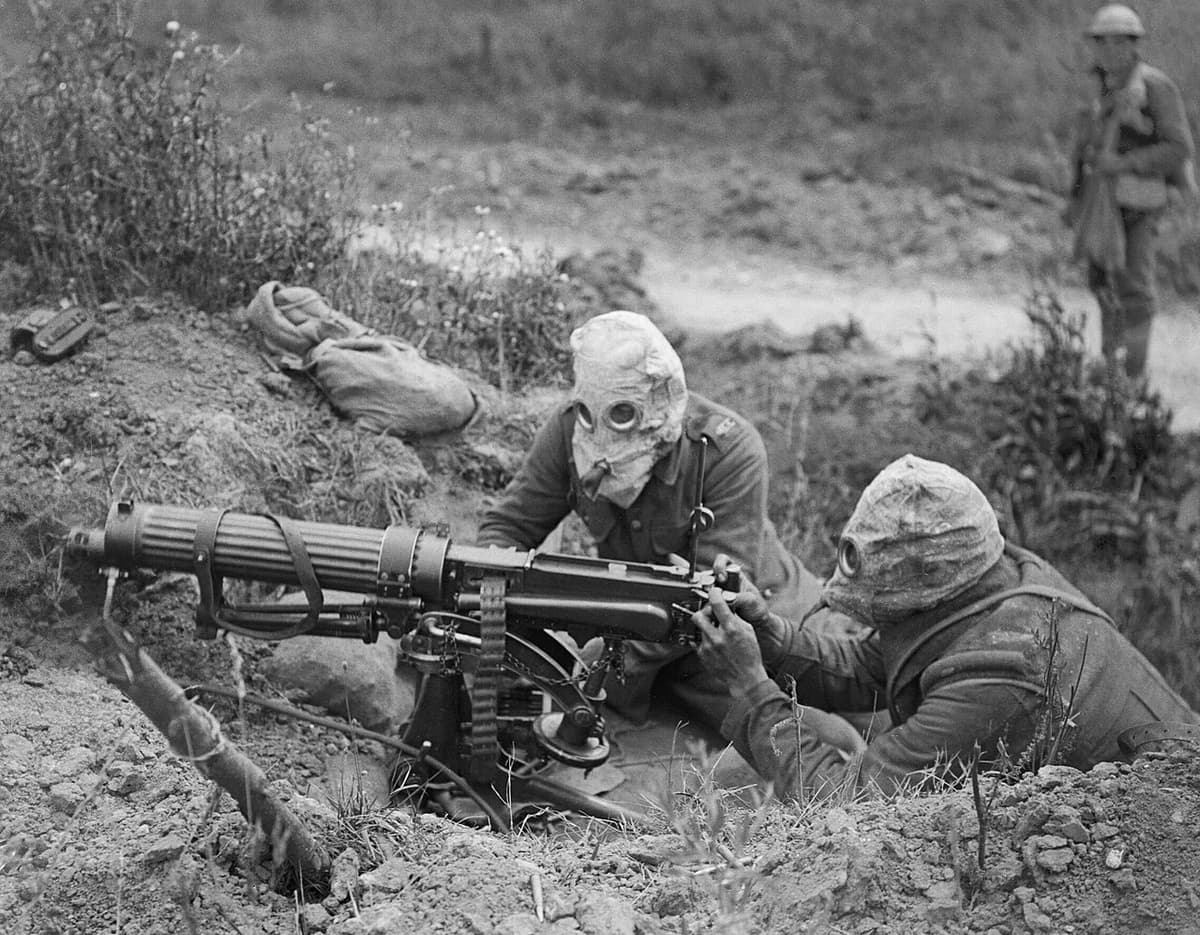
The Vickers crew in gas masks brings two of these ideas together. Machine guns made open ground deadly, and gas meant soldiers had to fight while protecting their lungs and eyes.
When you use a photograph as evidence, separate what you can see (mud, masks, a tank) from what you infer (conditions, tactics, suffering). Then ask what the photographer chose to leave out of the frame.
Collapse of the war plans in the west
Every western power went to war in 1914 expecting a short campaign. Within about three weeks all of their plans had broken down. Germany's Schlieffen Plan aimed to knock France out quickly by sweeping through Belgium, then turn east to face Russia. How that plan was designed belongs to the lesson on the causes of World War I.
A country or group that is taking part in a war.
Several setbacks came one after another.
- Belgian resistance. Belgium chose to fight rather than let German troops pass. Its army held up the German advance for ten days, time Germany could not afford.
- The Battle of Mons. The small British Expeditionary Force met the Germans at Mons and slowed the momentum of the advance.
- Russian speed. Russia attacked Germany far sooner than German planners had expected. German generals moved troops east to meet the threat, which weakened the force that was supposed to swing round to Paris.
- The Battle of the Marne, September 1914. British and French forces stopped the weakened German armies before they reached Paris.
France's own plan also failed. Its invasion of Alsace-Lorraine ran straight into German machine-gun defences and ended with heavy French losses.
The failures were linked. Belgian resistance and the fight at Mons cost Germany time. Russia's early attack cost Germany men in the west. Together these left the German armies too weak to win at the Marne.
Students often say the Schlieffen Plan failed only because Britain joined the war. British troops at Mons and the Marne mattered, but Belgian resistance and the speed of Russia's attack were just as important.
9 more sections in this topic
Pick this up in your Library: it holds the whole topic, notes, cheatsheet and questions.