
Economic growth and development
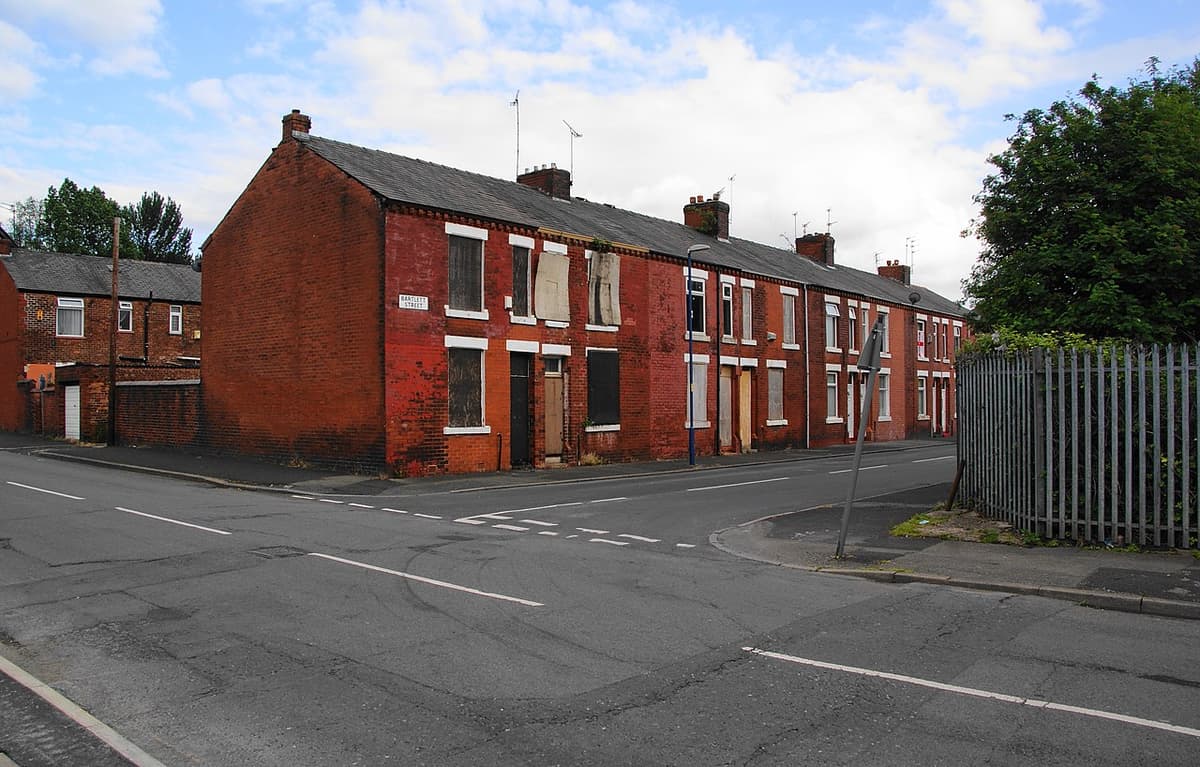
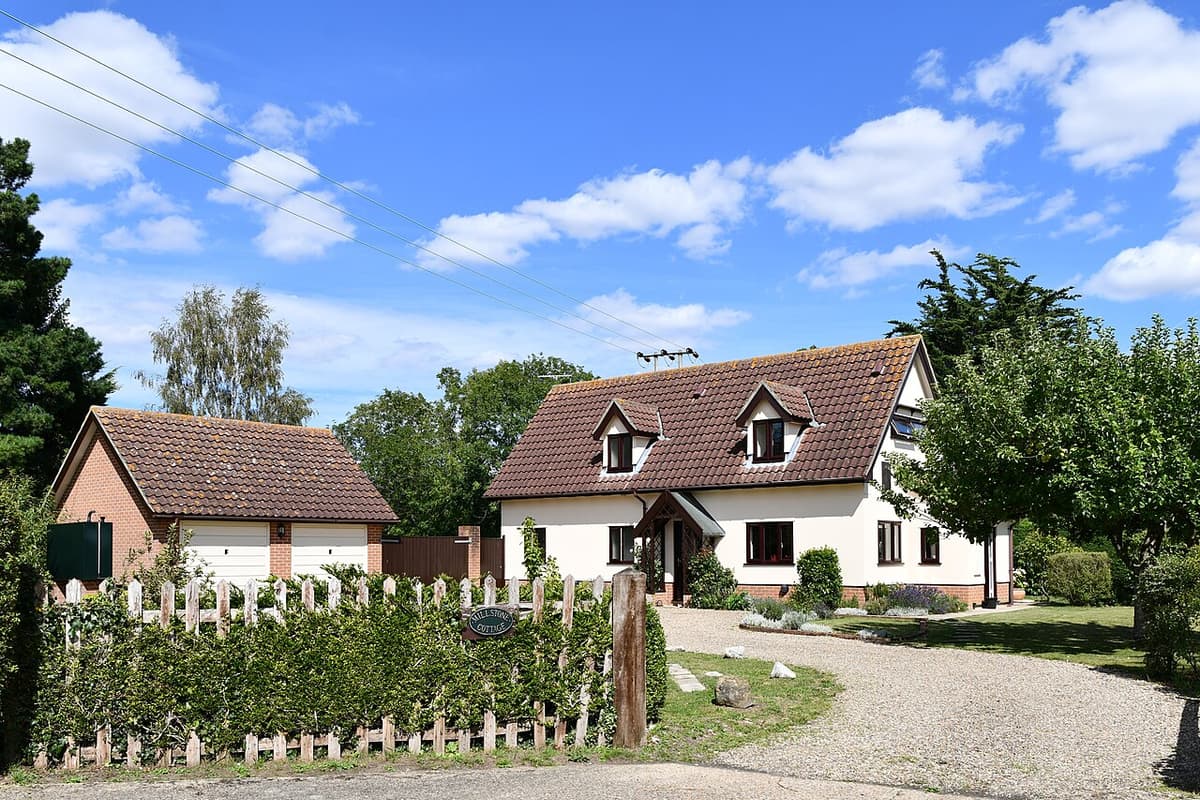
Homes differ enormously between countries, and even between streets in the same city. A boarded-up brick terrace and a large detached house with a double garage and landscaped lawn tell very different stories about the lives of the people inside. So does a compound of round mud-walled huts with thatched roofs on bare, dusty ground. Geographers, economists, historians and sociologists have spent decades asking why quality of life varies so much, and how living standards can be raised where basic needs still go unmet.
Two terms sit at the centre of this question, and they are often confused.
A rise in the economic output of a country, measured by an increase in gross domestic product (GDP).
An improvement in standards of living so that people are no longer blocked from reaching their personal potential. It includes the freedom to access basic goods and services and the freedom to be and do what they want in life.
The second definition comes from the economist Amartya Sen, who described development as a kind of freedom to make choices. Growth is about how much a country produces. Development is about what people are actually able to do with their lives.
From the 1940s, as colonial powers gave up control of their colonies, economic policy in newly independent countries aimed almost entirely at high growth. The assumption was that higher incomes would automatically bring everything else a developed country has. In the twenty-first century some countries still fail to meet basic needs after many years of positive growth, which shows that growth on its own does not guarantee development.
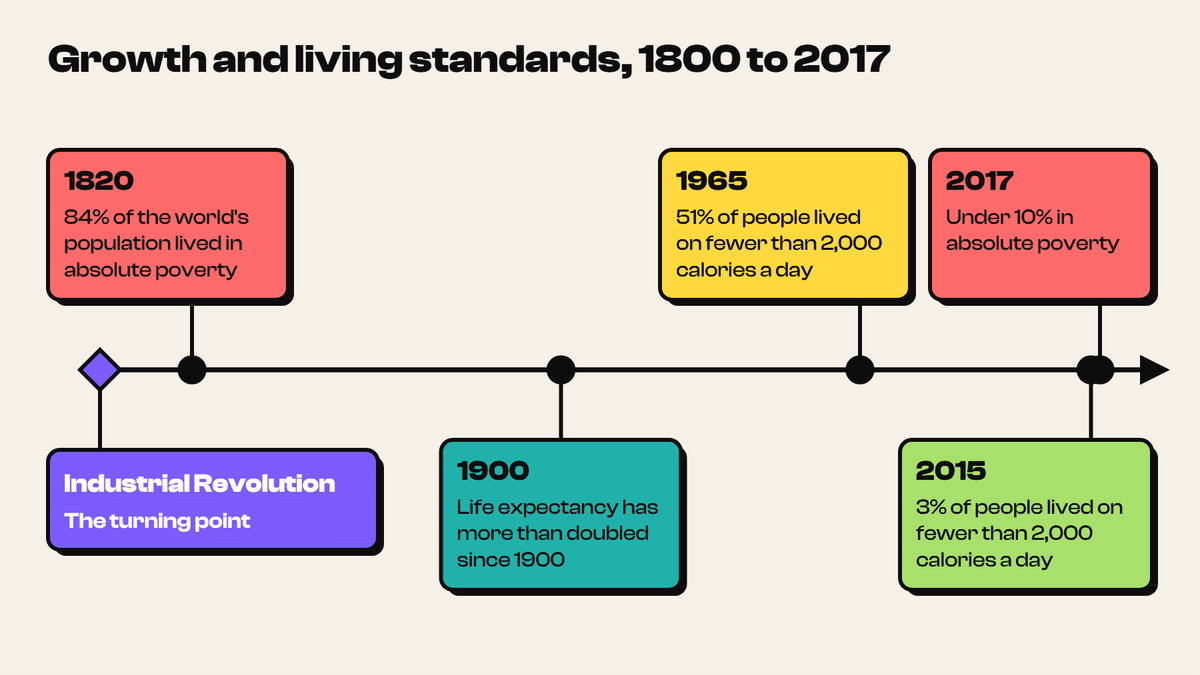
Growth has still achieved a great deal. In Utopia for Realists (2017), Rutger Bregman lists some of the changes since the Industrial Revolution:
- in 1820, 84% of the world's population lived in absolute poverty, and by 2017 the figure was under 10%
- life expectancy has more than doubled since 1900
- in 1965, 51% of people lived on fewer than 2,000 calories a day, compared with 3% in 2015
Before the Industrial Revolution, a person's income stayed roughly the same whether they were born in 1300 or 1600. The jump in productivity and output changed that, which is why governments still set growth as a policy target.
The relentless pursuit of growth also causes problems. These are felt in richer and poorer countries alike, but individuals in less economically developed countries feel them most sharply. One of the biggest is income inequality. Some inequality is built into capitalism, because people have the right to private property and decide how to use what they own. Most people earn wages, while a smaller group earns profits as business owners, and wages usually pay less because workers take on less risk.
Promoting free markets in developing countries can widen this gap further when:
- control of the country is held by certain ethnic groups and not others
- access to education and to credit is poor and unequal
- infrastructure is poorly developed
- institutions are unsupportive, for example through corruption or heavy bureaucracy
The French economist Thomas Piketty adds a sharper argument. People who are wealthy from assets such as property, shares or business profits find it far easier to grow their wealth than people living on a salary. Historically the rate of return on capital (r) has been much higher than the rate of economic growth (g) that drives rising incomes. When r > g, owners of capital pull further ahead of wage earners, so wealth inequality becomes much worse than income inequality.
Treating a rising GDP as proof that a country is developing. GDP can climb while most people still lack schooling, health care or clean water, especially if the extra income goes to a small group.
9 more sections in this topic
Pick this up in your Library: it holds the whole topic, notes, cheatsheet and questions.