
Reflection or change
Every artwork, song and fashion is made by people living at a particular time, so it carries traces of that time. Historians rely on this. A painting can show what a society valued, who paid for art and what techniques artists had. The harder question is whether culture ever pushes society somewhere new, or whether it only holds up a mirror to it.
A movement reflects society when it expresses ideas, values or conditions that already exist, often among the people who make it and pay for it.
A movement drives change when it alters what people believe, how they live, or what laws and governments do, beyond what would have happened without it.
Three kinds of question guide the inquiry.
- Factual: which social, cultural and artistic movements existed, and what caused them?
- Conceptual: how does the time period shape artists and what they make?
- Debatable: how far can such movements change society?
Two case studies sit at opposite ends of the argument. Renaissance art in Italy is a strong case for reflection, because it expressed ideas held by an educated and wealthy few. The 1960s youth counter-culture in the USA and Europe is the strongest case for change, because its members openly set out to overturn the way society worked.
Keep a two-column list headed 'reflected' and 'changed'. Place each example in a column with a reason. A judgement backed by sorted evidence is far easier to justify than one built from memory at the end.
Lifelike art in the Renaissance
Medieval painters were not trying to copy what the eye sees. Their figures were often flat and out of proportion, set against patterned or gold backgrounds. Renaissance artists set themselves a new challenge. They wanted a flat, two-dimensional surface to look like a solid, three-dimensional world.
Showing depth and distance on a flat surface so that objects appear to sit in real space.
The point in a picture where lines running away from the viewer appear to meet. Using it made perspective far more convincing.
The use of light and shade to make figures and objects look rounded and lifelike.
A further concern was the natural world. Artists painted landscapes of many kinds, with mountains, water, trees and open sky, where earlier art had often used decorative patterns.
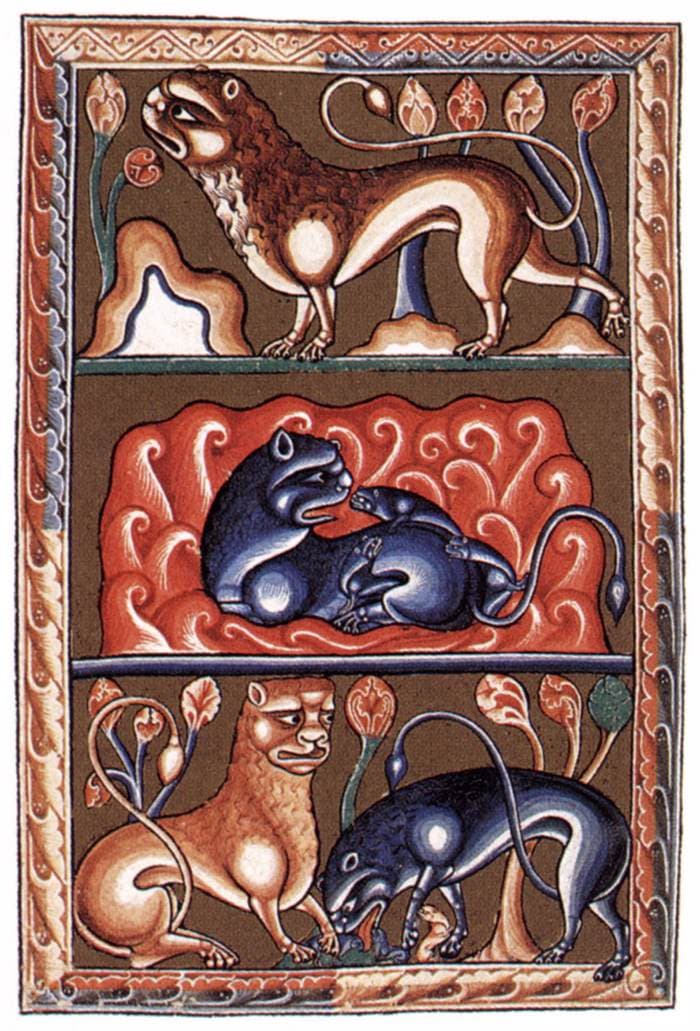
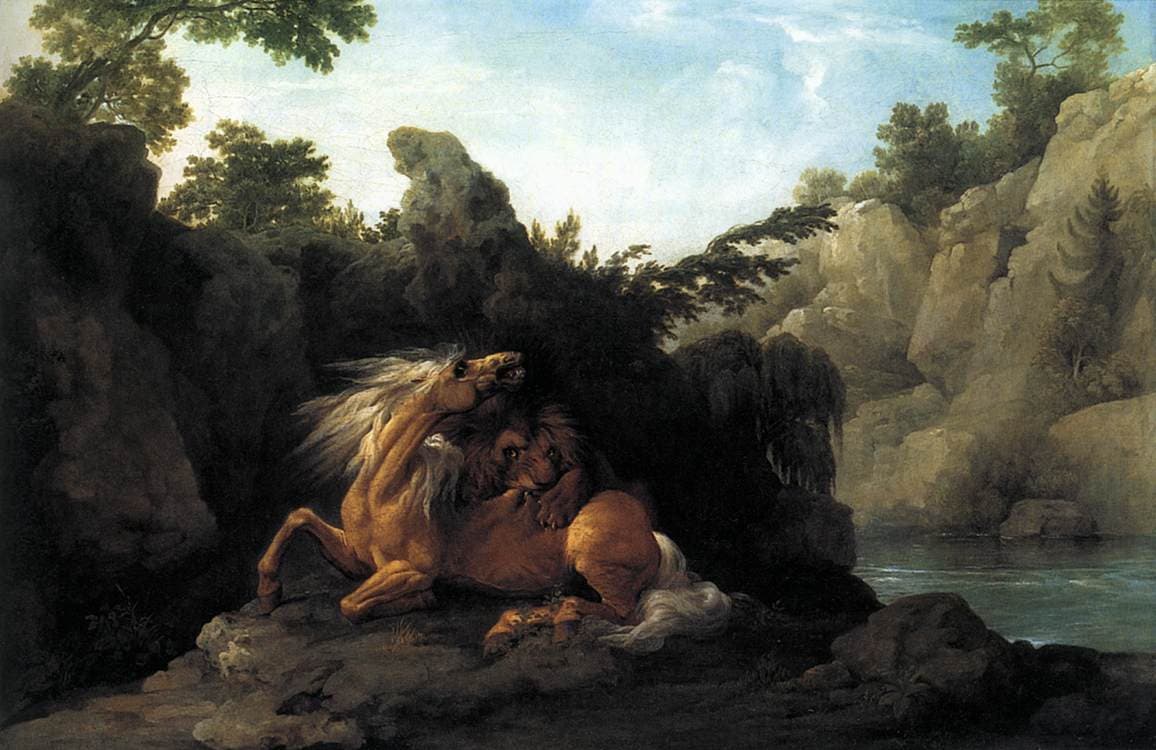
Compare the two lions. The medieval one works as a symbol. Its tree is stylised, its background is a pattern and nothing casts a shadow. The Renaissance lion lies on real grass, its body is shaped by light and shade, and a landscape opens out behind it. Only the second uses perspective.
These techniques mirrored humanism, the Renaissance interest in what it means to be human, which encouraged close study of the body and of the world people actually lived in. Where humanist ideas came from, including Petrarch and the printing press, belongs to the lesson on the Scientific Revolution.
Skill in realistic drawing also had a practical result. Artists and architects who could draw complex forms accurately could design and build complex structures. Keep this in mind for the judgement, because it is one place where Renaissance art did more than decorate.
9 more sections in this topic
Pick this up in your Library: it holds the whole topic, notes, cheatsheet and questions.