
The appeal of radical ideologies
In the 20th century, ideas that had been argued over in books and meetings were turned into governments and mass movements. Communists, fascists and Nazis built whole states around their beliefs. Feminists built campaigns that changed laws in country after country. Each ideology promised a better society, and millions of people followed them, sometimes at enormous cost.
A connected set of ideas about how society, the economy and government should be organised, which its followers try to put into practice.
A debatable question runs through this whole topic: why do people follow radical ideologies? Circumstances explain a great deal. The radical movements of the early 20th century grew out of crisis.
- In Russia, the First World War brought severe food and fuel shortages and a huge death toll. This helped bring down the Tsar in 1917.
- In Italy, fascism emerged as a movement in the years after the First World War.
- In Germany, defeat in the war left many people bitter. Later the Great Depression wrecked the economy, politics became polarised and the liberal government could not cope.
In conditions like these, ideologies offering strong leadership, national pride, jobs or a fairer share of wealth could win support quickly. Hitler, for example, promised German workers better living standards and an end to mass unemployment and insecurity.

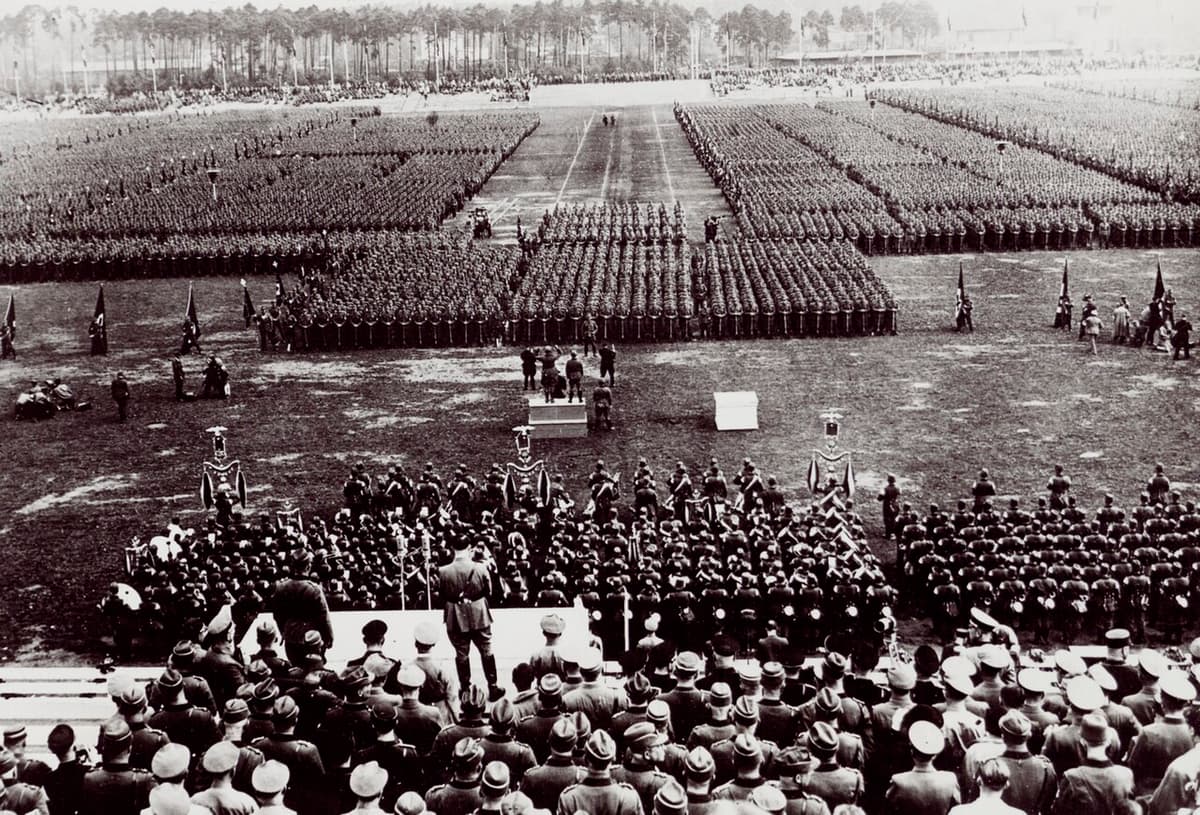
Once in power, several of these movements demanded complete control. In a speech to the Nazi party at Nuremberg in September 1934, Hitler described a party of 'truth' that would make no compromises and would hold 'total political control over Germany'.
A state run by a single party that allows no opposition and tries to control every part of people's lives.
For each ideology, keep track of three things: what it believed, the methods its followers used, and what it meant for ordinary people, especially women. These three questions make comparison much easier later on.
9 more sections in this topic
Pick this up in your Library: it holds the whole topic, notes, cheatsheet and questions.