
Ideas and innovations
Many of the great turning points in human history began as something you cannot see or hold. A magazine list of world-changing ideas points out how odd this is. An idea has no weight and no physical substance, yet it can change the direction of history. The French writer Victor Hugo made the same point when he said that an army can be resisted, but an invasion of ideas cannot.
A new way of looking at something, a solution to an existing problem, or a new way of doing things.
Sometimes used to mean the same as an idea. It can also mean a new product that comes out of an idea, such as the wheel.
Ancient civilisations produced many breakthroughs that still shape our lives, including early alphabets, law codes, weapons, the wheel and the seven-day week. Each has changed over time, but the moment it was first created had effects that spread across the world.
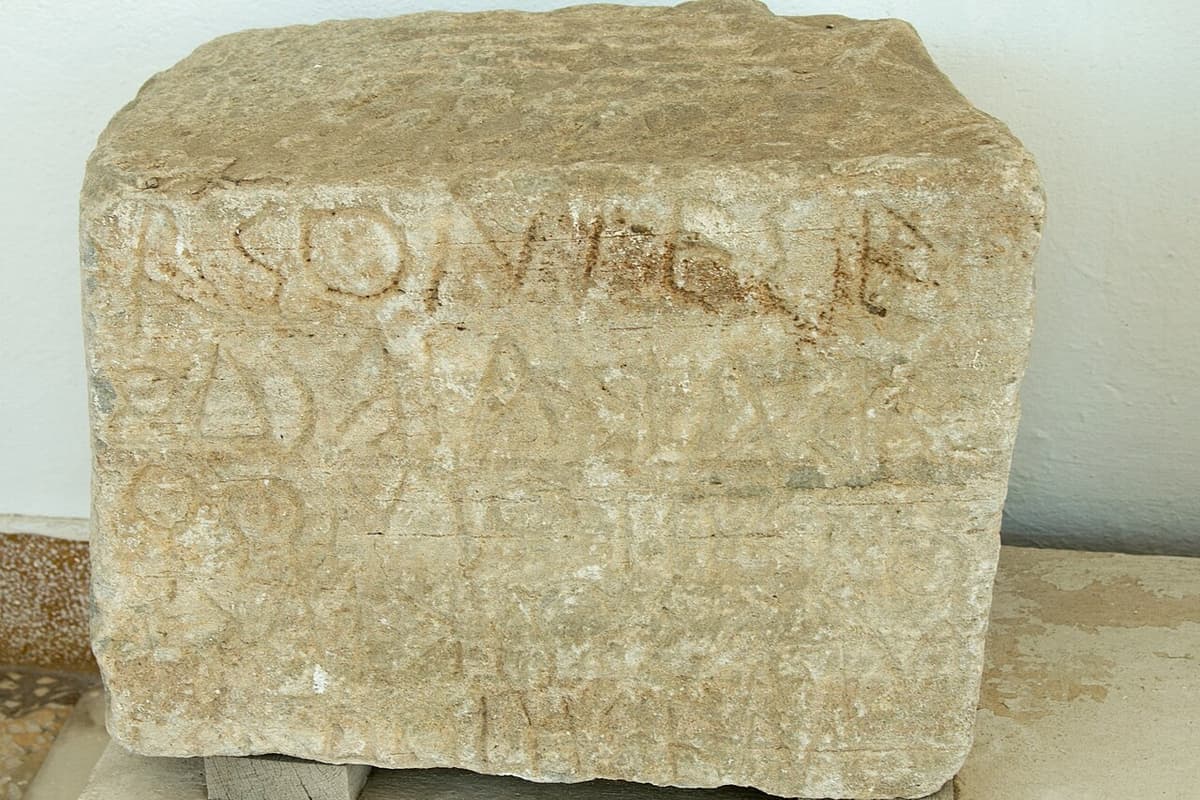
The Ancient Greek alphabet is a good example of an idea. The wheel is a good example of an innovation, a new product whose invention caused lasting change.
It is often hard to say exactly where an idea or innovation began. The wheel shows why.
- Mesopotamia has very early evidence of wheeled vehicles, in pictures on clay tablets from Uruk (about 3500 to 3350 BC).
- Some of the earliest pictures of wheeled carts come from Poland and other parts of the Eurasian steppes.
- Linguistic evidence (the history of the words people used) also points to the Eurasian steppes.
Historians therefore disagree. One view is that the wheel was so hard to invent that it probably happened only once and then spread outwards from a single place. Another view is that people in different regions invented it independently at roughly the same time.
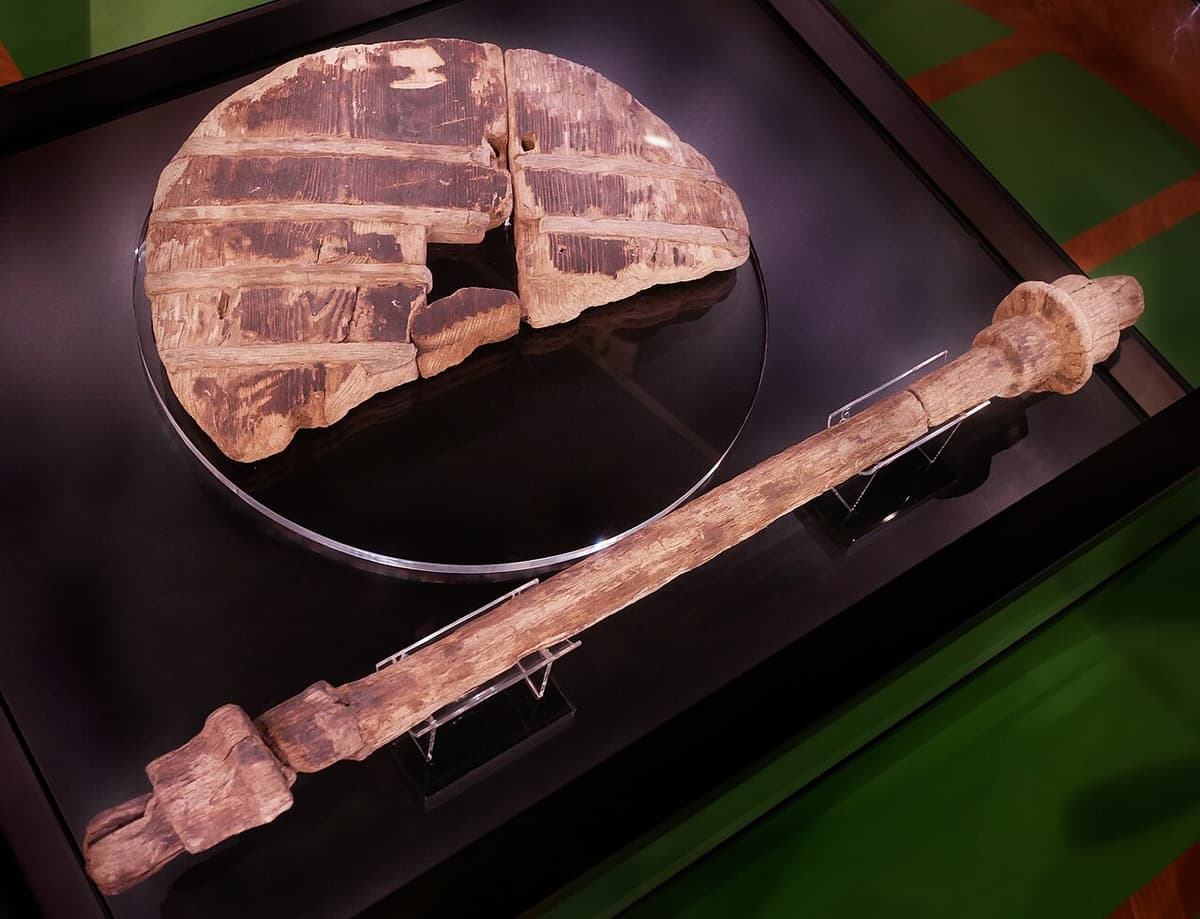
The Ljubljana Marshes Wheel was found in 2002 in the Ljubljana Marshes, about 20 km south of Ljubljana, the capital of Slovenia.
Made of wooden planks held together by crosspieces, it has been dated to 3150 BC and is the oldest wooden wheel yet discovered.
Finds like this show that early wheels existed well outside Mesopotamia, which is one reason the question of origin stays open.
The oldest surviving object is only the oldest one that happened to survive and be found. Different kinds of evidence (objects, pictures, language) can point in different directions, so any claim about where an idea started has to be held with some caution.
The Renaissance and the Italian city states
The ideas behind the Scientific Revolution grew out of an earlier period of change in Europe.
From the word for rebirth. The name for the period from roughly 1400 to 1600 (historians give slightly different dates), when the learning of Ancient Greece and Rome was rediscovered.
The Italian writer Giorgio Vasari first used the word rinascita (rebirth) in 1550. The French historian Jules Michelet made 'Renaissance' the name of a whole historical period in 1855, and the Swiss historian Jacob Burckhardt defined and popularised the idea in 1860, seeing the period as a time when classical learning came back to life. The Renaissance followed the Middle Ages and was gradually replaced by the Enlightenment in the 17th and 18th centuries. Its rediscovery of ancient learning reached into the arts, education and architecture, and eventually into how people understood the solar system.
The Renaissance mainly began in Italy. Italy was not one country at the time. It was divided into many city states, each running its own affairs and often at war with its neighbours. A 40-year stretch of peace in the 15th century gave many of them the chance to grow rich and confident. Among them were Rome, Milan, Florence, Venice, Pisa and Genoa.
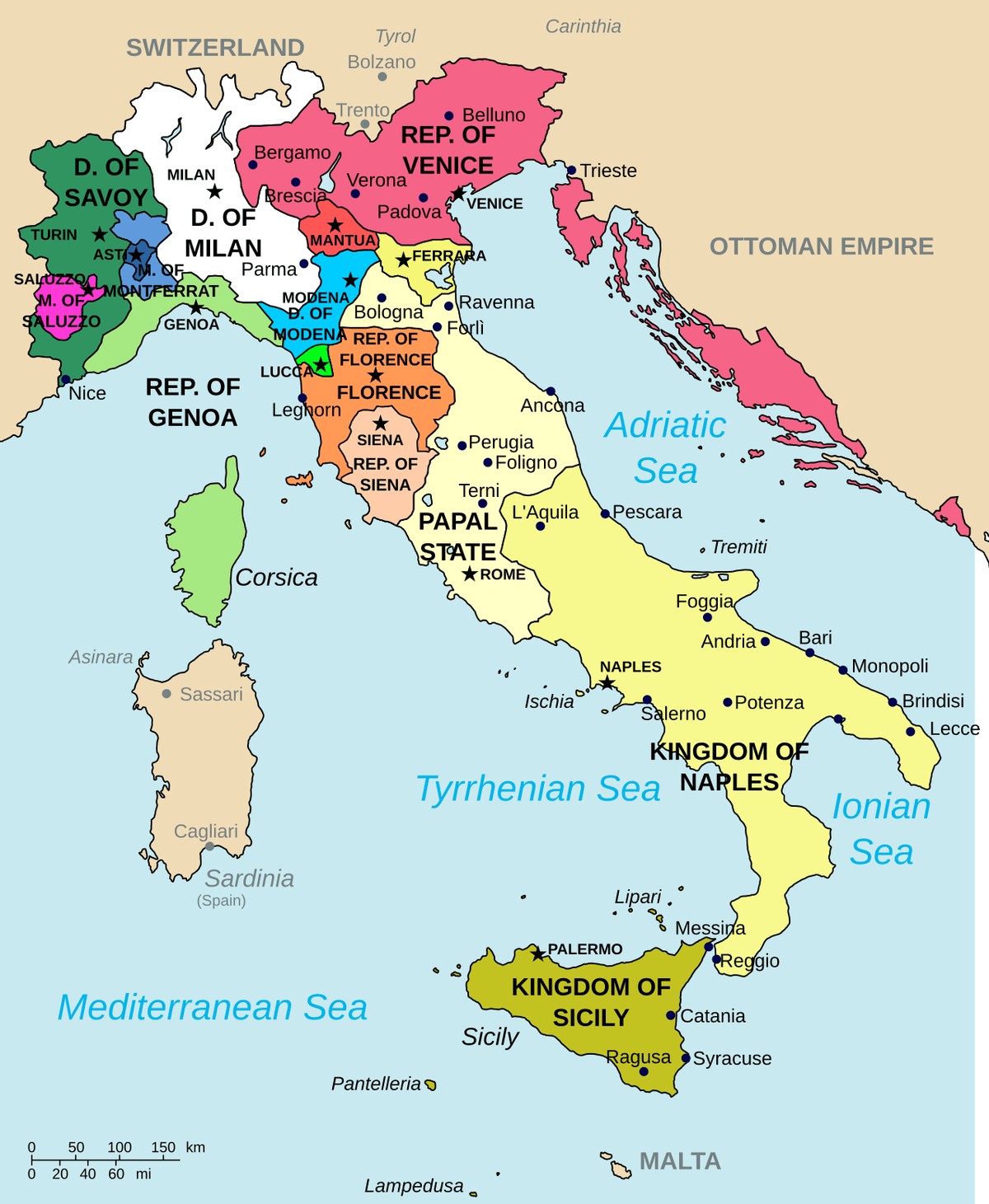
Each state had its own government and its own character. Rome was ruled by the papacy (the Pope). Venice was built on a lagoon and known for its waterways.
Florence mattered most to the start of the Renaissance. It was governed by the powerful Medici family and was extremely wealthy. The Medici spent large sums on the arts, and Florence became the setting for much of the work of figures such as Leonardo Da Vinci and Michelangelo.
Wealth is the link in the chain here. The great wealth of city states such as Florence paid for books, artists and scholars.
Peace meant that money could be spent on learning rather than on war. Without both, new thinking would have had far less room to grow.
9 more sections in this topic
Pick this up in your Library: it holds the whole topic, notes, cheatsheet and questions.