
Imperial ways of seeing
In 1762 visitors to Vauxhall Gardens in London could look at a large painting of Robert Clive greeting Mir Jafar after the Battle of Plassey, shown as a friendly meeting between allies. By the early twentieth century, cheap prints sold across India showed Bharat Mata, India pictured as a goddess holding the national flag. Both are pictures of India, and they disagree completely about who should hold power. Under colonial rule, art became a contest over how India would be seen, and who would do the seeing.
From the eighteenth century, European artists travelled to India alongside British traders and rulers. They brought new styles and new conventions, and the pictures they made sold well in Europe, where they shaped how the West imagined India.
A style or norm that is generally accepted by artists and viewers.
The idea that an artist should observe closely and reproduce exactly what the eye sees, so the finished image looks lifelike.
Realism went hand in hand with oil painting, a technique Indian artists did not know well. Oil paint allowed a painter to build up light, colour and texture until a scene looked real. The lesson on the Renaissance shows where these methods first developed. Subjects varied a great deal, but almost every European picture of India carried the same underlying message: British culture, people and power were superior.
A style of landscape painting that showed India as a quaint, wild land waiting to be explored by travelling British artists, seemingly untouched by human control.
The best-known picturesque painters were Thomas Daniell and his nephew William Daniell. They sailed from England in 1785, reached Calcutta in early 1786, stayed about seven years and travelled from Calcutta into northern and southern India, recording territory Britain had recently conquered. Their big oil paintings were shown to select audiences in Britain, and buyers keen to learn about the empire snapped up albums of their engravings.
A picture printed on paper from a block of wood or metal into which the design has been cut.
The Daniells painted two very different Indias. In Ruins on the banks of the Ganges at Ghazipur (1791), crumbling walls, a small domed shrine, faqirs, cattle and boats sit beside a calm river. Everything is still. The ruins hint at a grand civilisation that has decayed. In their drawing of Clive Street in Calcutta (1786), broad avenues lead to European-style buildings, and the street is crowded with people, carts and movement. Placed side by side, the two images argue that traditional India was frozen in the past and that only British rule could modernise it.
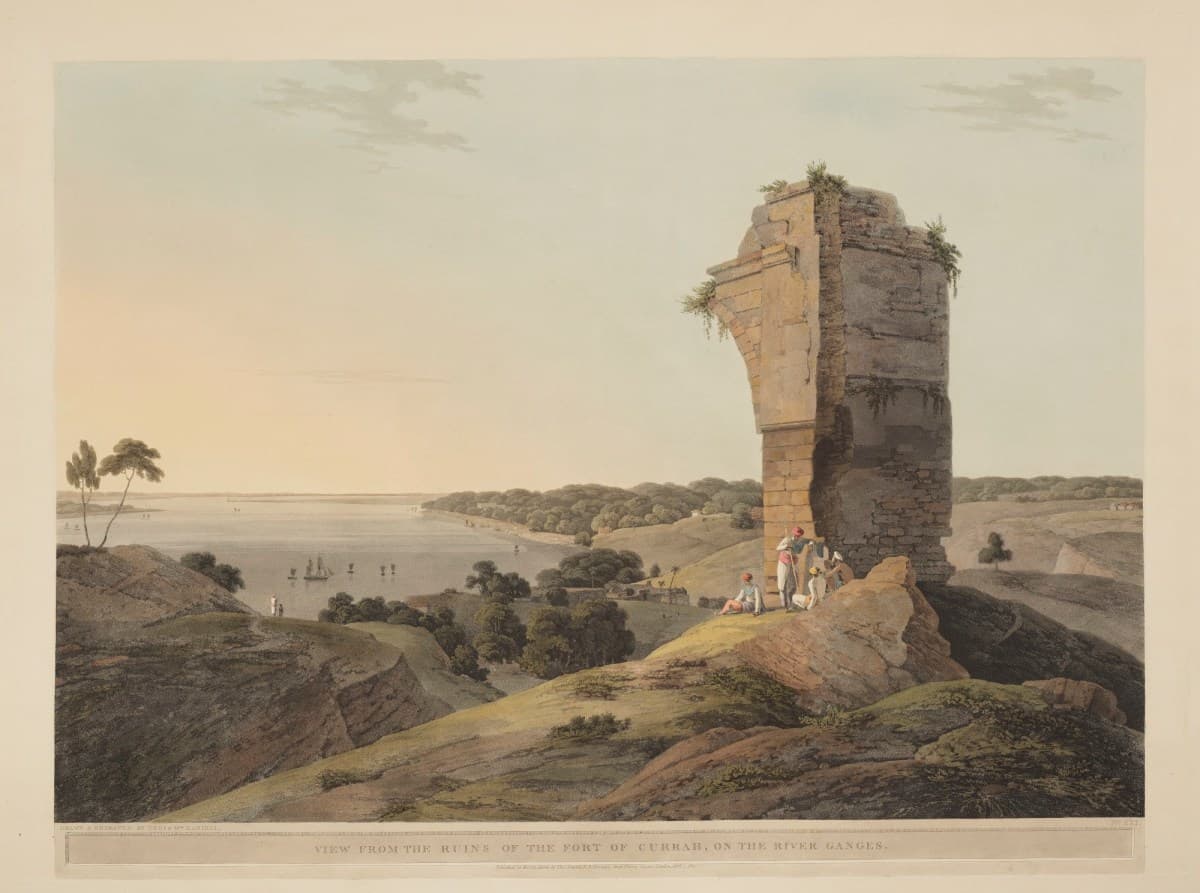
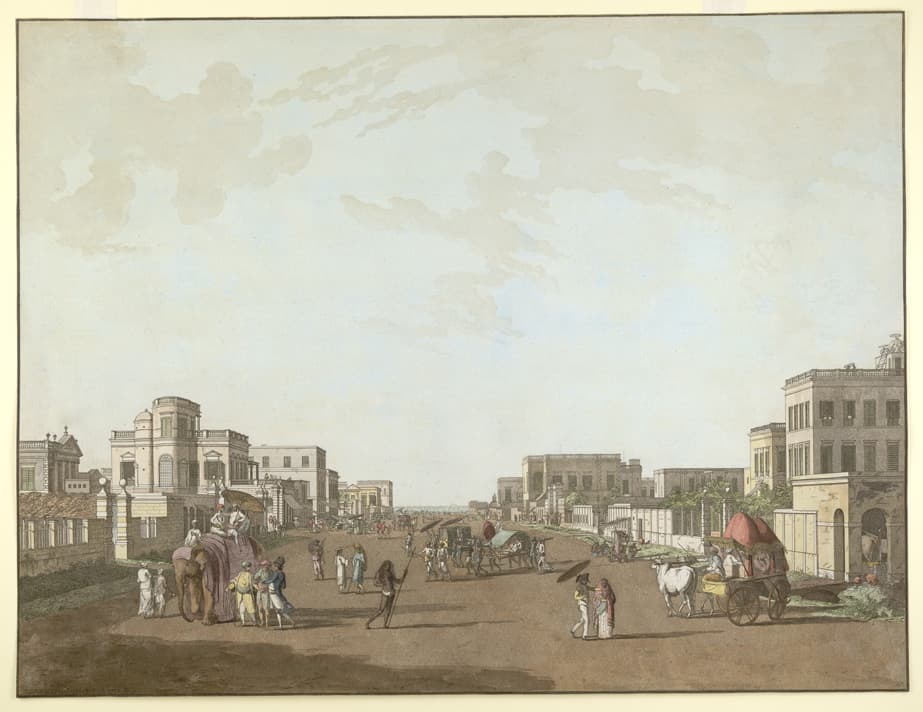
Photography carried the same habits forward. From the mid-nineteenth century European photographers opened studios and founded photographic societies in India. Samuel Bourne, co-founder of the famous studio Bourne and Shepherd, which first opened in Simla and later in Calcutta, photographed old buildings and steps along the river at Sati Chaura Ghat, Kanpur (1865), with the same fascination for ruins as the Daniells. Others photographed India's many communities in ways designed to make the country look primitive.
The message was built in stone as well. Most new mid-nineteenth-century buildings in Bombay used the Gothic style, with pointed arches, spires and tall, narrow shapes, as in Victoria Terminus (built 1878-1887). In Calcutta the British also borrowed the Classical style of Greece and Rome, with rounded arches and rows of columns, as in the Central Post Office (1860s). Either way, the buildings were meant to display British power, glory and cultural achievement.
9 more sections in this topic
Pick this up in your Library: it holds the whole topic, notes, cheatsheet and questions.