
Surgery around 1800
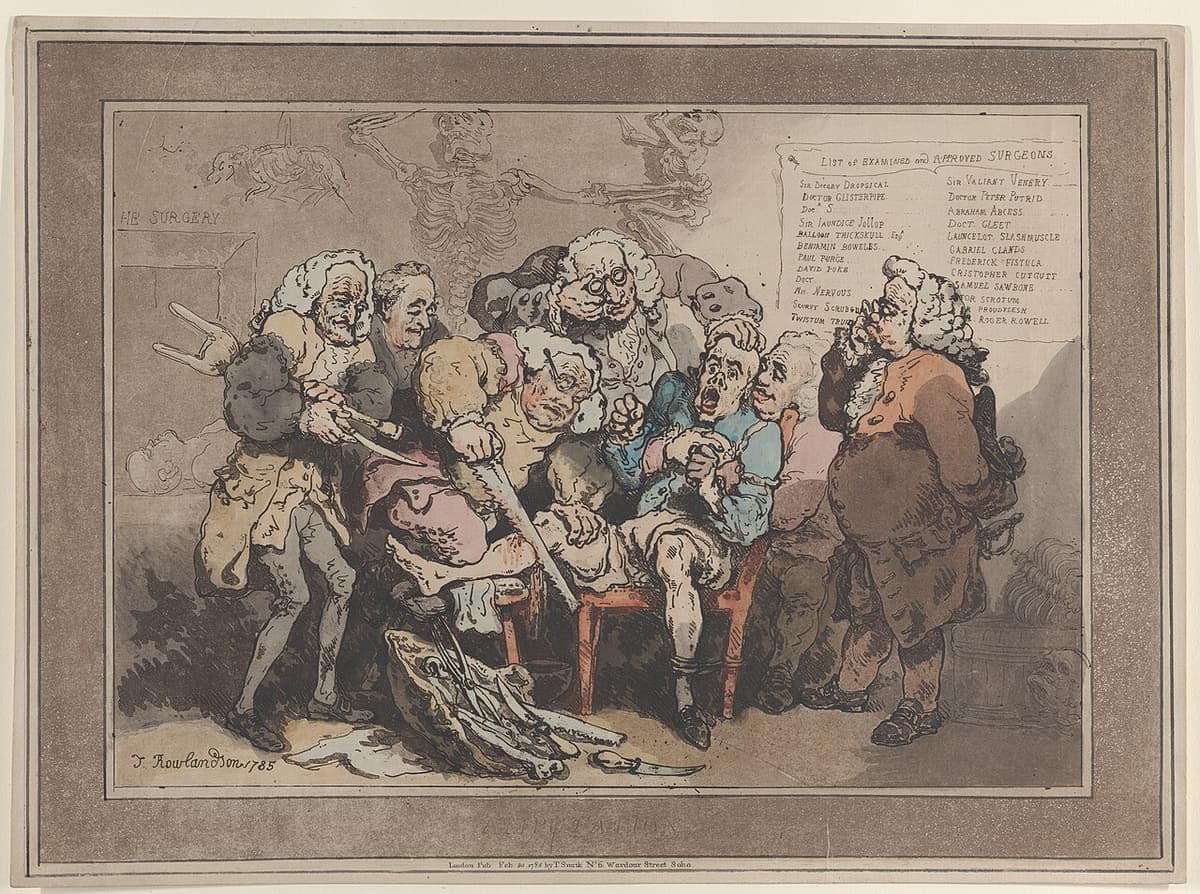
Source E is a British cartoon from 1793. Several surgeons in wigs pin a frightened man to the table while one of them saws through his leg. Skeletons and a list of surgeons' names hang on the wall behind them. Cartoonists exaggerate, but the details here match what we know about operating at the time.
To cut off a limb, such as an arm or a leg, usually because it is badly injured or infected.
Before the 1800s an operation was a horrific and traumatic experience. There was nothing to stop the pain, so surgeons worked as fast as they could, and many patients died of shock on the table. Those who survived the operation often died afterwards. Some London hospitals recorded a death rate of 80 per cent after surgery. Surgeons still tried new and experimental operations, and some pioneering ones took place in the USA in the early 1800s. Some historians suggest that American surgeons were more willing to test new techniques on enslaved black people.
For surgery to become safer, three obstacles had to be overcome:
- pain, which caused shock and forced surgeons to rush
- infection, which killed many patients in the days after an operation
- blood loss, which could kill a patient during or soon after surgery
Alongside surgery, nineteenth-century medicine also made huge gains in preventing disease, through vaccination and germ theory. Each breakthrough was resisted by some doctors and members of the public, so progress was argued over and slow to spread.
When you study a cartoon, ask why the artist chose each detail. The number of men needed to hold the patient down tells you there was no pain relief. The skeletons hint at how such operations usually ended.
9 more sections in this topic
Pick this up in your Library: it holds the whole topic, notes, cheatsheet and questions.