
Sources on the causes of disease
For most of human history nobody knew what really caused disease. How people explained illness decided how they treated it. If a god sent the sickness, you prayed. If the body had gone wrong, you tried to fix the body. Three sources from very different times show how these explanations competed.
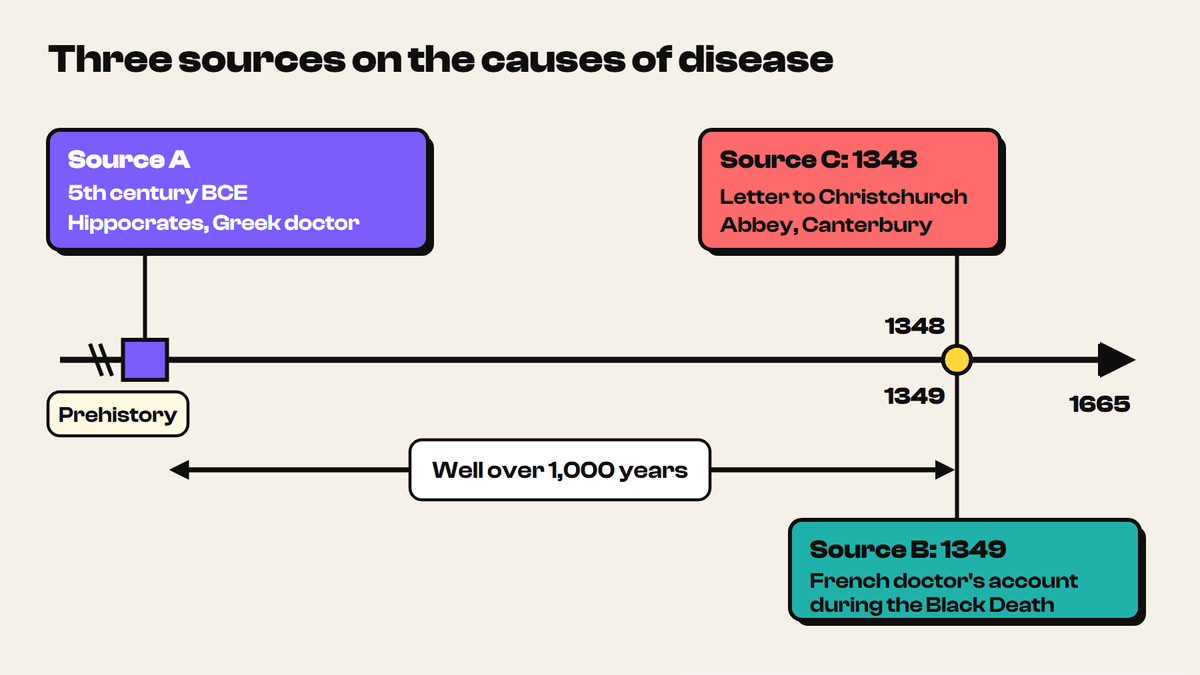
Source A comes from the teaching of the Greek doctor Hippocrates in the fifth century BCE. It says illness has natural causes. When the fluids in the body (the humours) fall out of balance, a person becomes ill, and sweating or vomiting is the body pushing out the extra humour. Because magic plays no part, magical cures are pointless. The source recommends rest and a change of diet first, then more regular exercise as the patient grows stronger. Only if these fail should the doctor bleed or purge the patient.
Source B is from an account by a French doctor in 1349, written during the Black Death. He claims the disease kills almost at once and spreads through the eyes. An 'airy spirit' leaves the eyes of the sick person, strikes the eye of a healthy person looking at them, and carries the poison across.
Source C is from a letter sent to Christchurch Abbey in Canterbury, England, in 1348. It explains plague as God's doing. God allows plagues, famines and wars to frighten and punish people and to drive out their sins. England, it says, will suffer pestilence because its people have grown proud and corrupt.
The origin of a source: who made it, when, where and for what purpose. Provenance helps a historian judge what a source can and cannot tell us.
Look closely at the dates. Source A is the oldest by well over a thousand years, yet it is the one that rejects supernatural causes most firmly. Source C, written in medieval England, puts the cause back in the hands of God. Source B sits between the two, offering a physical explanation that is still badly wrong.
When comparing sources, use two highlighter colours, one for points where they agree and one for points where they disagree. Then check the provenance of each one before deciding what the comparison tells you about change over time.
These sources raise the central question of the period. Over such a long stretch of time, did medicine actually get better, or did it move forwards and then slip back?
Prehistoric and Egyptian medicine
In prehistoric societies, serious illness was the job of the 'medicine man'. Women usually took charge of childbirth and the everyday care of the sick.
Prehistoric people used two kinds of explanation side by side:
- Supernatural causes, such as angry gods or evil spirits
- Natural causes, such as an injury from hunting or an insect bite
Treatment mixed the two as well. Healers used ritual and prayer, but also herbs and some basic surgery.
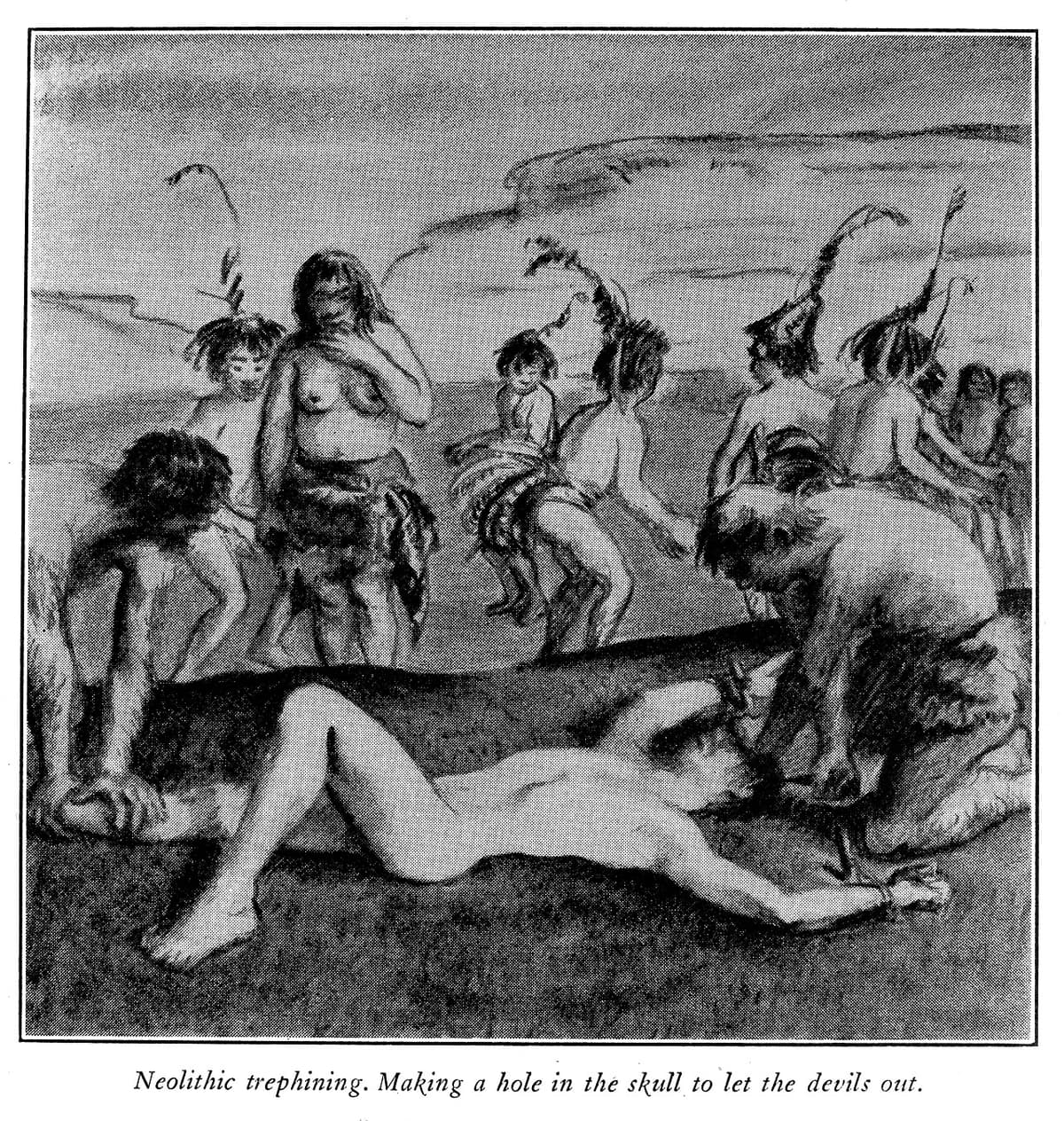
An early operation in which a hole was drilled through the scalp and skull, probably to relieve pressure on the brain.
Evidence from skulls shows that prehistoric people survived the operation. This tells us prehistoric healers had real practical skill, even if they had no idea how the brain worked.
In Ancient Egypt, over more than a thousand years BCE, high priests acted as healers and women remained the main carers. Egyptians still blamed gods and spirits for disease, but they added a new physical idea. They believed the body contained 'channels', and that sickness followed when these became blocked. Their treatments changed little from prehistoric ones, although they put a strong emphasis on hygiene to stop disease in the first place.
From Egyptian times onwards, trade linked Africa with lands as far away as India and China. Merchants carried new herbs and plants that could be used as medicines, so herbal medicine spread along trade routes. The same merchants, and the goods they carried, could also spread disease from one region to another.
The Egyptian 'channels' idea matters because it looks for a cause inside the body. It shows a natural explanation growing alongside the supernatural one, not replacing it.
9 more sections in this topic
Pick this up in your Library: it holds the whole topic, notes, cheatsheet and questions.