
Hazard perception
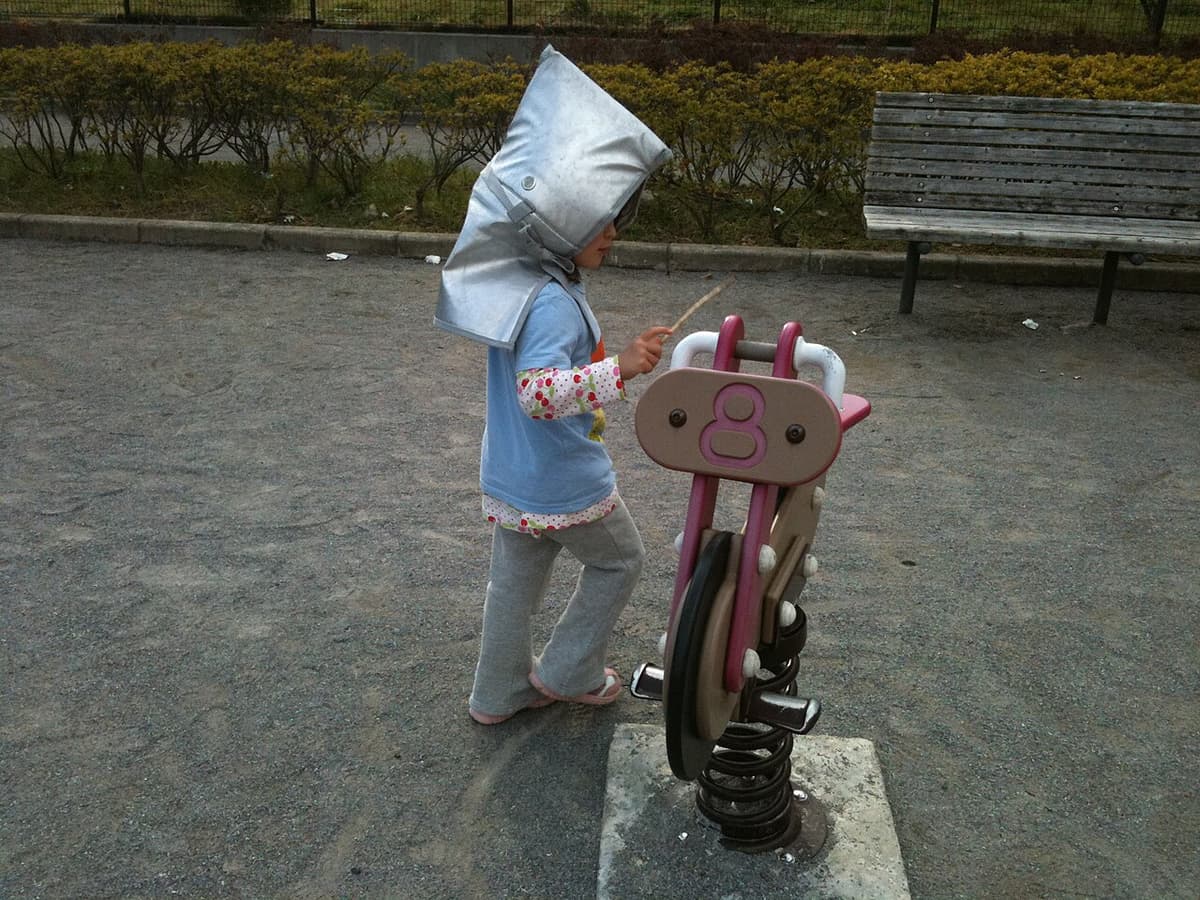
In Japan, schoolchildren practise earthquake drills so often that pulling on a padded hood and sitting still becomes routine. Between 2006 and 2015, natural disasters killed almost 70,000 people a year worldwide, and those deaths were spread very unevenly between countries. A disaster happens only when a hazardous event meets a vulnerable population (the lesson on causes and consequences of tectonic activity defines both terms). So reducing deaths depends as much on people as on the Earth, and it starts with how people see danger.
Everyone lives with some risk. The journey to school, a swim in the sea or a walk in the mountains all carry hazards. People tend to notice risk when their lives are threatened, but they are far less alert to risks to their assets, such as a house or a car. How seriously people take a hazard affects whether they prepare for it and how they react when it arrives. Poor perception can raise risk.
The way an individual or group understands how likely and how serious a natural hazard is. It shapes whether people prepare, evacuate or ignore warnings.
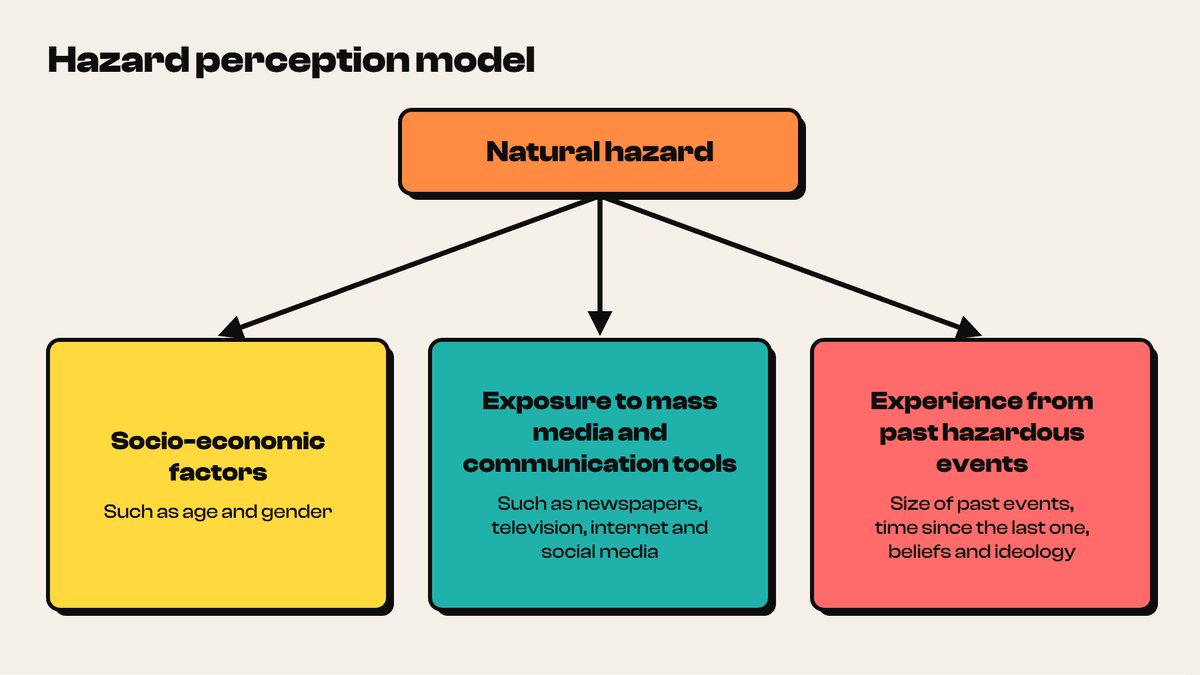
The hazard perception model groups the influences into three sets.
- Socio-economic factors, such as age and gender.
- Exposure to mass media and communication tools, such as newspapers, television, internet access and social media.
- Experience from past hazardous events, including how large past events were, how long it is since the last one, and people's beliefs and ideology.
These factors do not carry equal weight. Scientific studies suggest that past experience gives people a more accurate sense of risk than their age, occupation or level of education.
Two towns sit on the same fault. One was shaken by a strong earthquake a few years ago, while the other has not felt a damaging event for generations.
The model predicts that residents of the first town will judge the risk more accurately, because 'length of time since last exposure' is short for them.
Perception also depends on how people think about hazards in general. Some see them as a normal part of life, or as an act of God, which can lead to acceptance rather than preparation. Others see them as extreme events that technology can control, which can lead to overconfidence in defences. A third view treats hazards as the result of both physical and human processes, so people must adapt and keep their approaches flexible. Each view leads to a very different kind of management.
9 more sections in this topic
Pick this up in your Library: it holds the whole topic, notes, cheatsheet and questions.