
Gandhi and the end of British rule
In 1947 India became the first British colony to win independence. Mohandas Gandhi, known as 'Mahatma' or 'great soul', led the nationalist challenge to British rule from the end of the First World War, so it is tempting to give him the credit. Historians are less certain. Independence came after two world wars had drained Britain, after a new British government decided it wanted to leave, and after a rival leader, Mohammed Ali Jinnah, had split the movement in two. The question running through this topic is how far one person can change history when much larger forces are also at work.
India mattered enormously to Britain. It was called the 'Jewel in the Crown' of the British Empire because it brought Britain wealth and strategic advantages. A British Viceroy governed it, and Indians had very little say in how they were ruled.
Two organisations that would shape the struggle appeared well before Gandhi's rise:
- The Indian National Congress (1885), led by educated and influential Hindus, campaigned for Indians to play a bigger part in government.
- The Muslim League (1906) was set up to protect the interests of India's Muslims.
Britain answered growing pressure with limited concessions. In 1909 the Minto-Morley reforms, named after Viceroy Lord Minto and Secretary of State for India Lord Morley, allowed more Indians to take part in government. The aim was to head off more violent resistance. In 1917, in the middle of the First World War, Secretary of State Edwin Montagu promised Indians a further share in government. Many Indians expected their help in the war to be rewarded with greater freedom once it ended.
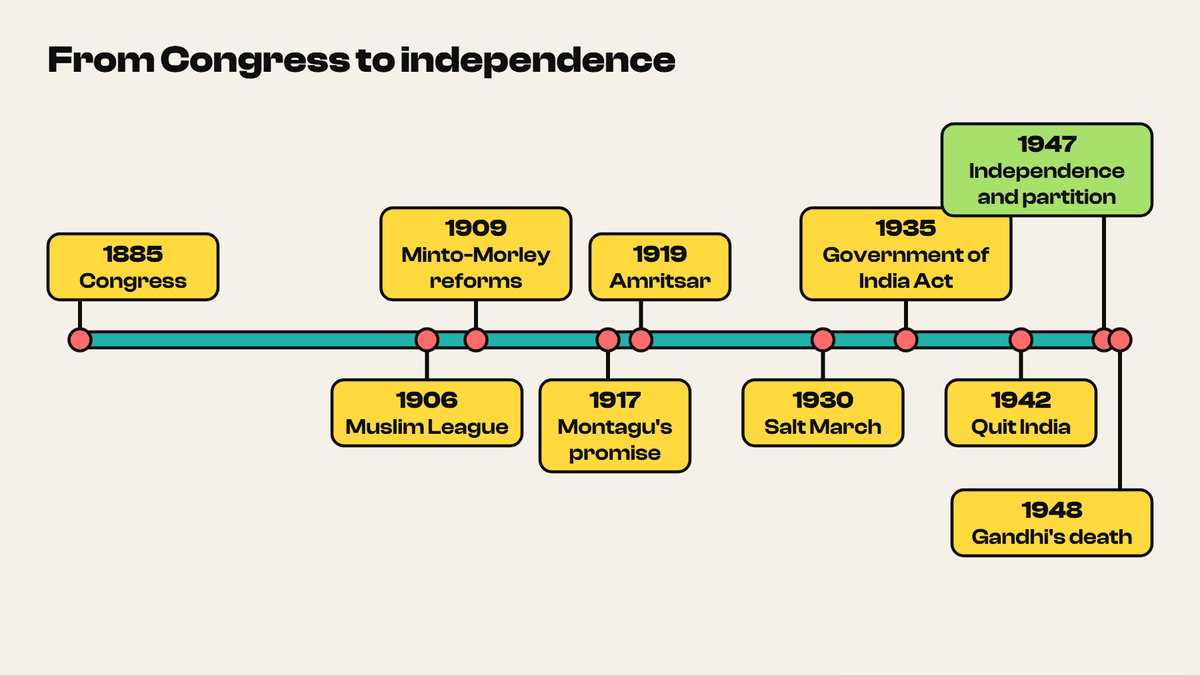
Indian politics had a Hindu-led organisation and a separate Muslim organisation long before Gandhi became leader. Keep this in mind when judging how far any one person could hold the nationalist movement together.
9 more sections in this topic
Pick this up in your Library: it holds the whole topic, notes, cheatsheet and questions.