
Cybercrime and young internet users
Stephen Hawking once argued that computer viruses should count as a form of life. He added that it reveals something unflattering about people that the only life we have built so far exists purely to destroy, and that we have "created life in our own image".
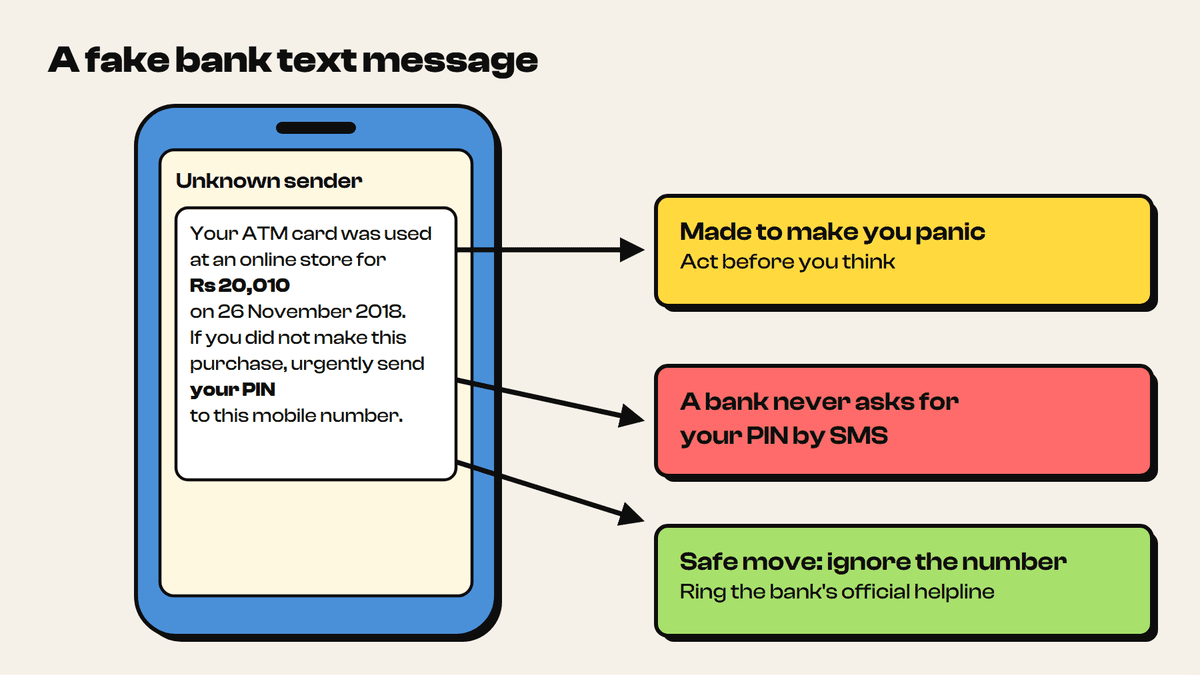
Now picture a text arriving on your phone. It says your bank noticed your ATM card being used at an online store for Rs 20,010 on 26 November 2018, and that if you did not make the purchase you should urgently send your PIN to a mobile number. The message is built to make you panic and act before you think. A bank has no reason to ask for your PIN by SMS, so the safe move is to ignore the number and ring the bank's official helpline to check.
The online world of computers, phones and networks that links each user with crores of other people around the globe.
Any possible way someone could attack you through the internet or mobile technology.
An offence committed in a digital setting, where a computer is either the target of the crime or the tool used to commit it. It can be aimed at a person, a group, a company or even a whole country.
Young people now go online at a very early age, to game, chat, make friends and shop. Two things make children especially easy targets. They often arrive in cyber space knowing little about the dangers or the safeguards, and they are at an age when trying new things is exciting. Curiosity is a good way to learn, but without guidance it can lead straight into a trap.
The scale of the problem is large. India's Computer Emergency Response Team (CERT-In) recorded more than 53,000 cyber security incidents in 2017. Attacks are also growing more sophisticated, and many now aim to collect personal details such as phone numbers, addresses, photos and bank information. Criminals can later use those details to build a fake profile of the victim or to bully them.
9 more sections in this topic
Pick this up in your Library: it holds the whole topic, notes, cheatsheet and questions.