
Cities of the Indus and Ghaggar-Hakra
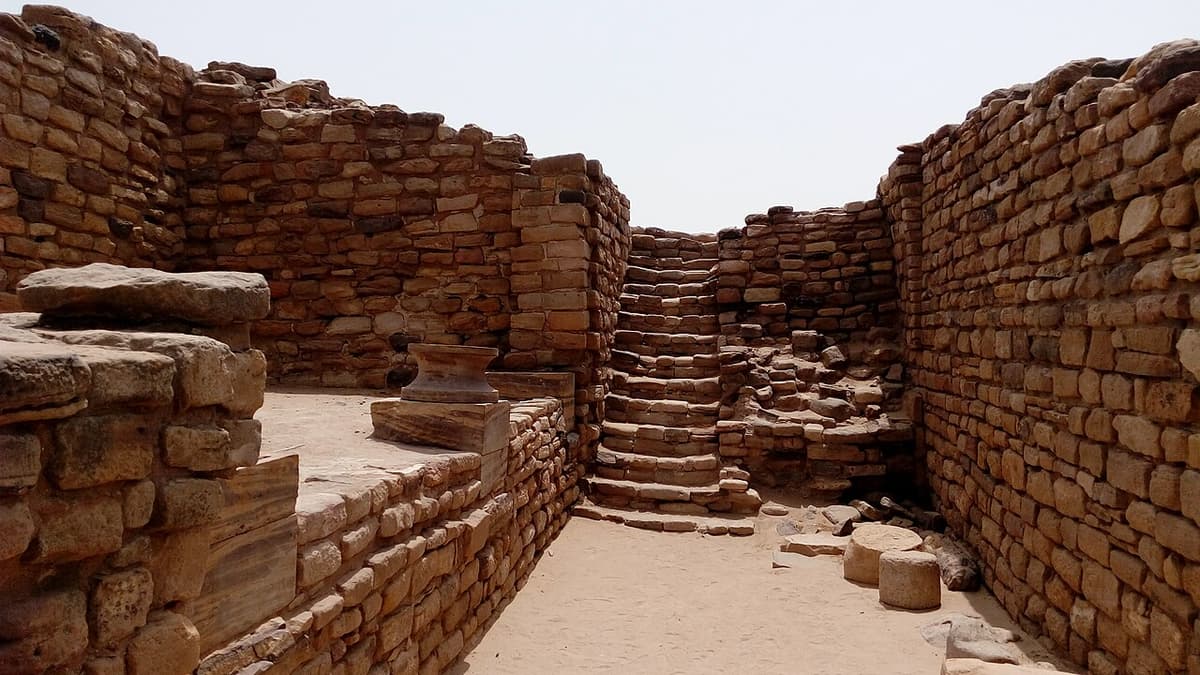
More than 4,000 years ago, people in the north-west of the Indian subcontinent lived in large planned cities with straight streets, covered drains and huge water tanks. Later the cities emptied and were forgotten for thousands of years. Nobody can yet read the writing these people left, so almost everything we know comes from objects that archaeologists have dug up. For every claim about the Harappans, keep asking one question. How do we know?
The civilisation grew up on the wide, fertile plains of Punjab and Sindh, watered by the Indus River and its five main tributaries. Further east lay a second river system, the Ghaggar-Hakra (called the Ghaggar in India and the Hakra in Pakistan). Today it flows only in the rainy season. More than 2,000 sites have been found across the region, and by one count close to two-thirds of them lie in the Ghaggar-Hakra basin. Mountain ranges such as the Hindu Kush, the Sulaiman Range and the Himalayas form natural edges to the area.
A smaller river that flows into a bigger river or a lake. The Yamuna, for example, is a tributary of the Ganga.
Five very large cities have been identified. Their ruins now lie in two modern countries.
- Harappa, in Punjab (Pakistan)
- Mohenjo-daro, in Sindh (Pakistan)
- Ganweriwala, in the Cholistan desert (Pakistan)
- Rakhigarhi, in Haryana (India)
- Dholavira, in the Rann of Kutch, Gujarat (India)
Smaller places matter too, such as Kalibangan in Rajasthan and Lothal in Gujarat. Settlements ranged from cities and regional centres to farming villages, ports and craft workshops.
Villages came first and cities later. From about 3500 BCE villages in the region grew into towns, and around 2600 BCE some towns grew into cities. Historians call this change the First Urbanisation of India. Archaeologists divide the story into three phases.
- Early Harappan (before 2600 BCE): farming and herding villages with few large buildings.
- Mature Harappan (c. 2600-1900 BCE): the age of big planned cities and the most prosperous phase.
- Late Harappan (c. 1900-1300 BCE): the cities empty and people return to village life.
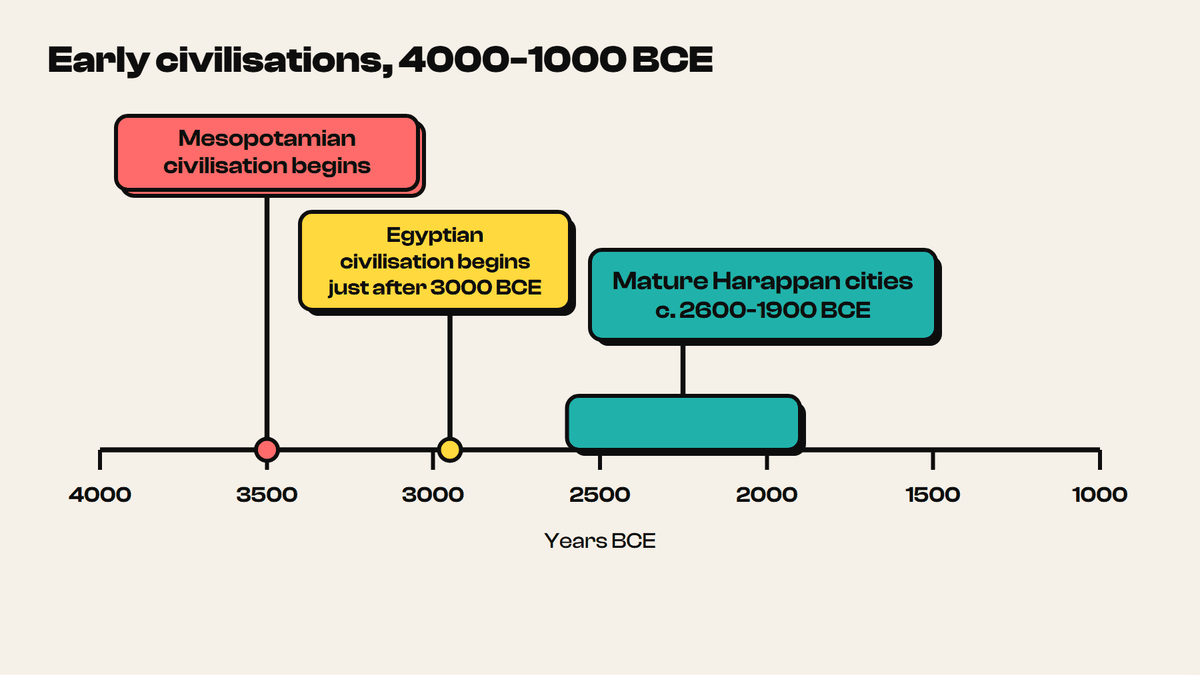
The letter c. before a date stands for the Latin word circa, meaning "about". Dates this old are always approximate.
The civilisation has several names, and each one reflects a view about the evidence.
- Indus Valley civilisation was the first name, because the early sites were found on the Indus plains.
- Harappan comes from Harappa, the first city to be excavated, in 1920-21. Its people are called Harappans.
- Indus-Sarasvati or Sindhu-Sarasvati adds a second river. People who use it identify the Ghaggar-Hakra with the Sarasvati, a river praised in the Rig Veda, an ancient collection of hymns, as running "from the mountain to the sea". Later texts describe the Sarasvati drying up.
Some writers now avoid "Indus Valley" because the map shows sites spreading far beyond one valley. Supporters of "Indus-Sarasvati" point to the many sites along the Ghaggar-Hakra. Matching a dry river bed today with a river in an ancient hymn is an interpretation, so the name stays a matter of debate. "Harappan", named after a site, avoids the river question altogether.
Notice which name a book or website uses. The name can hint at which reading of the evidence the writer prefers.
9 more sections in this topic
Pick this up in your Library: it holds the whole topic, notes, cheatsheet and questions.