
Rejoicing and mourning in 1947
India became independent at midnight on 14-15 August 1947. That night Jawaharlal Nehru, the first prime minister of free India, addressed a special session of the Constituent Assembly in his 'tryst with destiny' speech. The national movement had contained many different voices, but almost everyone in it shared two aims for the years after freedom. India would be governed as a democracy, and its government would work for the welfare of all, above all the poor and socially disadvantaged groups.
Keeping those promises would be hard, because freedom arrived together with the partition of the country. The year 1947 brought violence and displacement on a scale never seen before, and the new nation-state was born in conditions possibly harder than any country had faced at its start.
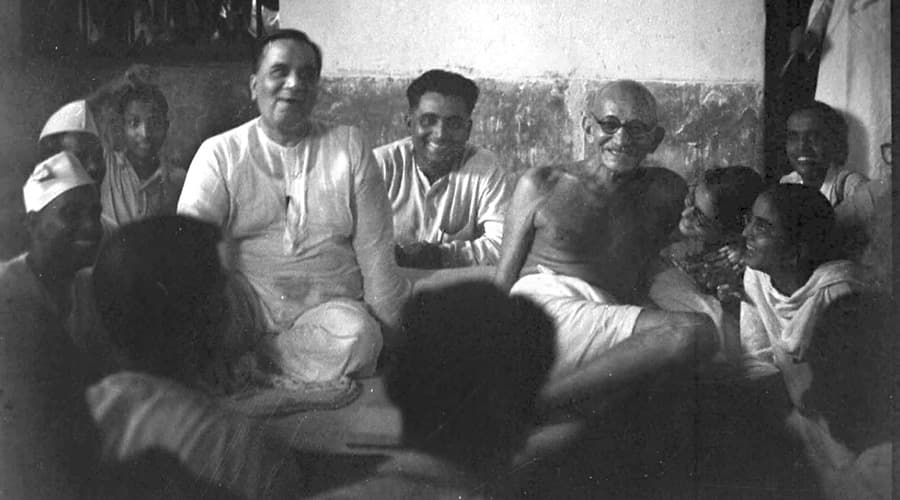
That photograph holds both moods at once. In Kolkata, Hindus and Muslims patrolled the city together on trucks flying both flags, hoping to signal an end to communal killing. Gandhi, speaking in Kolkata on 14 August, put the same tension into words. The next day Indians would be free of British rule, he said, but at midnight the country would also be divided, so it would be 'a day of rejoicing as well as of mourning'.
Gandhi took part in none of the Independence Day celebrations. He spent 15 August in riot-torn Kolkata, working to stop Hindus and Muslims fighting each other.
The three challenges of nation building
Independent India faced three broad challenges, and the first was also the most immediate.
- The first was to build a nation that was united while still making room for the diversity of its society. India was continental in size, with many languages, cultures and religions, and many people at the time doubted that such a varied country could hold together for long. Partition seemed to confirm their fears. Leaders had to decide whether unity would be pursued at the cost of every other aim, whether regional and sub-national identities would have to be given up, and, most urgently, how India's territory would be joined into one.
- The second was to establish democracy. The Constitution gave every citizen fundamental rights and the vote, and India chose representative democracy with a parliamentary government, so that political competition would happen inside a democratic framework. A democratic constitution was necessary but not enough. The harder task was to build everyday democratic practices that matched it.
- The third was to secure development and well-being for the whole society, not only for some sections of it. The Constitution promised equality and special protection for socially disadvantaged groups and for religious and cultural communities. The real test was to design policies that would grow the economy and end poverty.
The part of the Indian Constitution that sets out the welfare goals democratic politics in India should work towards.
In the years straight after 1947 the first challenge pushed the other two into the background. Partition had shown how fast a territory could be split along lines of community, and hundreds of princely states were about to become legally free to go their own way. Until the nation's borders were secure and its people held together, democracy and development had nothing stable to stand on. That is why national unity and territorial integrity came first. In practice the first decade turned on three problems: living with the legacy of Partition as a secular state, integrating the princely states, and redrawing internal boundaries to suit people who spoke different languages.
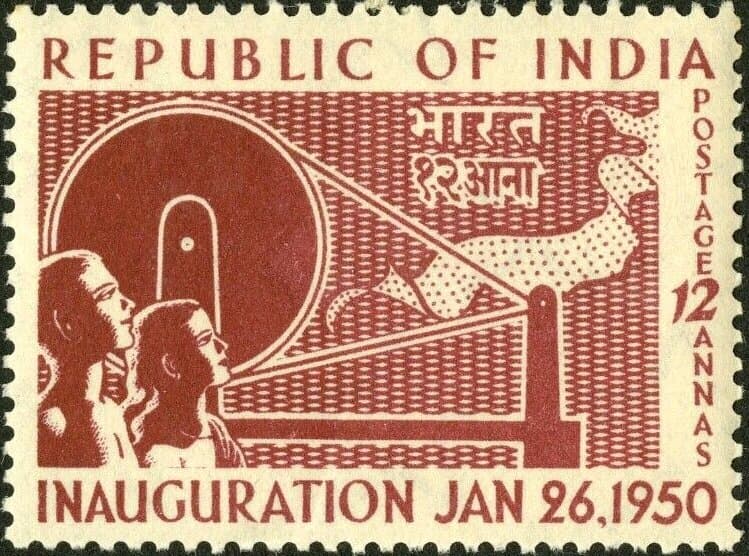
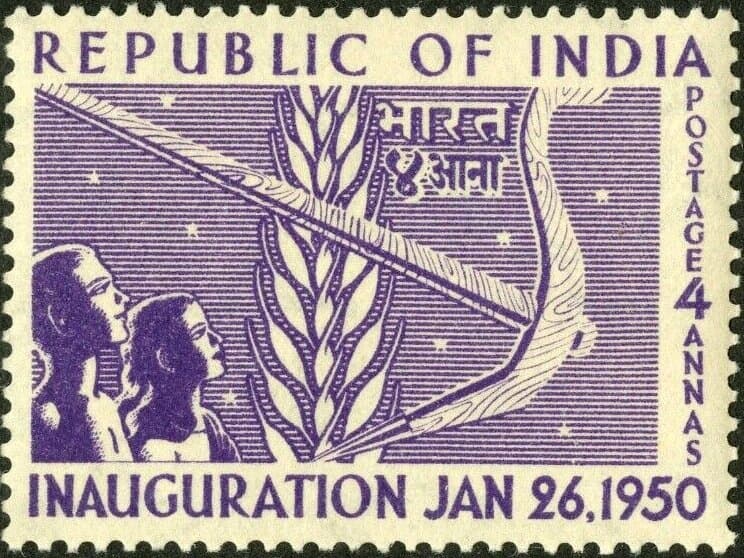
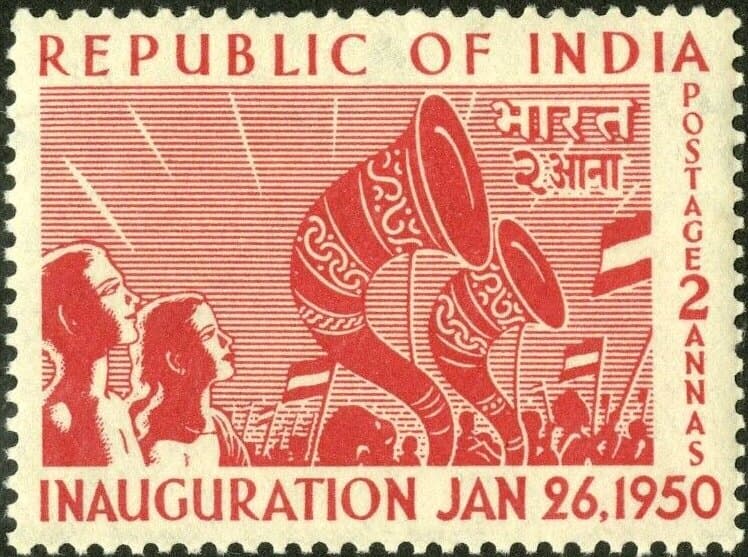
Treat the 1950 stamps as evidence. Ask which of the three challenges each image speaks to, and which challenge the designers chose not to show.
9 more sections in this topic
Pick this up in your Library: it holds the whole topic, notes, cheatsheet and questions.