
The Guatemala precedent
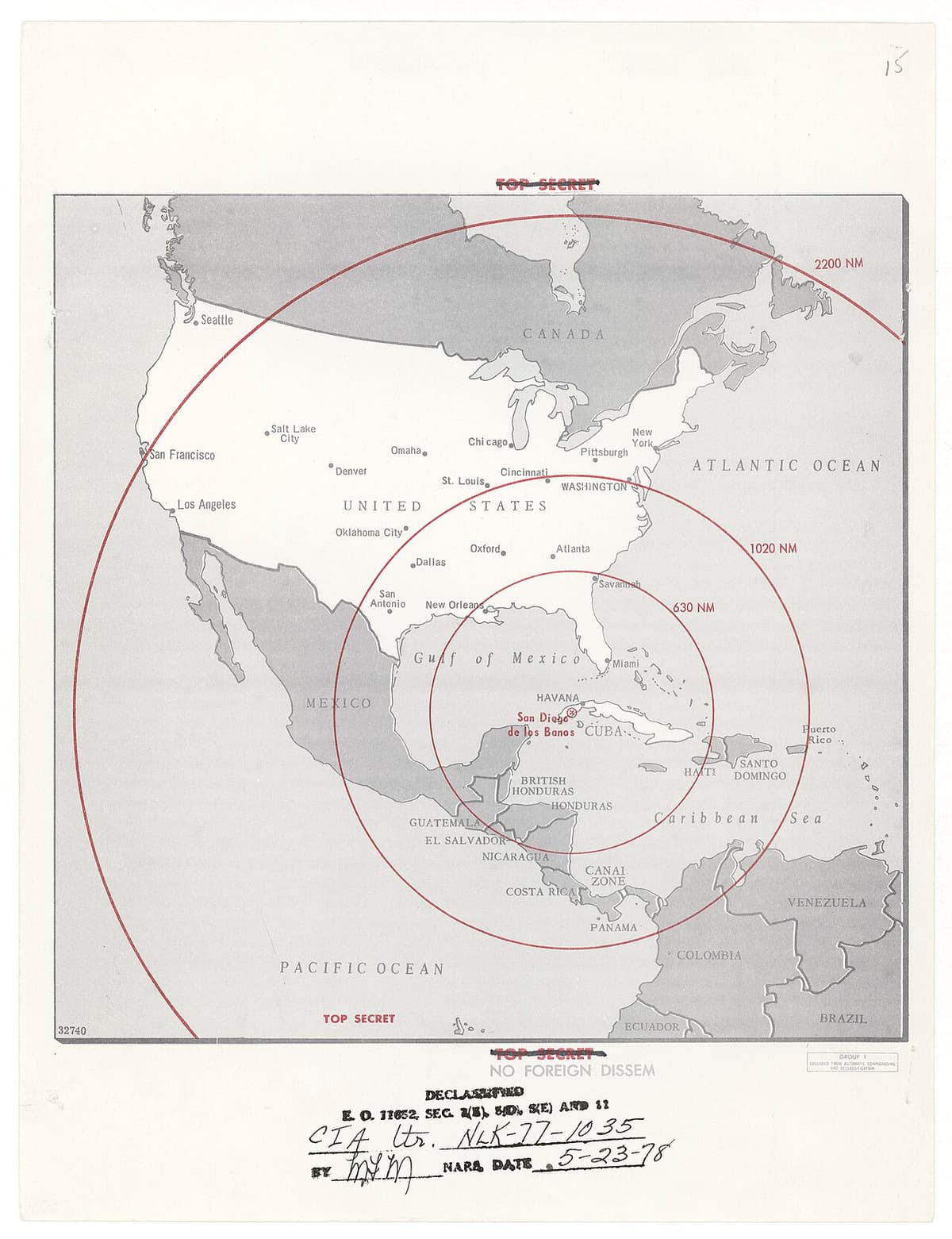
In October 1962 President John F. Kennedy and his advisers met in secret around a map of the Americas. Rings drawn outward from Cuba showed how far the nuclear missiles being built on the island could reach. They covered Mexico, Central America and most of the United States, and the widest ring stretched into Canada. The chain of decisions that put those rings on the map began eight years earlier, in Guatemala.
In the 1930s and 1940s the USA had followed a Good Neighbor Policy, staying out of the internal affairs of countries in the Western Hemisphere. In the 1950s and 1960s the drive to contain communism reversed this, and Washington became far more willing to intervene in Latin America and the Caribbean.
Guatemala shows the shift clearly. A 1944 uprising removed the dictator Jorge Ubico, who had ruled since 1931, and in 1945 a philosophy professor, Juan Jose Arevalo, became the country's first democratically elected president. His successor from 1951, Jacobo Arbenz, started land reform in a very poor country and legalised the Guatemalan Party of Labor, the country's communist party. A 1952 poster promised peasants 'land and freedom'.
Breaking up large estates and handing the land to the peasants who farm it.
The reforms hit a powerful American business. The United Fruit Company grew bananas across Central America for the US market and was Guatemala's largest landowner, so land redistribution and union rights threatened it directly. It lobbied the Truman and then the Eisenhower administrations to get rid of Arbenz. Eisenhower, Secretary of State John Foster Dulles and his brother Allen Dulles, head of the CIA, were all strong anti-communists, and the two brothers had close ties to United Fruit. In 1954 forces led by Colonel Carlos Castillo Armas, armed and trained by the CIA, removed Arbenz. Armas ruled as a military dictator, banned the opposition and attacked the unions.
US officials said they feared Arbenz would take Guatemala into the Eastern Bloc. The evidence makes it unlikely that he ever intended to.
What mattered for later events was the method: a reforming government that touched US property was overthrown by local fighters the CIA had trained, without US troops. Washington would try the same method in Cuba seven years later.
9 more sections in this topic
Pick this up in your Library: it holds the whole topic, notes, cheatsheet and questions.