
Art as a mirror of its era
Historians usually start with politics and economics. The art of a period records the same changes from another angle. A painting shows what the people who made it and bought it believed and valued, and what tools and materials they had to work with.
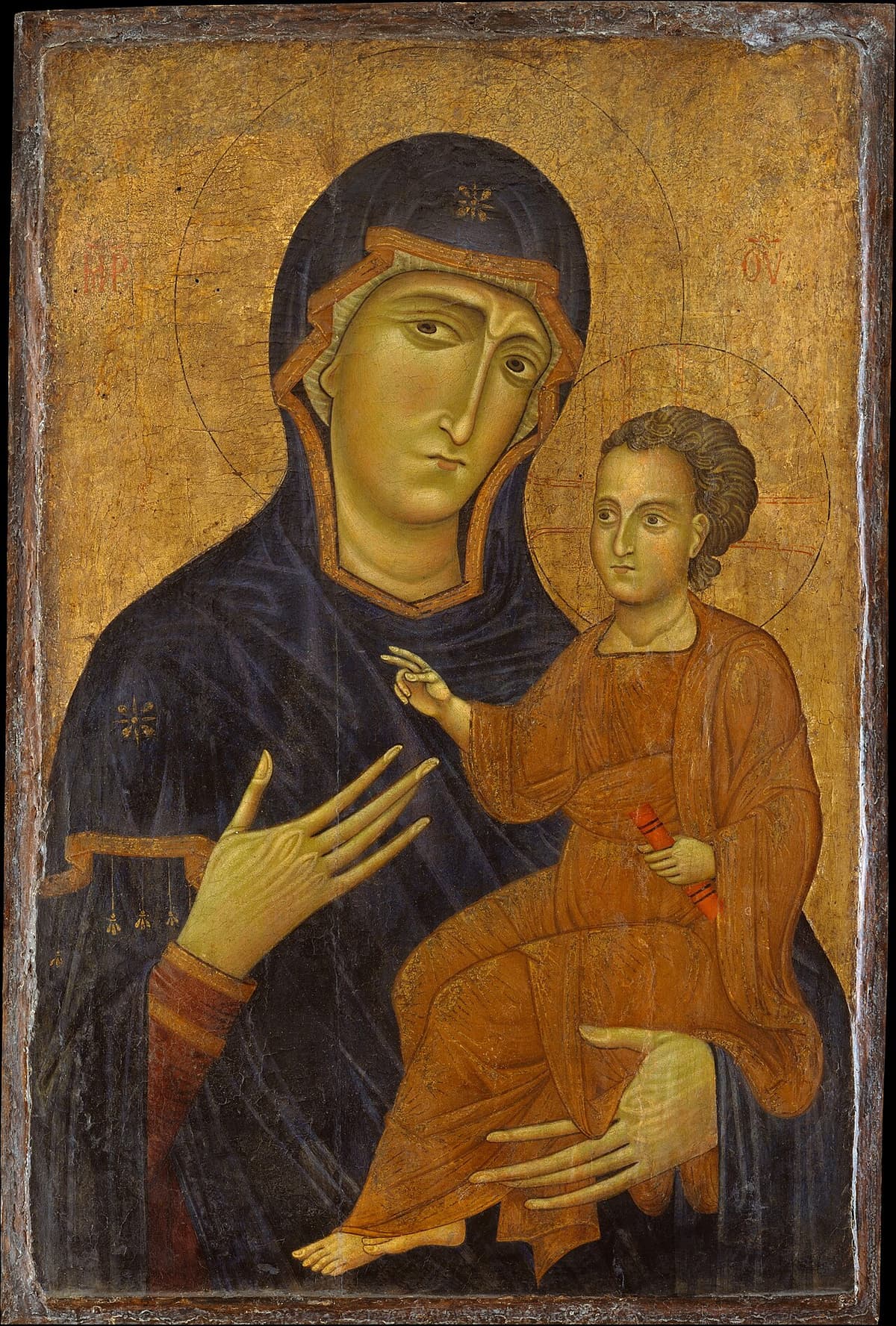
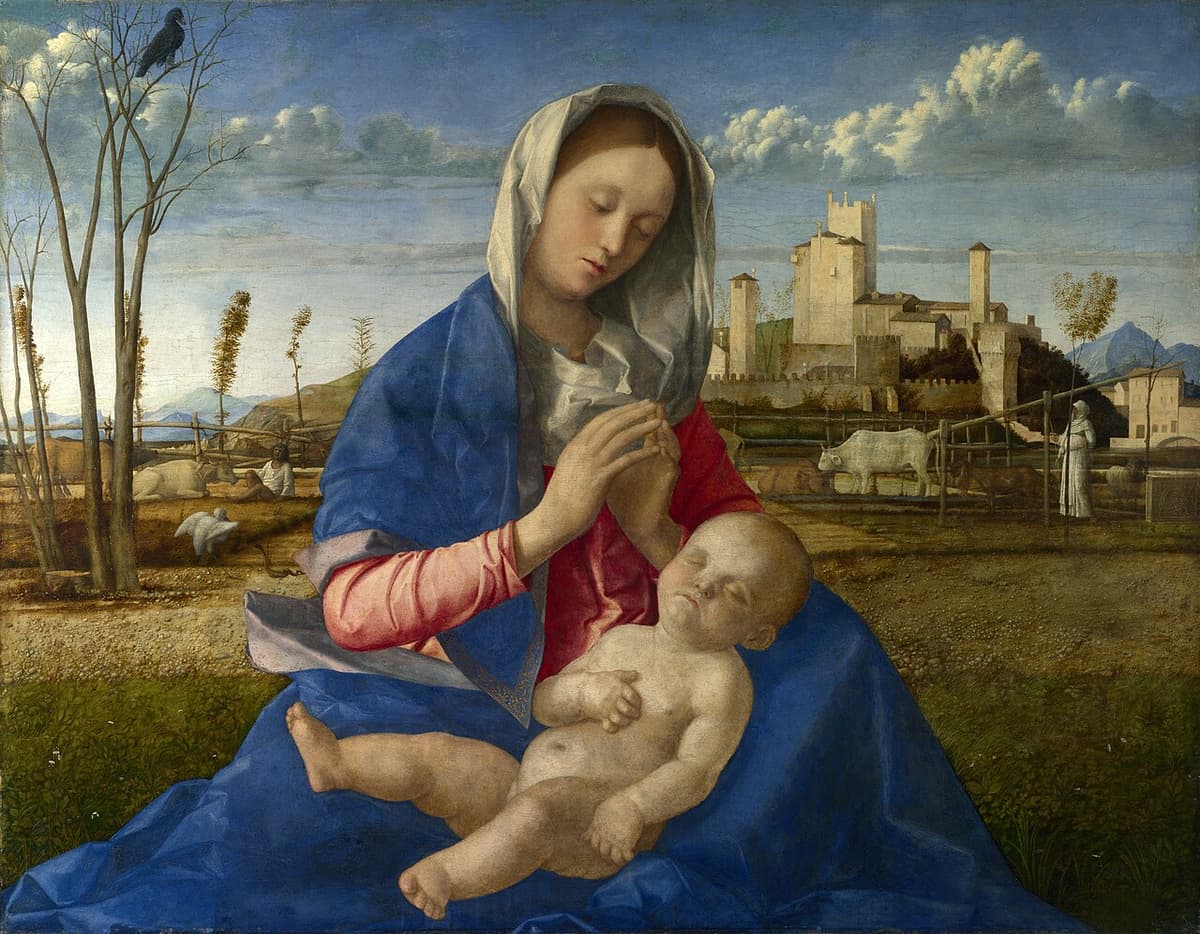
Compare two Italian paintings of Mary and the infant Jesus. Berlinghiero's Madonna and Child from the thirteenth century (the Middle Ages) is flat and set against a gold background, with no landscape at all. Mary is a holy symbol for worship. Giovanni Bellini's Madonna of the Meadow from about 1500 (the Renaissance) shows a lifelike Mary in blue, praying over the sleeping child on her lap. Behind her is a realistic landscape with a walled town, trees and animals. The subject stayed the same. The society producing the picture changed, and so did its idea of what a painting should do.
The same reading works for the century from the 1830s to the 1930s. Three turning points sit behind those changes: the Industrial Revolution, the First World War and the Bolshevik Revolution of 1917 in Russia. The question to keep in mind throughout is how far these outside forces, as opposed to artists' own choices, shaped the new movements.
Four possible causes give you criteria for a judgement:
- Technology: new materials and inventions that changed how art could be made.
- Patrons and buyers: who paid for art, and what they wanted to see.
- Trauma: the shock of mass killing in war.
- State power: governments deciding what art was allowed.
Against all four stands a fifth factor, artist agency, meaning the decisions artists made for themselves about what to paint and why.
As you meet each movement, note which of the four causes it is evidence for, and where you can see an artist making a deliberate choice. That record is the raw material for your final judgement.
Romanticism and Realism
When the Industrial Revolution began, the leading style of painting was Romanticism.
A style of art that looked back to life before industrialization, painting rural scenes, landscapes and stories from classical mythology, and offering an escape into an idealized past.
Romantic painters did not ignore industry. They answered it by turning away. The factory town was left out, and a gentler, supposedly better world was put in its place. Even this choice to escape was a response to industrial change.
Realist artists reacted against that picture of the world.
A movement, beginning in the nineteenth century, that tried to show the world as it actually was, especially the lives of urban workers, labourers and the poor, including the harsh and uncomfortable sides of their lives.
The difference is one of attitude. Romanticism offered an optimistic, idealized image of humanity. Realism offered a more truthful one and accepted that the truth could be unpleasant.
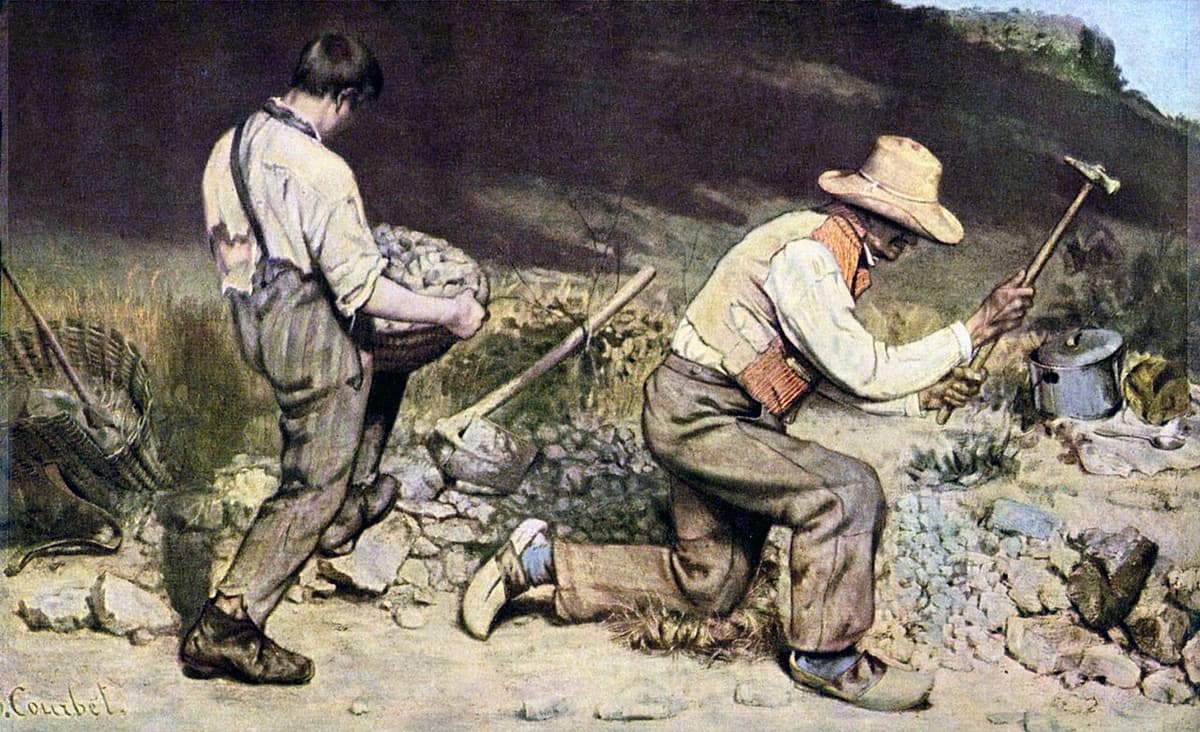
The French painter Gustave Courbet (1819–77) led the movement. He said he never used his imagination and painted only what he saw, and he wanted to change what the public looked at and what it enjoyed. This shocked people who expected art to improve on reality. In The Stone Breakers, a youth carries a basket of stones while a kneeling man in a straw hat swings a hammer at rocks. Both wear worn clothes, and neither is made heroic or beautiful.
Courbet's insistence on truth spread across borders:
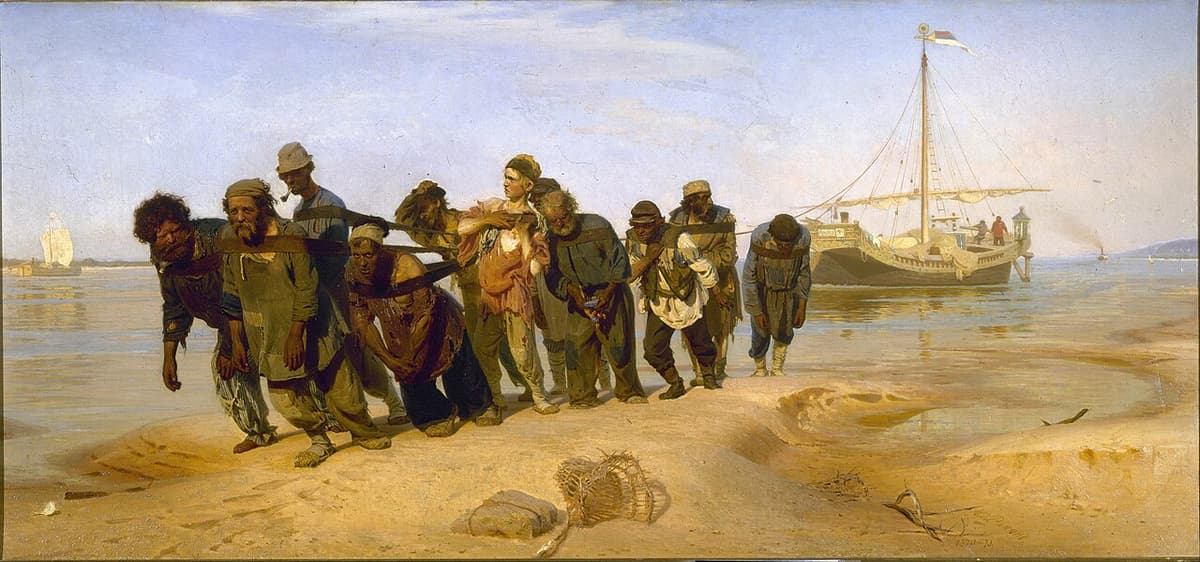
- Russia: the Peredvizhniki (Wanderers), formed in the 1860s, used painting to expose inequality and injustice in daily life. Ilya Repin's Barge Haulers on the Volga shows a line of ragged, exhausted men in harness dragging a boat along a sandy riverbank.
- USA: the Ashcan School, including George Bellows and Robert Henri. Bellows's New York fills the canvas with tall buildings, dense crowds, horse-drawn carts and snow.
- England: Luke Fildes and L.S. Lowry painted the everyday lives of poorer people.
In Fildes's The Widower, a man in rough clothes sits in a dark cottage holding a limp child while other small children sit and crawl on the floor.
Nothing in the scene is softened. A viewer is made to feel the cost of poverty and illness in a working family's home.
9 more sections in this topic
Pick this up in your Library: it holds the whole topic, notes, cheatsheet and questions.