
The idea of a Renaissance
In 1500 the Venetian painter Gentile Bellini finished The Recovery of the Relic of the Holy Cross. The event it marked had happened in 1370, but Bellini placed it in the Venice of his own century. A crowded bridge arches over a canal, gondolas move along the water, and tall houses with balconies line both banks. The picture records a busy, wealthy and confident city, and cities like this one are where the story of the Renaissance starts.
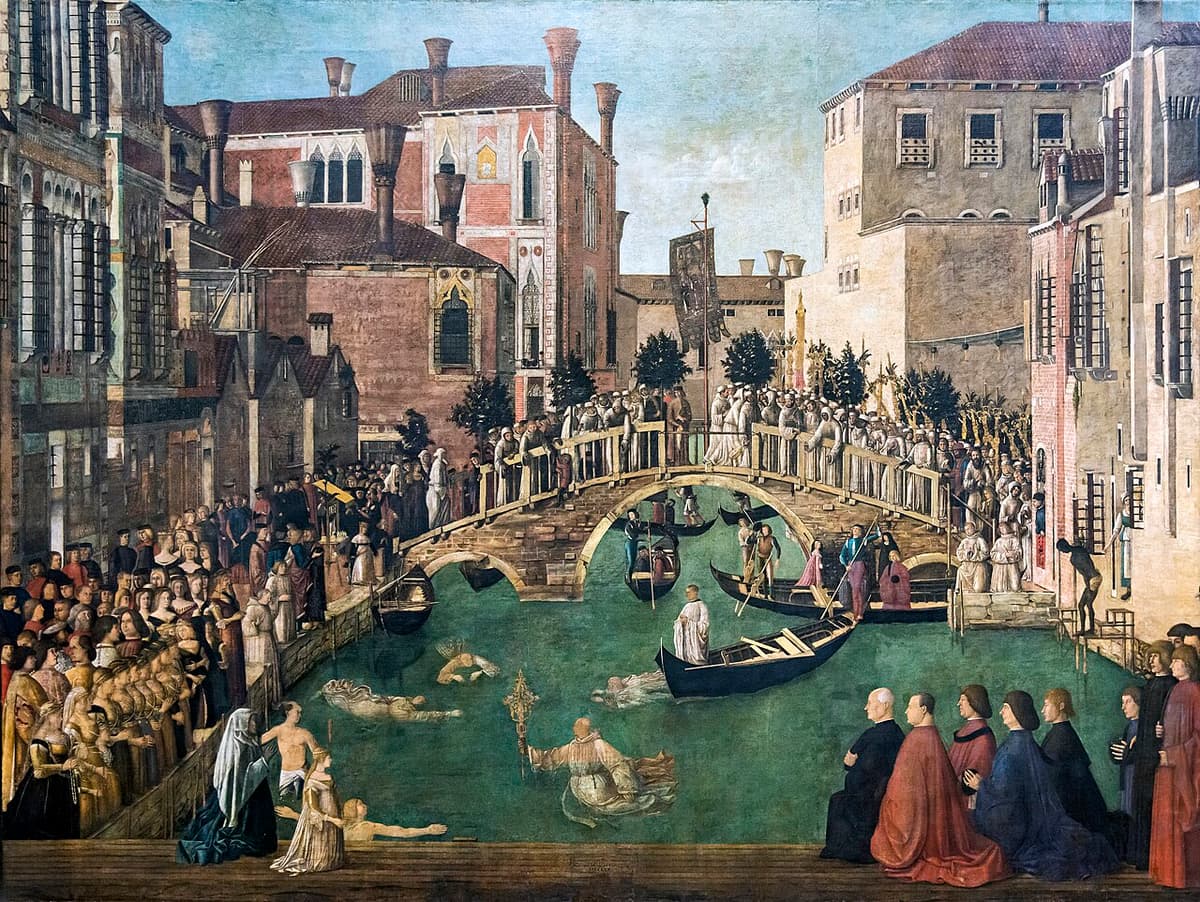
Between the 14th and the late 17th centuries, towns grew in many parts of Europe. The people who lived in them developed an urban culture and came to see themselves as more 'civilised' than country dwellers. Florence, Venice and Rome led the way as centres of art and learning, and rich patrons paid painters and writers to work for them.
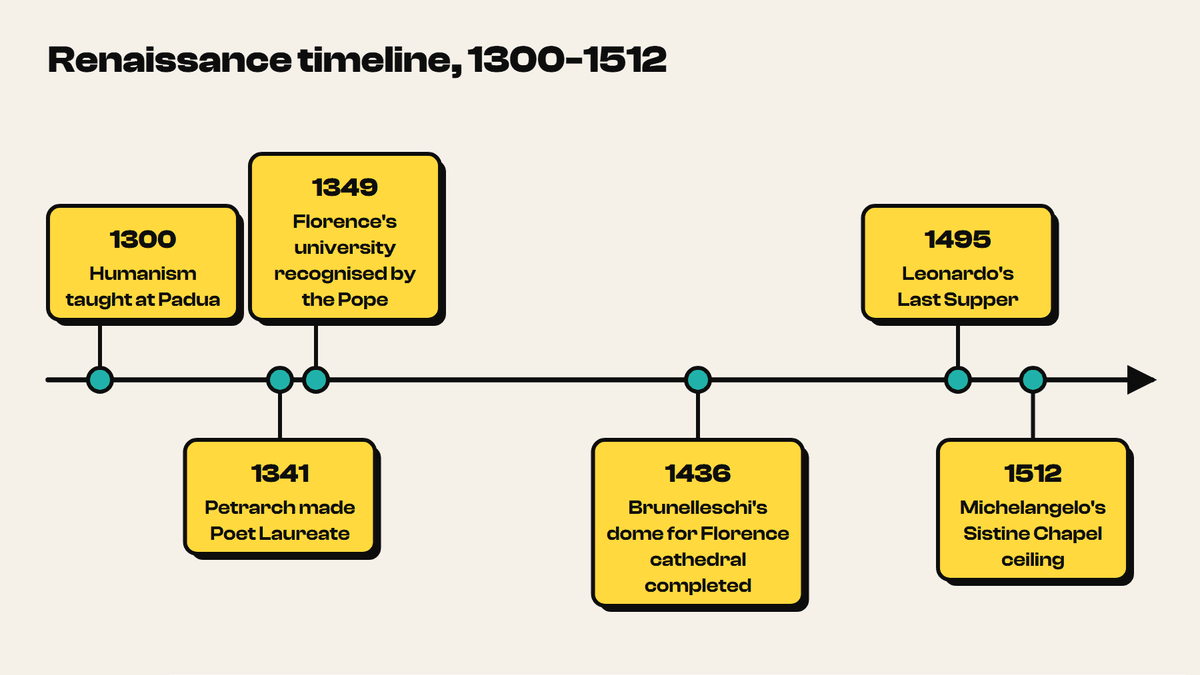
From a word meaning 'rebirth'. Historians in the 19th century used it as a label for the cultural changes in Europe from the 14th century onwards.
The historian who did most to fix this label was Jacob Burckhardt (1818-97), a Swiss scholar at the University of Basle. His teacher, the German historian Leopold von Ranke (1795-1886), held that history should be about states and politics, written from the papers of government departments. Burckhardt found this too narrow. Culture, he argued, deserved as much attention as politics. In 1860 he published The Civilisation of the Renaissance in Italy, which used literature, painting and buildings to trace a new humanist culture in Italian towns from the 14th to the 17th century.
At the heart of Burckhardt's picture was the individual. Renaissance man, in his view, believed he could make his own decisions and develop his own talents, and that made him 'modern'. Medieval man had let the church do his thinking for him.
Treat Burckhardt's sharp line between 'medieval' and 'modern' as an argument to test. Later historians have challenged it strongly.
9 more sections in this topic
Pick this up in your Library: it holds the whole topic, notes, cheatsheet and questions.