
Life expectancy in England and Wales
Life expectancy is one of the clearest measures historians have for judging whether health actually improved. For England and Wales, the numbers from 1841 to 2011 show a dramatic change.
The average number of years a newborn baby can expect to live if death rates at the time stay the same. It is an average, so a large number of early deaths pulls it down sharply.
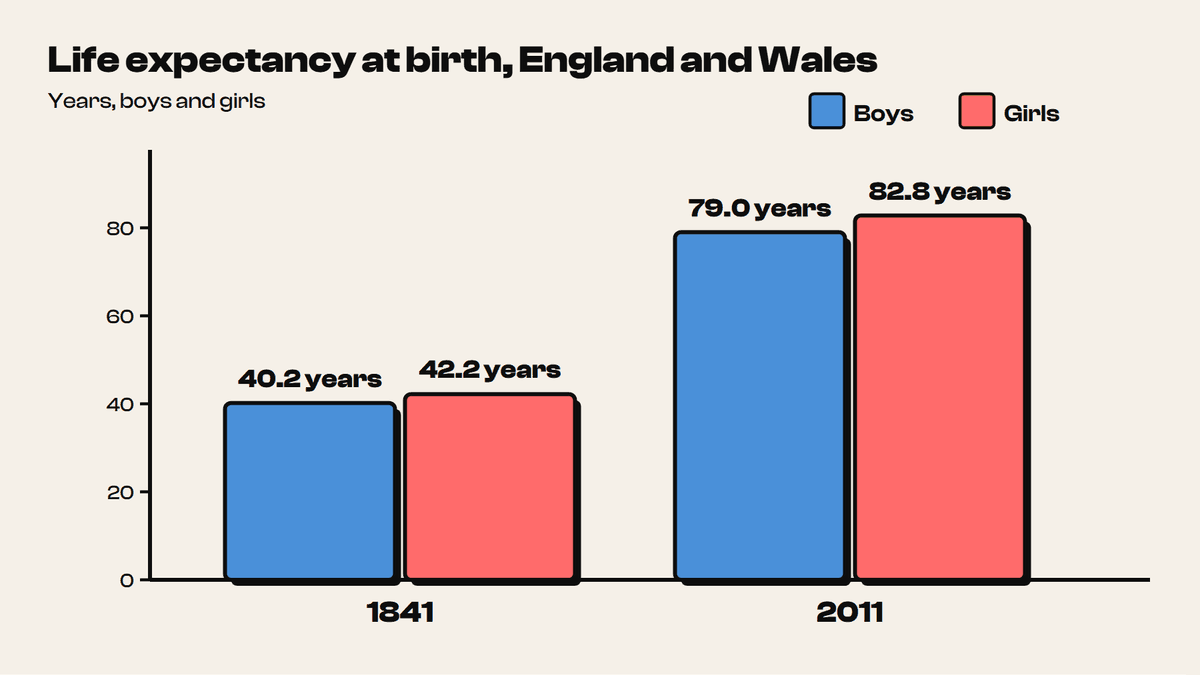
- A boy born in 1841 could expect to live 40.2 years. By 2011 this had risen to 79.0 years.
- A girl born in 1841 could expect 42.2 years. By 2011 the figure was 82.8 years.
In other words, life expectancy at birth almost doubled in 170 years.
The historian's job is to explain that rise. Many things changed over the period, including scientific knowledge, wealth, technology and the role of government. The key question is which factor did most to improve health and medical practice, and did the most important factor change over time?
Registering a birth only became a legal requirement in 1874, under the Births and Deaths Act. Figures from before then are less reliable, because some births and infant deaths may never have been recorded.
9 more sections in this topic
Pick this up in your Library: it holds the whole topic, notes, cheatsheet and questions.