
Leeds before and after
Industrialization changed where people lived, the work they did and the hours they kept. In some towns it did all of this within a single lifetime. Leeds shows the scale of it. An engraving of Leeds in 1750 (Source A) shows a small town with a church tower, a river, trees and open fields. There are few buildings and no factory chimneys. An engraving from 1850 (Source B) shows a crowded city packed with factories, their chimneys pouring out smoke. Only a hundred years separate the two pictures.
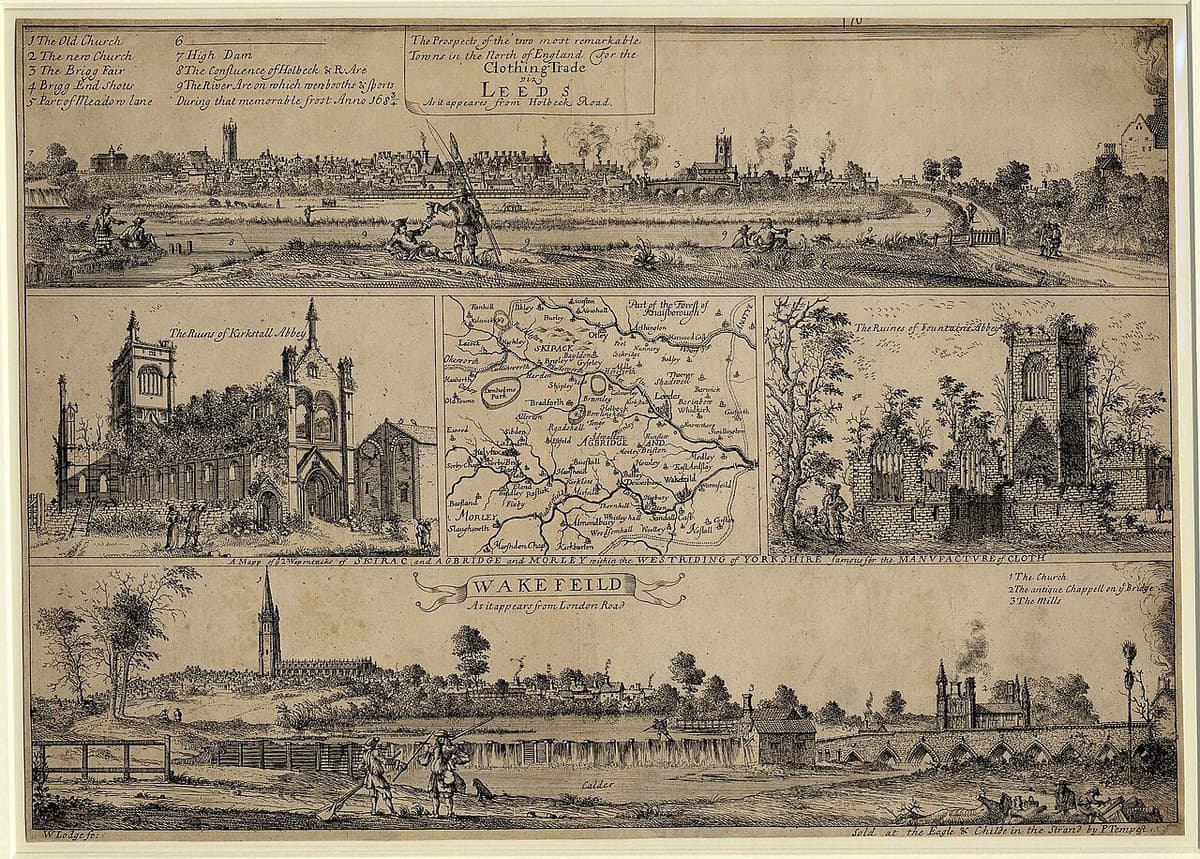
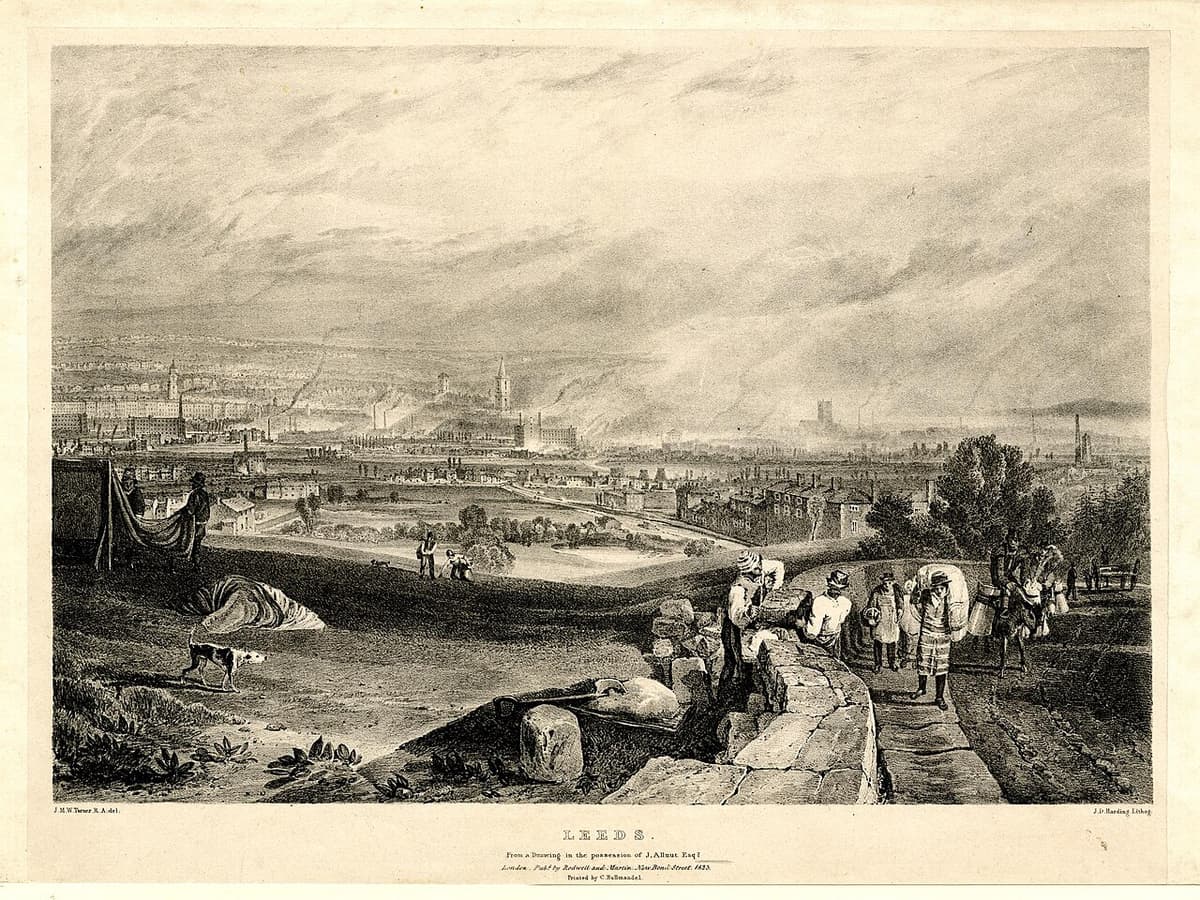
Sheffield went the same way. Pictures of it in the 1800s show dark industrial buildings and tall chimneys smoking over the water. Before factories, much spinning and weaving was done at home, where families worked together and set their own hours. The factory replaced that with a working day set by the owner and the machine. The reasons the machines and factories appeared at all belong to the lesson on causes of the Industrial Revolution.
The change reached into every part of ordinary life, including work, homes, health, political rights and the goods people could buy. It did not affect everyone in the same way. Some groups grew rich and comfortable, and others paid a heavy price. Keep asking who gained and who lost.
Factory conditions and child labour
Richard Arkwright built the first cotton factory to house his water frame, and cotton went on to lead industrialization. Mills changed the landscape, and they changed how people worked. The machines ran automatically, so most mill jobs needed little skill. By 1833, two-thirds of the workforce were women and children.
An orphan sent to work in a factory by the town authorities or by the workhouse that had been looking after them.
Other mills employed whole families, with parents and children working side by side. Owners preferred children for two reasons. They could be paid less than adults, and they were small enough to crawl under working machines. Some worked as fixers, mending broken threads. Others were scavengers, clearing away loose cotton. Every worker was watched by overseers, who were always men.
Eyewitness sources fill in the detail.
- Source C is a list of fines printed in a strike pamphlet by spinners at Tyldesley in 1823. Each of these offences cost 1 shilling: opening a window, being dirty, washing, whistling, arriving five minutes after the last bell, or leaving a little waste on the spindles. A sick spinner who could not find a replacement the employer accepted had to pay for that day's steam.
- Source D is the memoir of Robert Blincoe, an orphan who started mill work at seven. He describes arriving at about 5.30 a.m., the terrible noise, a stench that made him sick, and dust and fluff that half-choked him. Picking up loose cotton meant stooping all morning. When he sat down he was told this was forbidden and kept on his feet until midday, hungry and thirsty.
- Source F records John Moss, who supervised the apprentices at Backbarrow Mill, questioned by MPs in 1816. The mill used 111 parish apprentices aged seven to eleven, mostly from London. They worked standing from 5 a.m. to 8 p.m., with about half an hour each for breakfast and dinner. Moss often found children asleep on the mill floor at night. Machines crushed fingers very often, and one child's arm was broken.
- Source H is the account of Joseph Hebergam, aged 17, from a mill in Huddersfield. After six months he could hardly walk. His brother and sister carried him about a mile to work each morning. Arriving five minutes late meant a beating with a strap until they were 'black and blue'.
- Source E, an 1840 illustration from Frances Trollope's novel about a factory boy, and Source G, a cartoon by Cruikshank called 'English factory slaves', show ragged, barefoot children crawling under machines or threatened by overseers with whips and poles.
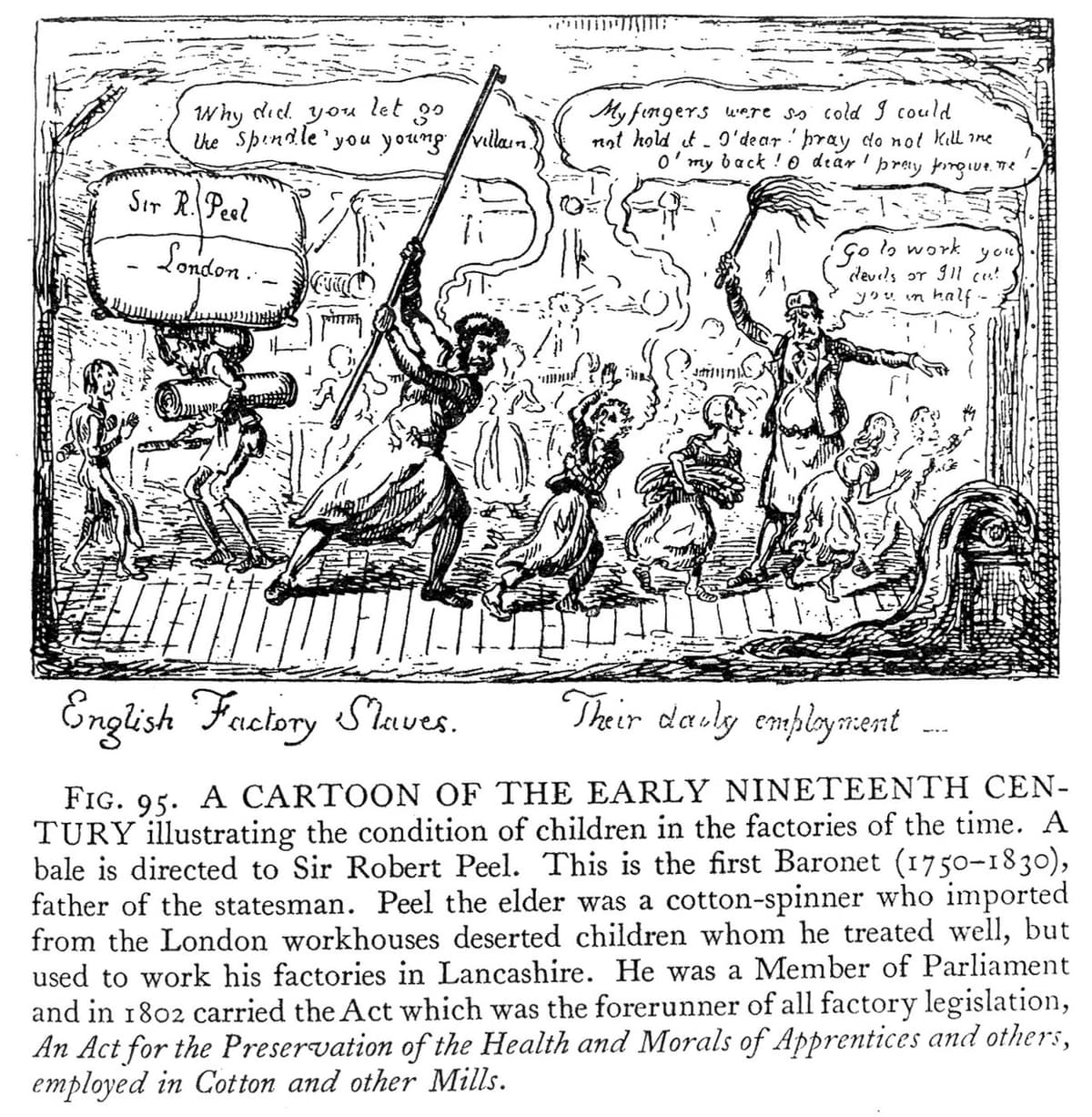
Read together, the sources point to four repeated conditions. Hours were very long, discipline was strict and petty, punishment was physical, and the rooms were noisy, dusty and full of dangerous machinery. The effects on children were exhaustion and lasting damage to their bodies. Blincoe became so deformed that he eventually left the mill to work for himself at home.
Factory discipline was something new. Under the earlier domestic system, spinners and weavers worked at home and chose their own hours. The bell, the fine and the overseer marked a sharp break with that way of life.
10 more sections in this topic
Pick this up in your Library: it holds the whole topic, notes, cheatsheet and questions.