
Environment and forced migration
Most people who move house do so by choice. Millions of others have no real choice at all. Their crops have failed, their island is shrinking, or someone more powerful has taken their land.
Forced migration is movement where staying would put a person's life or wellbeing at risk, and the full definitions are in the lesson on migration and politics.
Three main causes push people into forced migration:
- Conflict, such as war between countries or civil war
- Climate change, especially drought and rising sea level
- Land grabbing, where land is taken over for economic reasons
Conflict has historically been the biggest single cause, and it is covered in the lesson on migration and politics. The other two are both tied to the environment.
The environment matters in two directions. It can be a cause of migration, when the land can no longer support the people living on it. It can also be a consequence of migration, when large numbers of people arrive in a new place and put pressure on its land, water and forests.
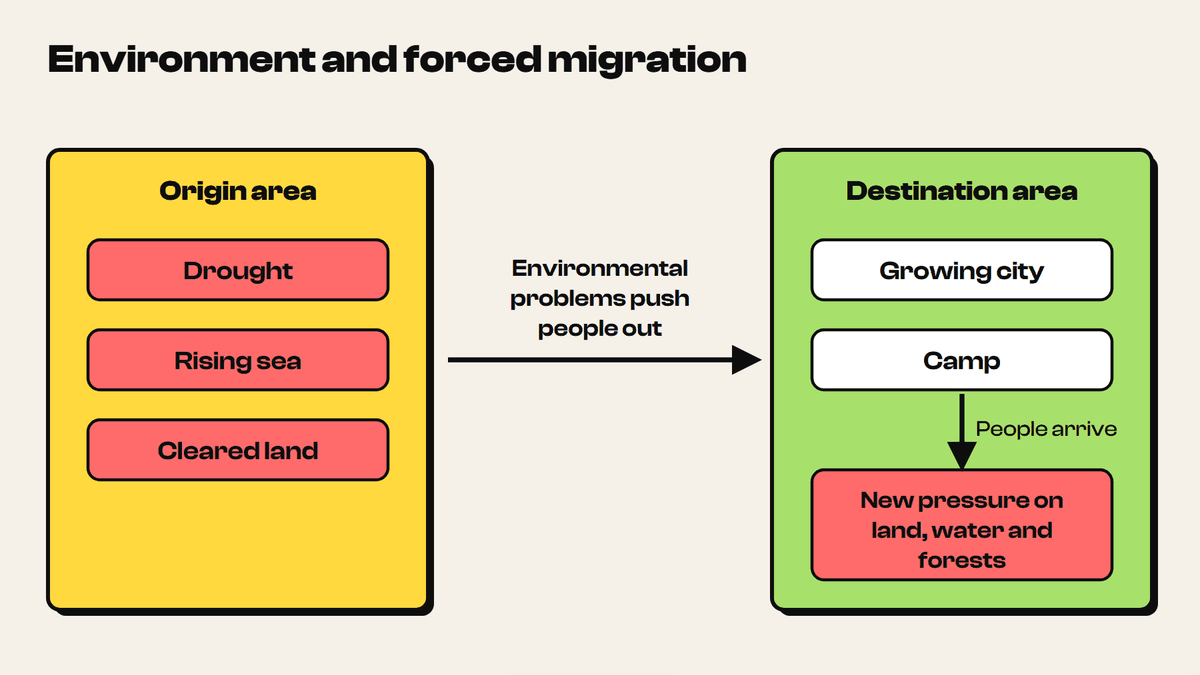
Keep both directions in mind throughout. A strong answer about environmental migration usually explains what happens at the place of origin and at the place of destination.
8 more sections in this topic
Pick this up in your Library: it holds the whole topic, notes, cheatsheet and questions.