
Population structure and planning
Governments have to plan years ahead. A primary school built today will need teachers for decades, and a pension promised today will have to be paid long after the promise is made. To plan well, policymakers need to know how a population is made up by age, where to invest and where the money will come from.
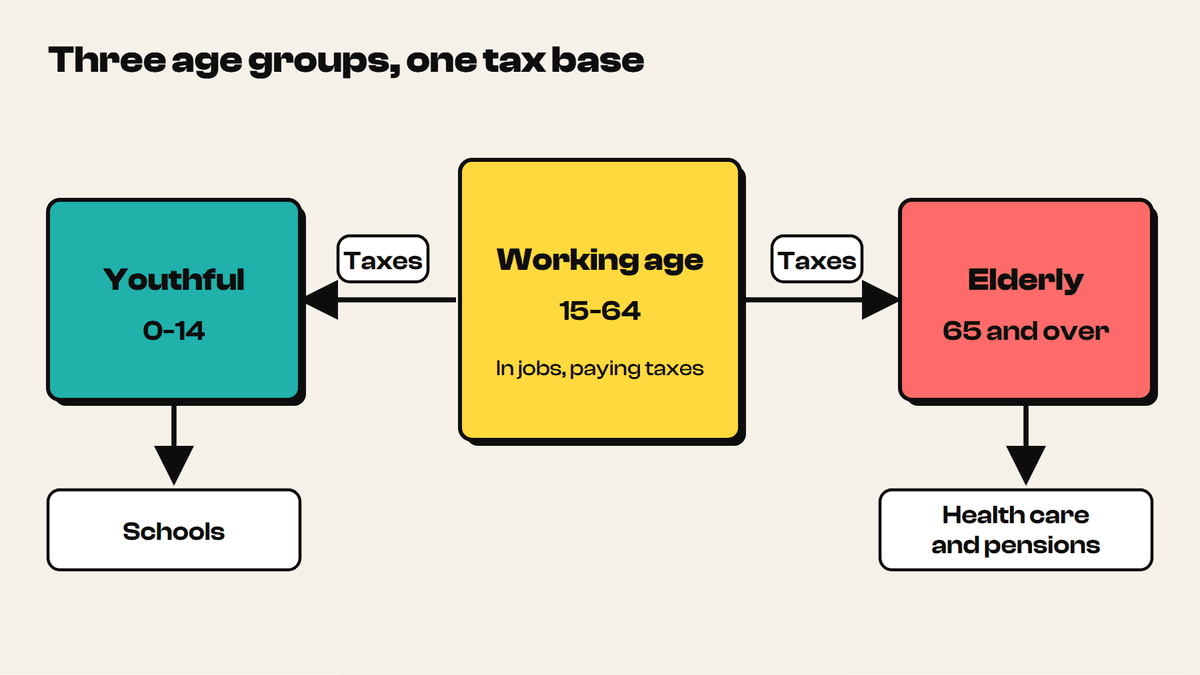
Geographers usually split a population into three broad age groups.
- Youthful, aged 0–14 years
- Working age, aged 15–64 years
- Elderly (or ageing), aged 65 and over
The working-age group matters most for funding. These are the people in jobs who pay the taxes that support schools for the young and health care and pensions for the old. When either the youngest or the oldest group becomes large compared with the working-age group, the balance tips and the government faces a policy problem.
The make-up of a population, here meaning the share of people in each age group. Policies can change this make-up over time.
9 more sections in this topic
Pick this up in your Library: it holds the whole topic, notes, cheatsheet and questions.