
A photograph from the Depression
In 1936 the American photographer Dorothea Lange came across a hungry mother sheltering under a tent with her children. She was the wife of a migrant farm worker, and the family had no home. Lange did not ask the woman's name or her story. The mother told her she was 32, and that she and her seven children had been living on frozen vegetables from nearby fields and on birds the children killed. Lange later recalled that the woman seemed to sense the pictures might help her, so she sat with her children around her and let Lange work.
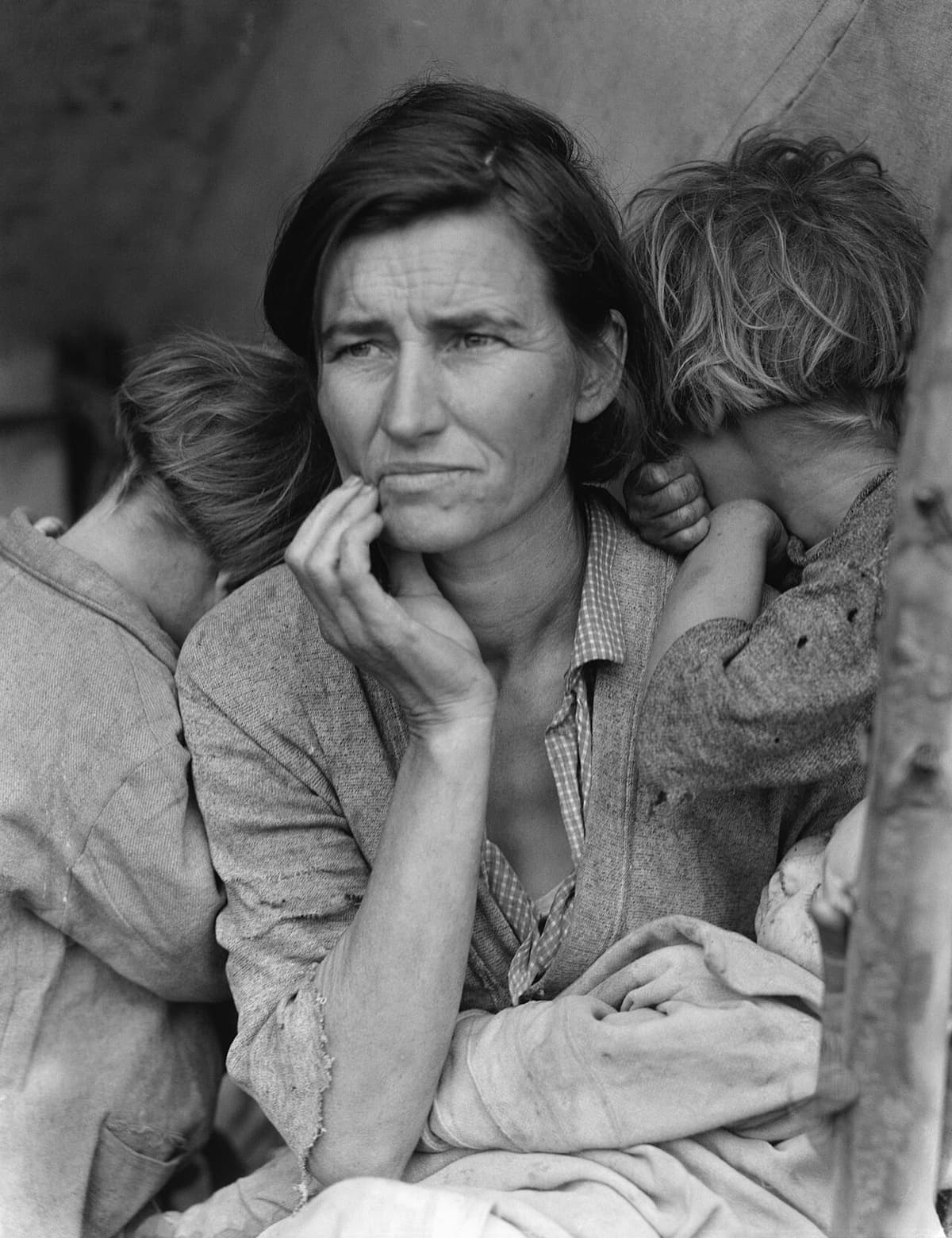
Lange's photographs recorded the poverty of the Great Depression years.
The economic crisis that began around 1929 and lasted until the mid-1930s, when production, employment, incomes and trade fell disastrously across most of the world.
Only a few years before this photograph, the USA had been enjoying a boom. Explaining how a farm family there ended up living off frozen vegetables means following a chain of linked causes, and that chain starts with the First World War.
9 more sections in this topic
Pick this up in your Library: it holds the whole topic, notes, cheatsheet and questions.