
Ideology and its key words
Photographs from the twentieth century are full of huge crowds. A women's liberation march carries banners reading 'Women Demand Equality'. A Soviet parade fills Red Square with red flags. A Nazi rally stands beneath a giant eagle and swastika, arms raised in salute. A street march carries a banner supporting socialist Cuba. Each crowd gathered because its members shared a set of ideas about how society should be run. Those ideas went on to change laws, start revolutions and wars, and decide who could vote, work or live in safety.
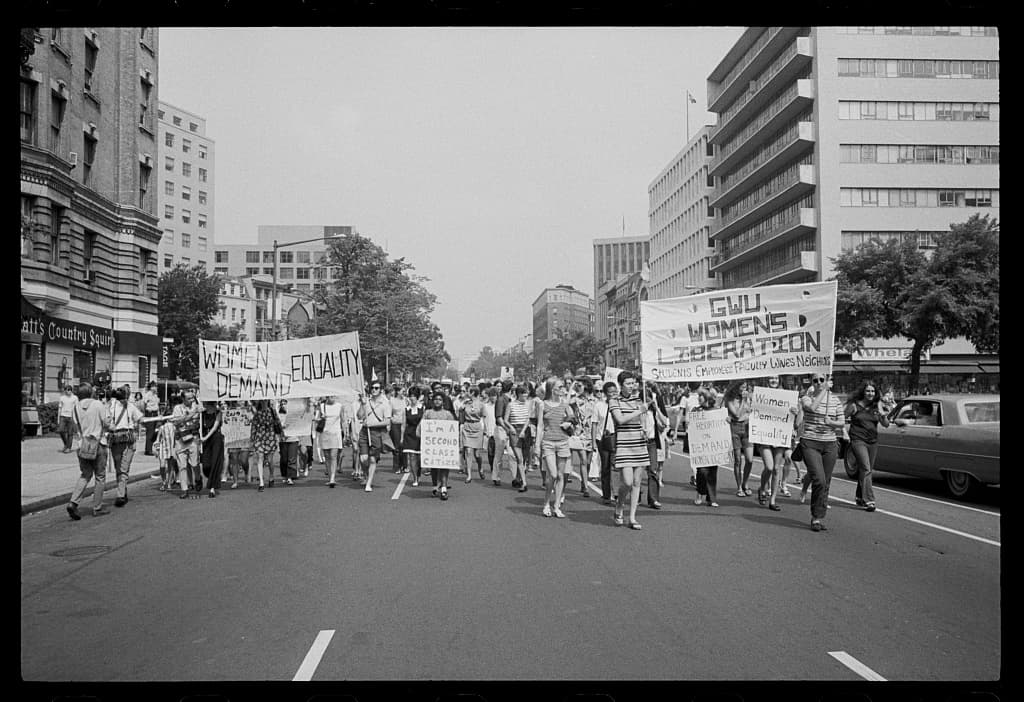
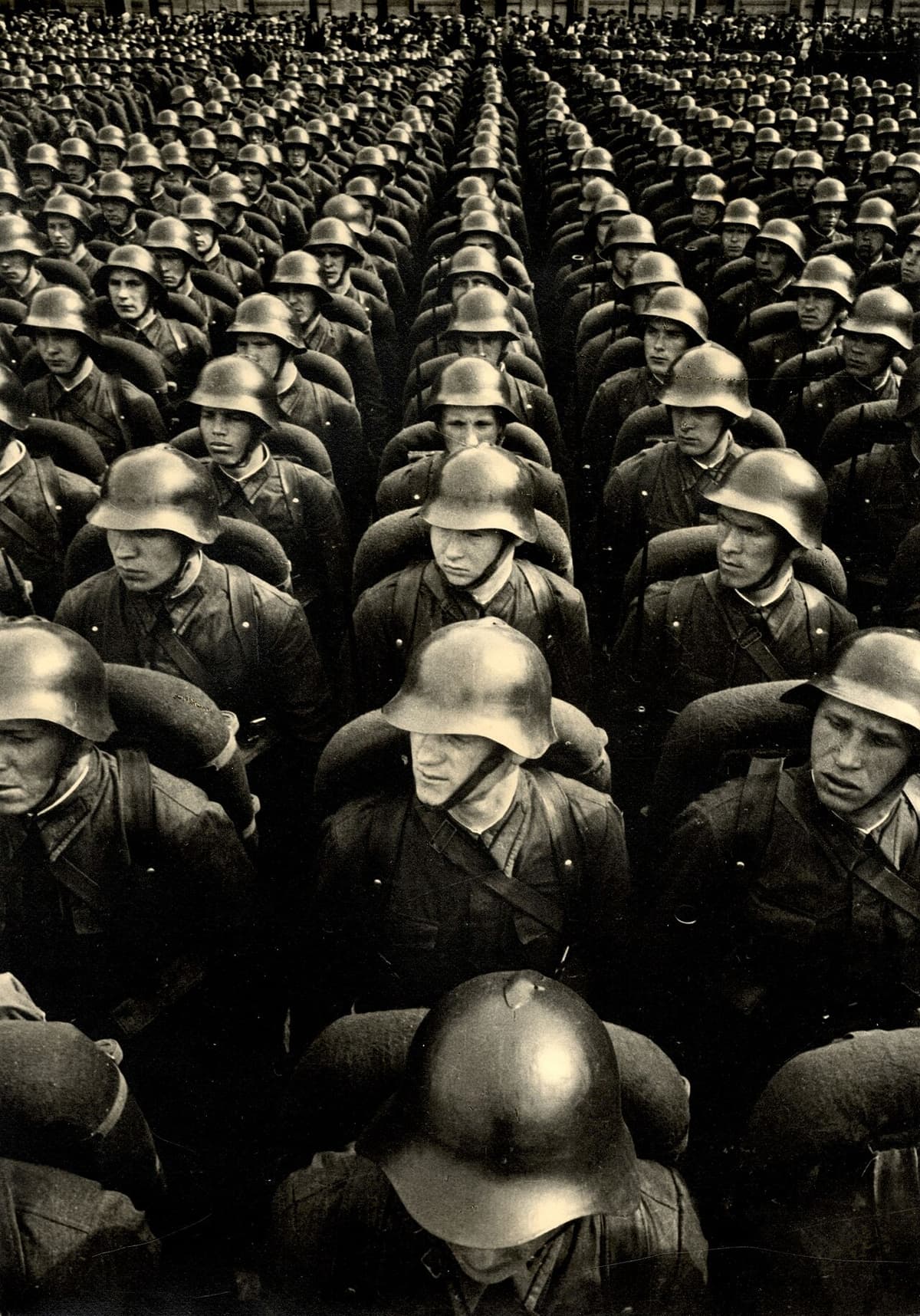
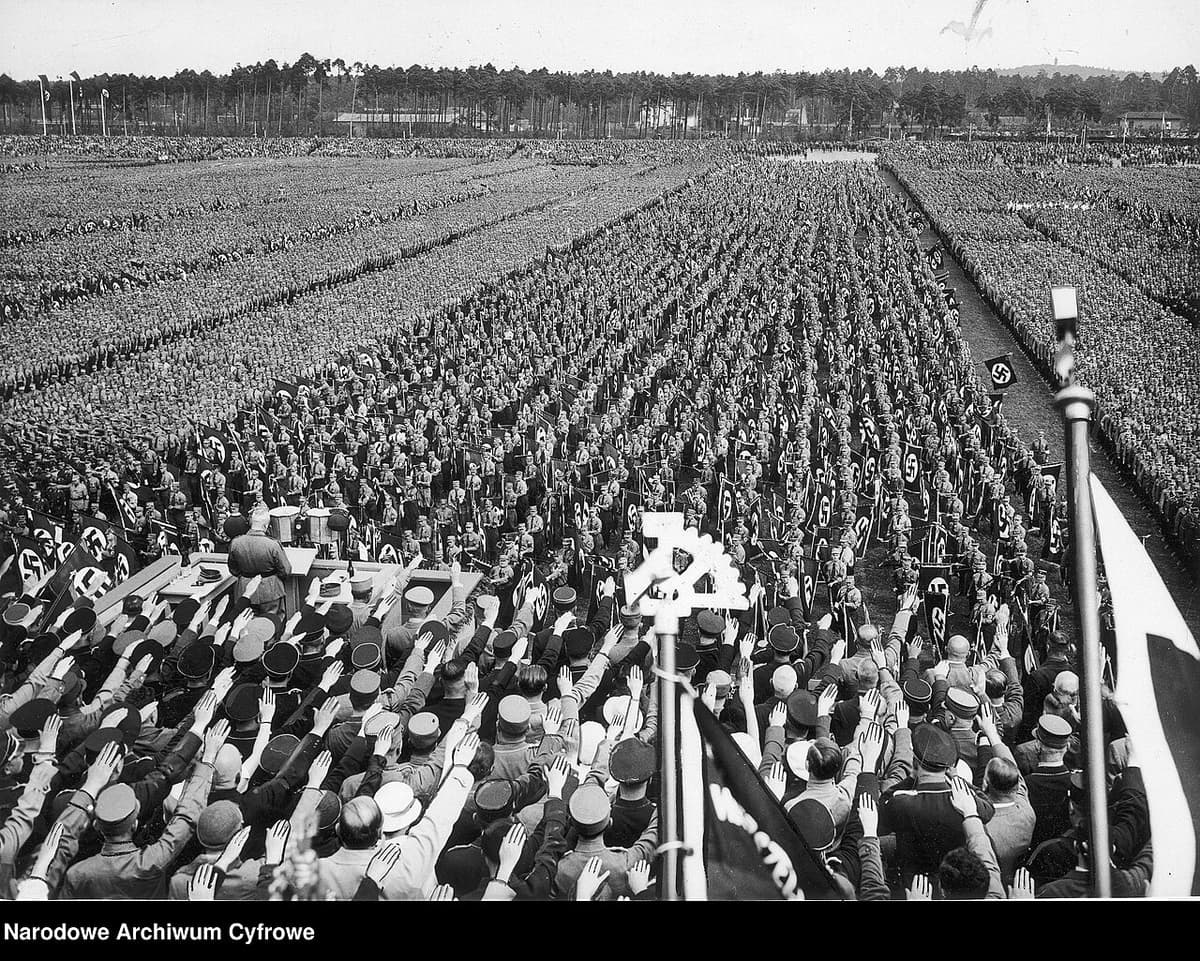
Two short sources show how far apart these ideas could be. In 1851 the French writer Pierre-Joseph Proudhon complained that being governed meant being watched, spied on, regulated, censored and ordered about. In 1934 Adolf Hitler told a Nazi party gathering in Nuremberg that his party would never compromise and would hold total political control over Germany. Proudhon wanted far less government. Hitler wanted government to control everything.
A connected set of beliefs about how society, politics and the economy should be organised, which a group uses to guide its actions.
A handful of key words come up again and again when comparing ideologies.
The recognised right to give orders and make decisions that others are expected to obey, such as the power of a government or a leader.
A system in which one person or one party holds total power, with no free elections and no legal way for people to remove them.
Freedoms and protections that people are entitled to, such as the right to vote, to speak freely or to own property.
The right of every adult citizen above a set age to vote, whatever their sex, wealth or class.
An imagined perfect society. Many ideologies promise to build one.
A government that demands strict obedience and allows little freedom is described as authoritarian. One that uses force to crush opposition is repressive.
When Proudhon lists being 'spied upon' and 'censored', he is describing a government using its authority to limit people's rights. When Hitler demands 'total political control', he is describing a dictatorship.
The individual-collective spectrum
Every ideology has to answer the same hard question. When what is good for one person clashes with what is good for the group, which comes first? At one end of a spectrum sit ideas that put the individual first: personal freedom, personal rights and limits on what governments may do. At the other end sit ideas that put the collective first. The collective might be a social class, a nation, a race or the state itself, and individuals are expected to serve it, even at the cost of their own freedom.
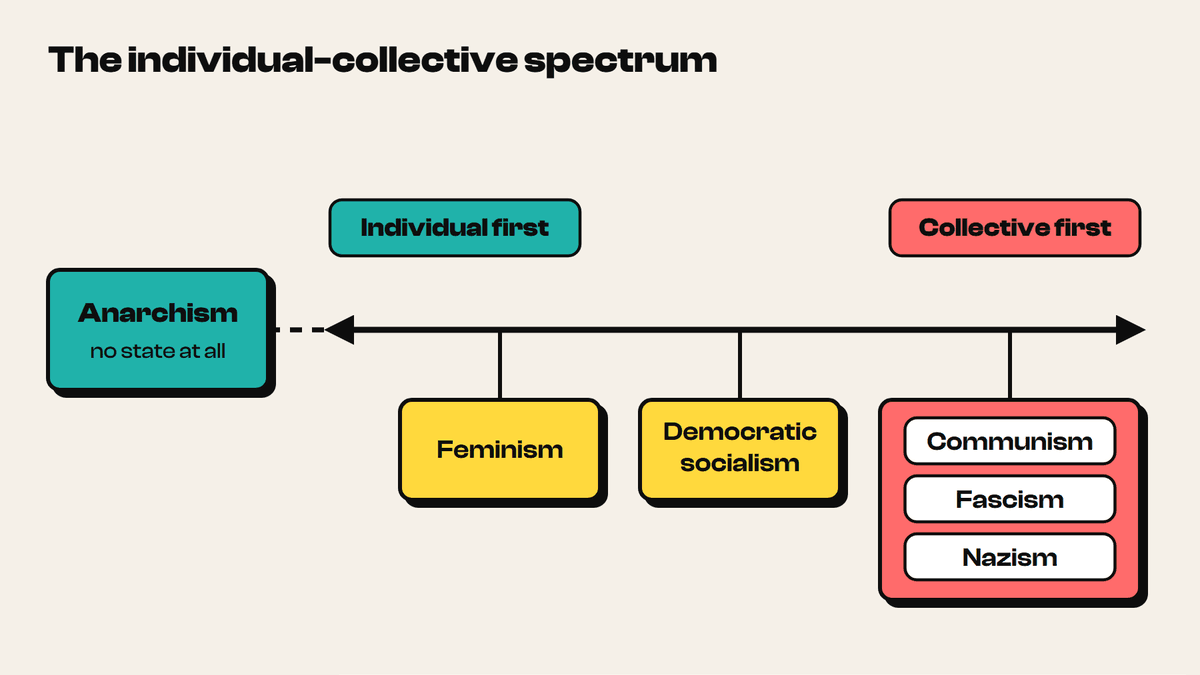
Placing an ideology on this line is a useful way to compare ideas that otherwise look very different. Communism and Nazism hated each other, yet both demanded that individuals give way to the needs of the state.
Anarchism sits at the extreme anti-state end.
The belief that society should have no state. Anarchists see governments as repressive and unnecessary, reject all imposed authority and want people to run their own affairs through voluntary groups.
The Englishman William Godwin first set out these ideas clearly in An Enquiry Concerning Political Justice (1793), and the Frenchman Pierre-Joseph Proudhon, the first person to call himself an anarchist, made the famous claim that 'property is theft' in What is property? (1840).
9 more sections in this topic
Pick this up in your Library: it holds the whole topic, notes, cheatsheet and questions.