
The Renaissance in the Italian city states
The word Renaissance means rebirth. It names a period of European history running from roughly 1400 to 1600, although historians do not all agree on the exact dates. The French historian Jules Michelet gave the period this name. The Swiss historian Jacob Burckhardt made it famous in his book of 1860, seeing these centuries as the moment when the learning of Ancient Greece and Rome was rediscovered. The Renaissance followed the Middle Ages, and during the 17th and 18th centuries it gradually gave way to the Enlightenment.
A period of roughly 1400 to 1600 in which ancient Greek and Roman learning was rediscovered and used in new ways. The word means rebirth.
That rediscovery reached into many areas of life. It changed painting and sculpture, education and architecture, and even the way people pictured the solar system.
At this time Italy was divided into many city states, each governing itself and often fighting its neighbours. In the 15th century a stretch of about 40 years of peace gave these states the chance to grow rich and confident. Rome, Milan, Florence, Venice, Pisa and Genoa all flourished. Each had its own government and character. Rome was ruled by the Pope, while Venice was a city built on a lagoon and famous for its waterways.
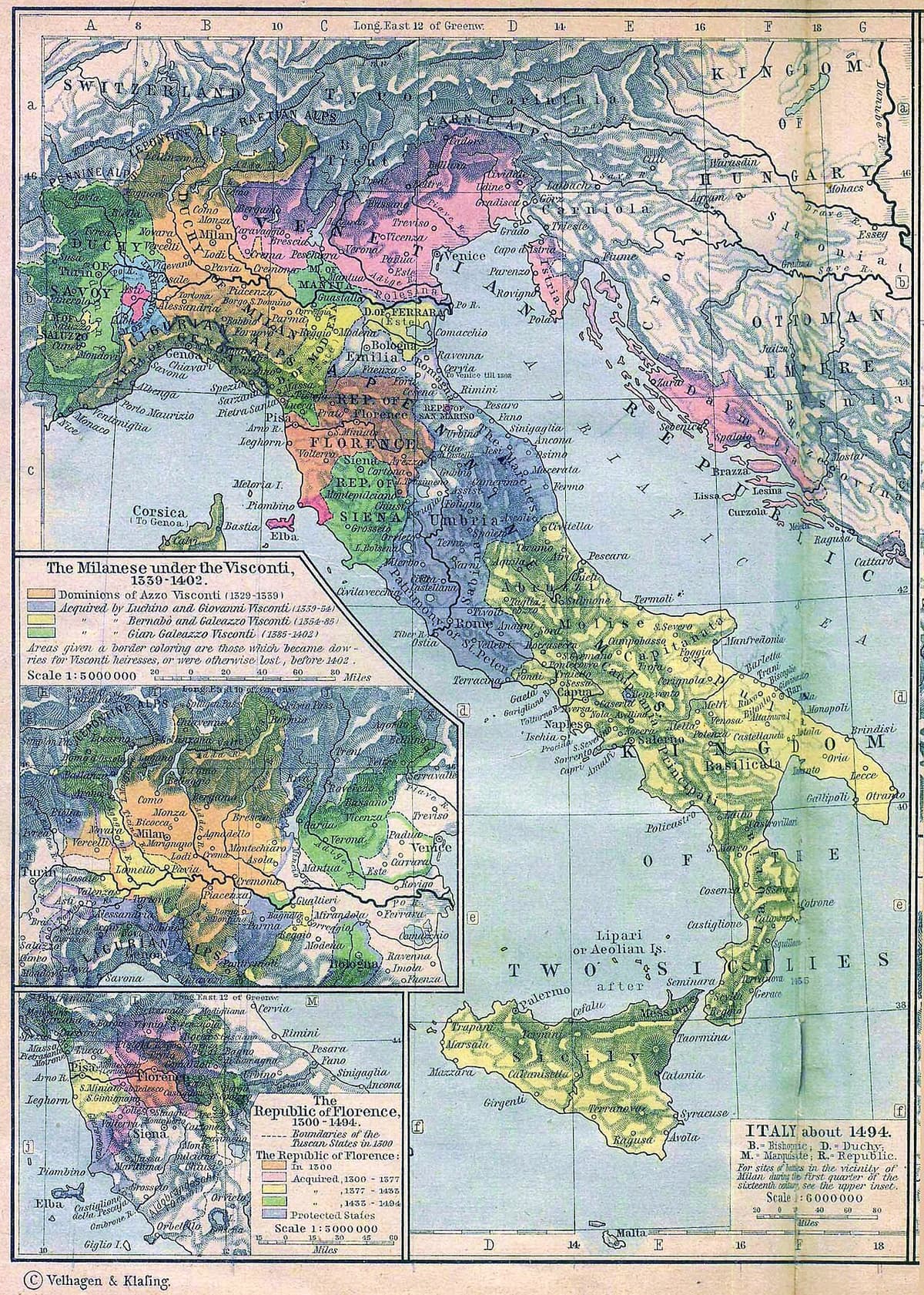
Florence mattered most of all. It was controlled by the Medici family, who were extremely wealthy and spent heavily on the arts. Put together, these conditions explain why the Renaissance began where it did. Peace gave the city states stability, wealth gave them money to spend, and powerful families such as the Medici chose to spend it on art and learning. Florence went on to be at the centre of the work of Leonardo Da Vinci and Michelangelo.
Students sometimes treat the Renaissance as a single event with a fixed start date. It was a gradual change spread over about two centuries, and the dates 1400 to 1600 are only an approximation.
Humanism and classicism
Two linked ideas sat at the heart of the Renaissance. Both grew out of the rediscovery of classical Greek and Roman books.
The study of what it means to be human, including the human body, the individual and human potential.
Humanists were curious about the body itself, so they studied anatomy (the parts of the body) and physiology (how those parts work together). They also placed more value on the individual person and asked what humans could achieve in different fields. In art this led to more lifelike pictures of people, and portraits became far more common.
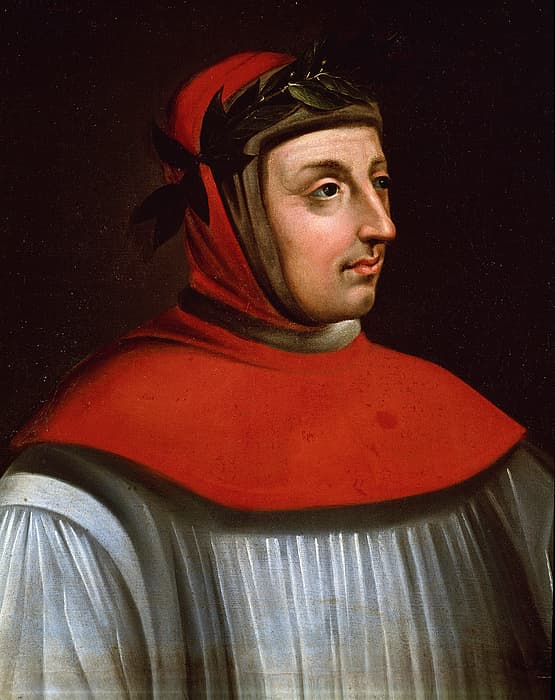
The poet Francesco Petrarch played a large part in getting humanism started. He loved books and tracked down many Ancient Greek and Roman texts. Petrarch and his followers also made people aware of the main themes in these books. The writings of the Roman lawyer Cicero were especially important in shaping humanist ideas. Without the texts Petrarch found, Renaissance thinkers would have had far less ancient learning to build on.
The rediscovery and reuse of Ancient Greek and Roman works, styles and ideas.
Classicism had very visible results. Architects brought back Greek and Roman building features such as the arch, the dome, columns and pediments (the triangular section above the columns at the front of a classical building). It also had a political side. Thinkers looked with fresh interest at the systems of government in Ancient Greece, including those that gave citizens a democratic say.
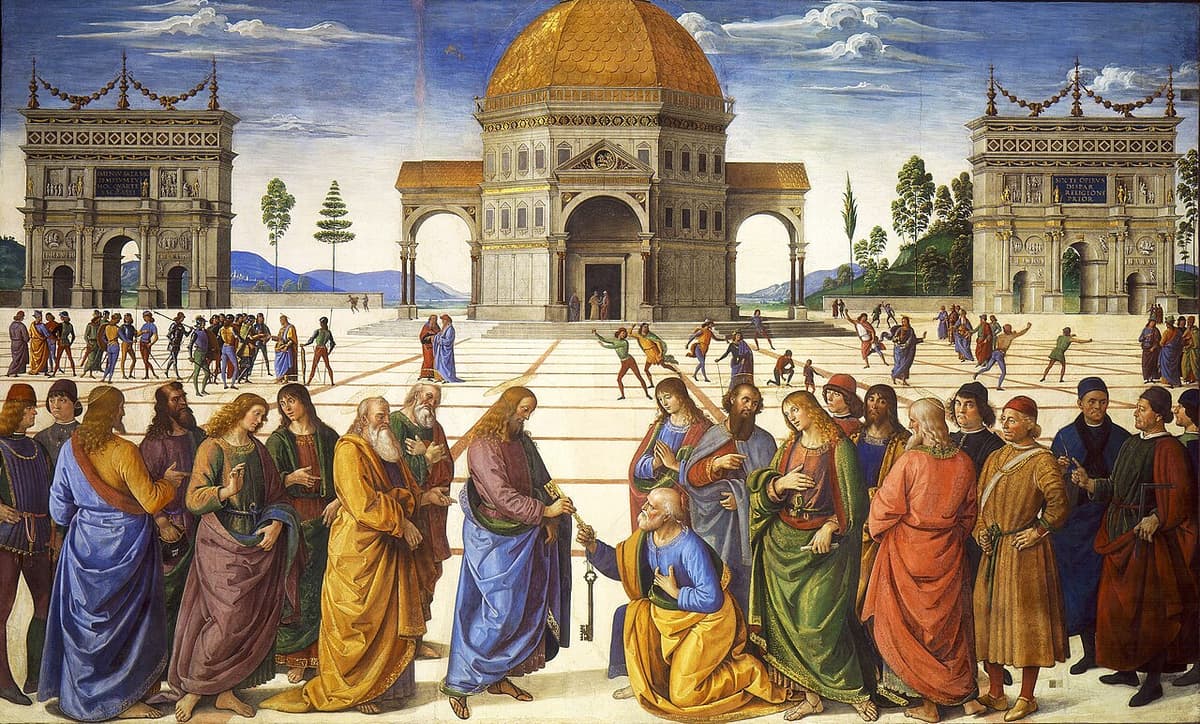
Perugino's painting shows classicism at work. The domed central building and the two triumphal arches in the background are taken straight from Greek and Roman architecture.
9 more sections in this topic
Pick this up in your Library: it holds the whole topic, notes, cheatsheet and questions.