
Exploration and trade
Almost every country today is tied to others by trade, travel and shared ideas. Many of those ties were first made by explorers, people who set out for places their own society knew little or nothing about. Why they went, and what happened when they arrived, explains a great deal about how the modern world became so connected.
A process of discovery. It means travelling to new places or finding new ways of seeing things.
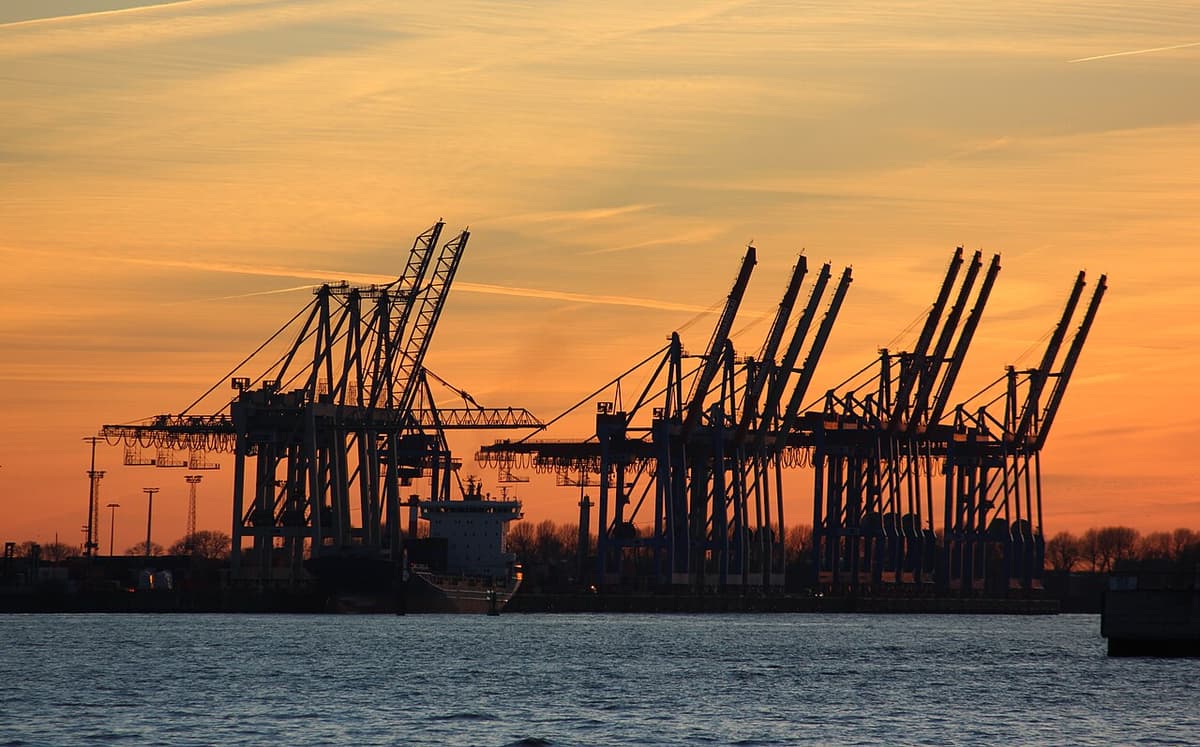
Exploration and trade have always gone together. The poet John Masefield showed this in 'Cargoes', a poem of three verses. Each verse describes a ship from a different age and lists what it is carrying.
- An ancient oared ship from Nineveh rows home to Palestine from distant Ophir. It carries ivory, apes, peacocks, sandalwood, cedarwood and sweet white wine.
- A grand Spanish galleon sails through the tropics from the Isthmus. Its hold is full of diamonds, emeralds, amethysts, topazes, cinnamon and gold coins called moidores.
- A dirty British coaster, its smoke stack crusted with salt, pushes through the English Channel in March. It carries coal from the Tyne, railway rails, lead, firewood, ironware and cheap tin trays.
Read in order, the verses trace how trade changed over time. The first two ships carry rare and beautiful luxuries for the rich. The galleon belongs to the age when Spain shipped treasure home from its American colonies. The last ship carries heavy, ordinary goods from an industrial country. Trade shifted from luxuries for a few people towards bulk goods for many, and every shift depended on new routes and new kinds of ship.
Jot down 3 ideas, 2 questions and 1 analogy that you link with the word 'exploration'. Keep the list and compare it with your thinking once you have worked through the whole topic.
Reasons for exploring
People have explored for many reasons, and most journeys had several motives at once. The main ones are these.
- Merchants travelled to buy goods they could sell for a profit, so trade was a major driver. Ideas travelled along with the goods.
- Explorers went in search of valuable resources such as spices, gold and silver.
- Some set out to conquer new lands and control the people living there.
- People may search for new land when they need food, water or safety, so survival can push them to move.
- Some wanted to discover and record things no one in their society had seen before.
- Many were drawn by adventure, the thrill and risk of the unknown.
- Advances in technology, especially in ships and navigation, made longer journeys possible. Exploration tended to grow whenever transport improved.
Underneath all of these sits curiosity. Wanting to know what lies beyond the horizon is part of human nature.
Taking control of a land and its people by force.
A large group of lands and peoples ruled by one country or ruler.
The same motives appear in very different periods.
- Chinese, Persian and Roman merchants traded along the Silk Road (trade).
- Marco Polo, a merchant from Venice, crossed Asia to reach China (trade and discovery).
- In the 1500s Spanish explorers in the Americas hunted for gold and found huge amounts of silver (resources).
- Hernán Cortés conquered the Aztec Empire (conquest).
- The legend of El Dorado, a city of gold, tempted Spanish adventurers (adventure).
- The Portuguese caravel made long ocean voyages realistic in the 1400s (technology).
It is tempting to give one reason for each journey. Most explorers had several. Columbus was looking for a new trade route to India, yet his voyage led on to conquest and the hunt for gold and silver.
10 more sections in this topic
Pick this up in your Library: it holds the whole topic, notes, cheatsheet and questions.