
Historical treasures
All over the world, the remains of past societies are still standing. The Pyramids at Giza in Egypt, Machu Picchu in Peru, the Great Wall of China, the Colosseum in Rome, Petra in Jordan, Angkor Wat in Cambodia, Stonehenge in the UK, the Parthenon in Greece, the Taj Mahal in India and Tikal in Guatemala attract visitors every year.
These places are famous because they show what earlier civilizations could achieve. A pyramid tells us that Ancient Egyptians could organise huge numbers of workers and plan enormous buildings. The road network of the Roman Empire shows how the Romans moved soldiers, goods and people across great distances. Each site gives us a view into a world that has disappeared.
Imagine filling a time capsule to be opened in 500 years. You might include a phone, a school timetable, a photograph of your family and a page from today's news.
Each item tells a future person something different about your life. None of them tells the whole story, and a future person would have to work out what each object meant. Historians face exactly this problem with the past.
History as evidence
We cannot travel back in time, so everything we know about the past comes from things that have survived to the present.
The study and interpretation of the evidence that has survived from the past.
A person who studies the past professionally by gathering evidence and interpreting it to understand how past societies lived.
Evidence comes in many forms. The ruins of an Ancient Roman city can reveal how ordinary people lived each day. The same ruins can also show the style of their buildings, how they were governed, what art they made and what religion they followed. Evidence from more recent times works the same way. A newspaper printed during the First World War helps us understand the war itself, and also how it was reported to people at home.
The key word is interpretation. Evidence does not explain itself. A historian has to look at it, ask questions and decide what it most likely means.
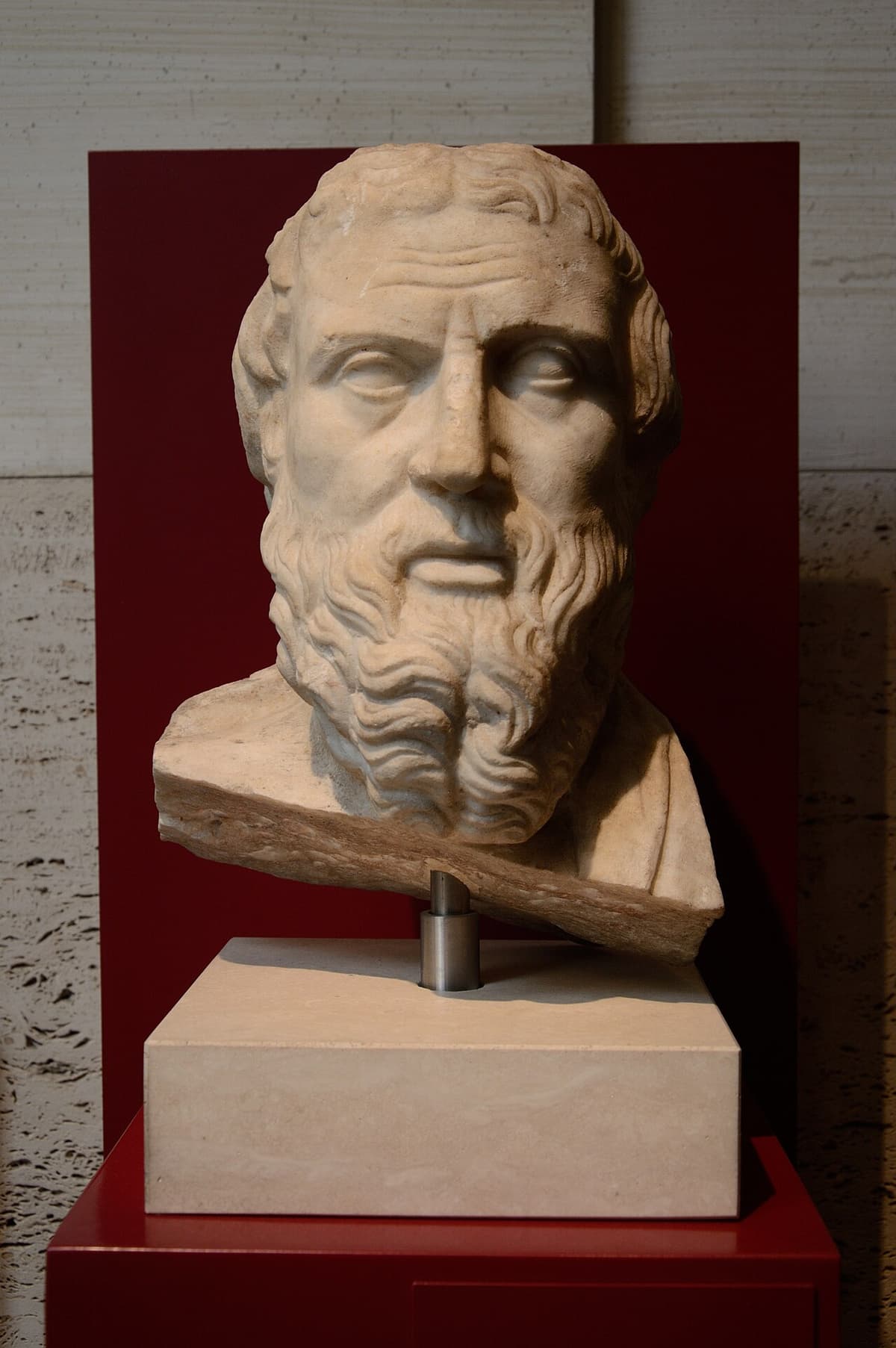
One of the earliest people to write history was Herodotus, a Greek writer often called the 'father of history'. Around 430 to 425 BCE he wrote his Histories, which recorded many accounts of events. He is best known for describing the Persian wars, fought between the Persian and Greek civilizations. Herodotus liked to tell entertaining stories about the events he described. Most of what we know about these wars comes from his writing, so our picture of them depends heavily on one man and his way of telling a story.
9 more sections in this topic
Pick this up in your Library: it holds the whole topic, notes, cheatsheet and questions.